MyPlate, MyTray, MyWay to Make Smarter Choices at Home and School

Long before MyPlate inspired the 2012 National Nutrition Month theme of “Get Your Plate In Shape,” creative school nutrition directors have been improving the nutrition on student trays across the county. For many first-class school programs, like the one in Waterford, Michigan, the “new” USDA Nutrition Standards really weren’t news at all. Thanks to careful planning and strategic collaborations, their meals are already consistent with the upgraded meal patterns.

When I first saw the newly-released USDA MyPlate icon on June 2, 2011, my immediate thought was “that’s a school lunch tray!” One of the first trays that came to mind was this simple, popular lunch from Waterford School District north of Detroit: Chili Mac (with whole-grain pasta and beans), white whole wheat roll, celery sticks, orange, and milk.

With Food and Nutrition Services Manager Doreen Simonds in the driver’s seat, Waterford students have been going down the healthy eating track long before USDA got on board with MyPlate. Thanks to a train engineer husband, supportive staff throughout the district, and a hefty dose of personal creativity, Doreen has developed a comprehensive nutrition education and motivation program around her Tracker Tray Train. The program helped Waterford district win several HealthierUS School Challenge awards and took Doreen all the way to the White House for a historic celebration with First Lady Michelle Obama.

Doreen credits Mrs. Obama with encouragement for the Tracker Tray concept. Her statement that the “cafeteria is the most important classroom in the school” motivated Doreen to apply for a Michigan Team Nutrition Wellness mini-grant and Tracker the Nutrition Train was born. Children’s natural fascination with trains helped to inspire the pictures and graphics, with cars representing the food groups – culminating in cafeteria murals drawn by a parent-artist.
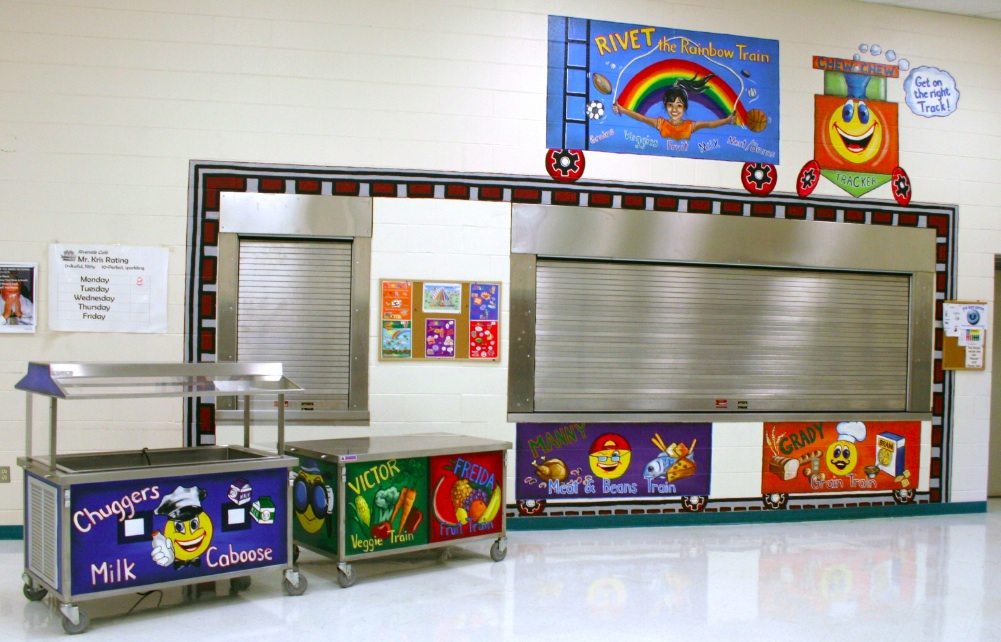
Like any good brand, the Tracker Tray concept is easy to extend into many aspects of the school nutrition program in Waterford, including:

  • Tracker Tray books (by Doreen Simonds), which foodservice staff read in classrooms and then send home to families, extending the concept to MyPlate at home;
  • Tracker Tray Days, when student volunteers play Tracker Tract games in a corner of the cafeteria and children can track their eating at school, beginning with a healthy breakfast; and,
  • Coming soon, a brand-new mascot in an engineer’s costume, WSD Depot Dog “Diggin” who will help Waterford “dig into good nutrition.”

According to Doreen Simonds and the photographic evidence, students and staff in Waterford are already digging into lots of nutrient-rich options. She credits the Tracker Tray program with helping to increase participation among the 11,500 students (51% free and reduced), as well as increasing the consumption of fruits, veggies, whole grains, and low-fat milk. Never one to rest on current successes, Doreen has already set her sites on a Guinness World Record – for low-fat milk consumption!! Stay tuned for this one – I have no doubt that there will be some great photos from the event.

School Breakfast: From the Hungry Side of the Tray

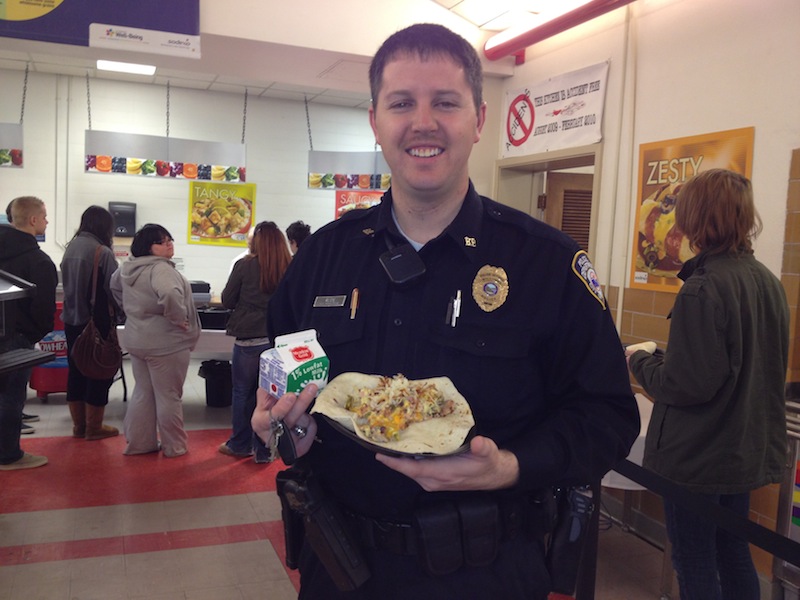
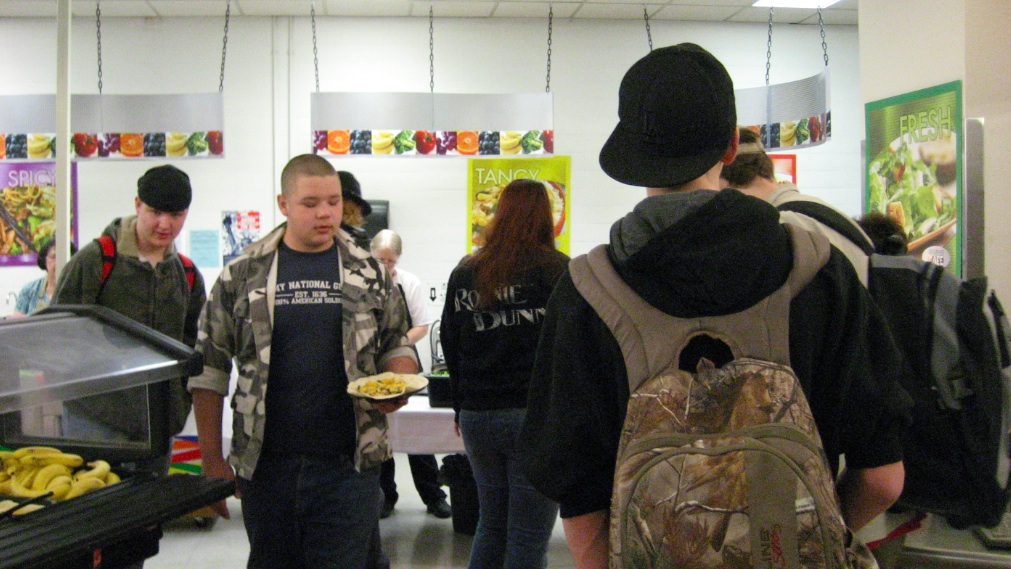
I was profoundly affected by my school breakfast visit Thursday morning – to Senior High School in Billings, Montana (1,900+ students, 31% free-reduced). I tried to capture it throughout the day in School Meals That Rock Facebook photos postings and some School Meals Rock tweets, but what I saw and felt was difficult to express 140 characters at a time.

Much of my work is fairly abstract – presentations about marketing healthy school meals, webinars about implementing new meal patterns, and interviews about nutrients that kids are missing. This visit to a large high school cafeteria for breakfast was much more important and straightforward – it was simply about feeding hungry teenagers.

The food was great. While it exceeded current USDA guidelines, the menu might have disappointed the vociferous school meal critics who sometimes seem to seek nutrition perfection. Some of the fruit was canned (peaches and pineapple in juice); there were corn dogs (whole grain, low-fat, turkey, but still corn dogs); and there were ready-to-eat cereals rather than plain oatmeal.

There was also fresh fruit (bananas, apples, and oranges), yogurt parfaits, and an amazing made-to-order burrito bar with locally sourced tortillas and sausage crumbles, plus eggs, spinach, jalapenos, onions, and salsa. While not organic-free-range nutrition perfection, it was wholesome, healthy, and prepared by “lunch ladies” who greeted kids by name with a smile and “welcome to our café” attitude.

In the bright sunny Senior High cafeteria, I was especially struck by three things:

  • First, the atmosphere was like the pleasant bustle of a coffee shop with lots of conversation, but no loud voices or inappropriate interactions. The school police officer came in – to talk with kids and have breakfast himself – rather than to “patrol” or enforce proper behavior. He said, “It’s like this every morning.”
  • There were all kinds of kids – with cowboy hats, updo hairstyles, multiple piercings, and athletic gear – all there to do one thing: eat breakfast. Best of all, there were many girls with smart plates filled with protein, fruit, and milk. With all the news about disordered eating, it is heartening to see young women enjoying breakfast.
  • When I asked several teens what they liked best about school breakfast, they looked a little surprised, because it was obvious to them. “I eat here almost everyday because it’s free and it’s good.” “Some kids don’t have money to eat and when I eat here, I don’t have to listen to my stomach growl all morning.”

On USDA’s “What’s on Your Plate” Day, these students were not looking for culinary perfection, steel cut oats, or exotic tropical fruit. They needed a balanced breakfast in a safe and welcoming place – they got that and much more. Next time you are tempted to pick apart a school menu or criticize the cafeteria offerings, go to your local high school and take a look at things from a hungry teen’s point-of-view.

Find out what changes the program has already made and what they would like to do if they had more support. Compare what the kids can enjoy in a school breakfast to those eating chips, pop, and candy from the corner store. Offer ideas to leverage USDA’s $1.94 reimbursement (food + labor) for even more nutritious options that teens will eat.

Better yet, get engaged with the school and the kids. Explore what you could do to help promote smart choices for successful athletes or start a school food pantry for the students in need. There is a brand-new food pantry at Senior High – and everyone is surprised by how many students are using it.

New-utrition Standards for School Meals: Another critical piece of the “Healthy Kids Puzzle”

As a committed Action for Healthy Kids (AFHK) volunteer since the original 2002 Summit in Washington, DC, I was honored to write about the release of the long-awaited USDA Nutrition Standards for school breakfast and lunch on for the February issue of the AFHK Connections newsletter. This is a longer version of that article, which is no longer available one the AFHK site.

The first “re-do” of school meal patterns in many years is designed to align meals served in school cafeterias more closely with the Dietary Guidelines for Americans. The new patterns do this in several important ways:

  • Requiring more – and greater variety of – vegetables and fruits, as well as more whole grain-rich breads and cereals
  • Making low-fat and fat-free milk the standard for schools (flavored milk must be fat-free)
  • Establishing minimum – and, for the first time, maximum – calorie levels for three different groups of students (K-5, 6-8, 9-12)
  • Setting targets for reducing sodium levels in school meals from 2014 through 2023

While these are the first new school food regulations in over fifteen years, they aren’t news to school nutrition professionals. Dramatic improvements in school meals have been an ongoing process in districts large and small over the past decade. The northern Virginia district where First Lady Michelle Obama and Secretary of Agriculture Tom Vilsack announced the 2012 Nutrition Standards is an outstanding example of excellence in terms of nutrition and overall wellness.

Under the direction of Penny McConnell, MS, RD, SNS, Fairfax County Public Schools (FCPS) Food and Nutrition Services, has received numerous awards, including District of Year from the School Nutrition Association in 2010. Serving an astounding 140,000 customers daily, FCPS links cafeterias, classrooms, school gardens, and other local food sources to create a 9-5-2-1-0 Zip Code for Healthy Kids in the “Energy Zone.” The FCPS program clearly recognizes that food and nutrition are just one important aspect of raising a generation of children that is fit, healthy, and ready to succeed.

As the 2012 Nutrition Standards are implemented across the country, there will undoubtedly be many news stories about school nutrition. I believe that it is important for families and health professionals to look beyond the sensational headlines and clever sound bites to learn what is really happening in their local schools. For example, while “pizza-as-a-vegetable” became one more way to bash school meals last fall, dedicated school nutrition directors and cooks (AKA lunch ladies and gentlemen) were serving amazing pies to appreciative kids from coast to coast. Here are some of their “secret” recipes for pizza and veggies:

  • Vegetables on top of pizza: Tomatoes, peppers, onions, zucchini, and even salad! Long Beach schools on Long Island, NY, have their own pizza oven and pizza guy. They serve pizza with unlimited salad greens and encourage kids to put their salad ON their pizza – very trendy and very healthy!
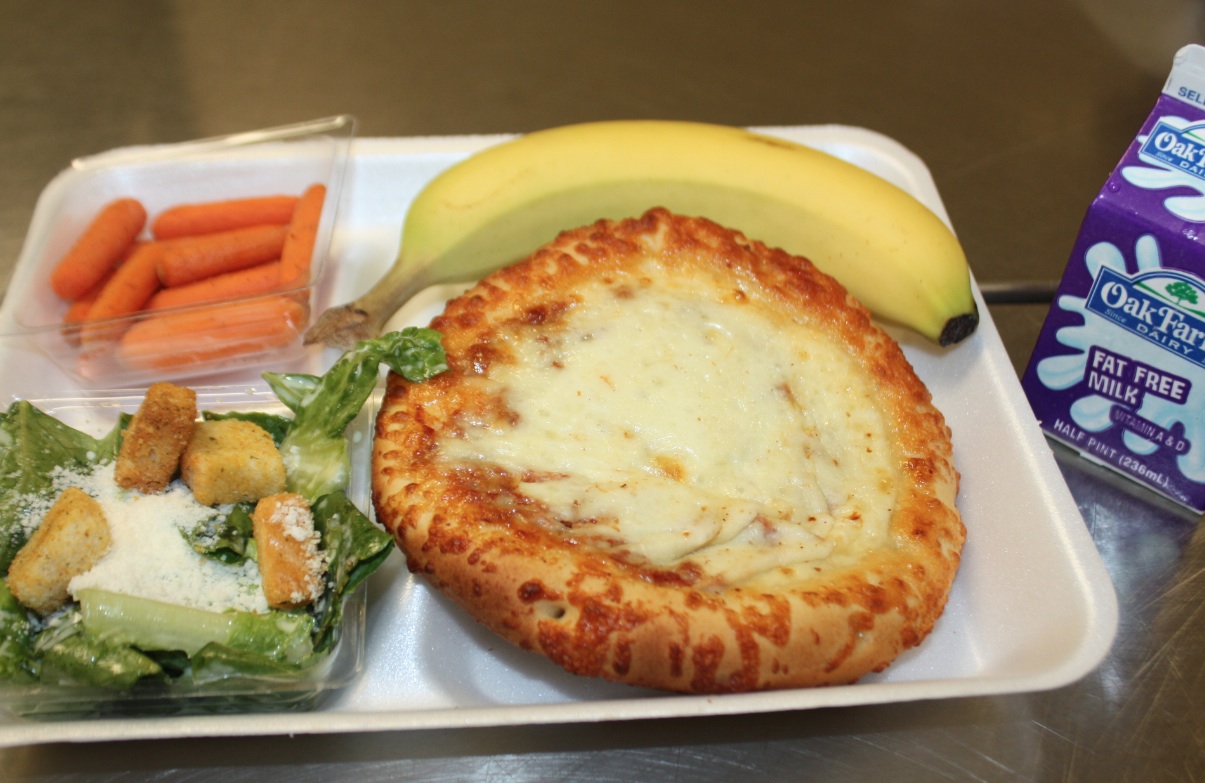
  • Pizza with a side of vegetables: For their 2011 Food Day celebration last October, Foster-Glocester High School in Rhode Island served roasted squash medley with Margherita pizza (topped with fresh, local tomatoes). HEB ISD outside of Dallas, Texas, serves baby carrots and a mini-Caesar salad with a personal pizza featuring whole-grain crust and low-fat cheese.

  • Produce bars with a slice of pizza on the side: From Maine to California, kindergarteners to high school seniors have greater access to fresh, often local, veggies and fruits than ever before. In the Roscommon (Michigan) Elementary school, the only problem they have with the salad bar is keeping it stocked during their busy lunch period.
  • Secret sauces with added veggies: Please don’t tell the students, but lunch ladies can be sneaky nutritionists and they are pumping up pizza sauces with all sorts of vegetables, including fresh local tomatoes and spinach, as well as herbs instead of salt for flavor.

I am in absolute agreement with the First Lady, the Agriculture Secretary, and White House Chef Sam Kass – partnerships will be essential for the successful implementation of the new Nutrition Standards for schools. I believe that we must work together – as school nutrition professionals, school food reformers, school food manufacturers, and school food regulators – so that students have access to the meals they need for strong bodies and sharp minds.

And, we must remember that nutrition is just one piece of the “Healthy Kids Puzzle.” Physical activity, sleep, and even stress reduction are essential for growing children. Fortunately, AFHK programs, like Game On! The Ultimate Wellness Challenge, ReCharge!, and Students Taking Charge, are wonderful resources for schools and communities to use in creating the healthiest possible nutrition and fitness environments for our future.

It’s Only Nutrition WHEN You Eat It: What is STILL missing from the School Nutrition Standards?

I applaud the recently issued USDA Nutrition Standards and am a huge fan of nudging students toward putting healthier options on their trays (aka behavioral economics). However, there is an incredibly important issue missing from most current conversations about food at school.

The REAL question is: How do we get all these wonderfully nutritious school breakfast and lunch meals into kids? My manta for 2012 is that is it only nutrition when a child eats or drinks it. If school food goes into a trashcan, it is garbage, not nutrition.

Let’s be honest: Most school cafeterias are not conducive to a pleasant dining experience for anyone (which is why few adults want to eat in them). Many barely give kids enough time to eat and drink what’s on their tray now (which will be more of a problem when more fruits and veggies are served under the new meal patterns). I have been in a few school lunchrooms with the feel of a prison – adults patrolling the aisles, prohibitions on talking to your friends, and stoplights when things get “out of hand.”

If, like First Lady Michelle Obama, we want to the new meal patterns to succeed in growing healthier children, we have to create more positive and pleasant mealtimes in schools. If we truly believe that school nutrition programs are critical for a healthier generation, we have to give more time and attention to HOW we feed children in school as well as to WHAT we feed them.

Three tried-and-true tips for more comfortable cafeterias from Montana Team Nutrition

1.     Schedule Recess Before Lunch

Research shows that the best sequence for children is playing, eating, then learning. When kids have Recess Before Lunch (RBL), it improves their nutrition, their behavior in the cafeteria, and their focus when they return to the classroom. From the nutrition side, they eat more entrées and vegetables – and drink more milk. Montana Team Nutrition offers a complete Recess Before Lunch: Guide to Success – a no-cost way to help close children’s nutrient gaps!

2.     Establish Reasonable Eat-tiquette Expectations

Like anything else in school, children can learn to behave well in the cafeteria. They just need to be taught appropriate eat-tiqutte – and then to have positive behavior consistently reinforced by everyone from the principal to lunchroom aides. In Welcome to Our Comfortable Cafeteria, real school staff from a real school in Gallatin Gateway, Montana, show how well this works with real kids. Bottom line: Adults need to have clear expectations, to teach them to everyone, and to reinforce them constantly.

 3.     Provide enough time and enough adult role models.

What was one of the most important things that the First Lady did when announcing the new USDA meal pattersn? She sat down at a table and enjoyed turkey tacos while talking with the students at Parklawn Elementary School. Children need enough time to eat – at least 15 to 20 minutes of seat time after getting their trays – and they will eat better when adults sit and enjoy lunch with them. The free Montana Team Nutrition Welcome to Our Comfortable Cafeteria webinar on February 21, 2012, will outline ways to create a lunchroom where administrators, teachers, aides, parents, and grandparents want to eat with kids.

We have to take a new approach to HOW meals are served in school cafeterias. The “herd-em-in/herd-em-out” mentality is not the path toward healthful eating habits. If our goal is competent eaters who make smart choices for lifetime health, we have to do better. Fortunately, for everyone in schools, Montana Team Nutrition resources provide some wonderful new road maps.

Next Steps in the Evolution of School Meals: Dedication, Innovation, and Collaboration

As you have probably heard, USDA released the long-anticipated new Nutrition Standards for school breakfast and lunch on January 25, 2012. The new regulations align the meals served in school cafeterias more closely with the Dietary Guidelines for Americans. These new meals patterns do that in several important ways:

  • Requiring more and greater variety of vegetables and fruits, as well as more whole grain-rich breads and cereals
  • Making low-fat and fat-free milk the standard for schools (flavored milk must be fat-free)
  • Establishing minimum and maximum calorie levels for three different ages groups (K-5, 6-8, 9-12)
  • Setting a 10+ year timeline for reducing sodium

While these are the first new school meal patterns in more than a decade, they are not news to school nutrition professionals. Improvements in school meals have been an ongoing process in districts large and small – long before celebrity chefs brought the issue to the headlines. The district where First Lady Michelle Obama and Secretary of Agriculture Tom Vilsack made the announcement last Wednesday is, in fact, an outstanding example of excellence in school nutrition. Under the direction of Penny McConnell, MS, RD, SNS, Fairfax County Public Schools (FCPS) Food and Nutrition Services in northern Virginia, has received numerous awards, including District of Year from the School Nutrition Association in 2010. Serving an astounding 140,000 customers daily, this is probably not the school lunch you remember. FCPS links cafeterias, classrooms, school gardens, and other local food sources to create a 9-5-2-1-0 Zip Code for Health Kids in the “Energy Zone.”

Image

DEDICATION

A recent USDA blog about the new-trition standards acknowledges the leadership and commitment of school nutrition professionals. I have seen this dedication firsthand from Virginia to my state of Montana. The staff at Gallatin Gateway School (185 students, K-8) just north of Yellowstone Park, have truly dedicated themselves to nutrition excellence. It’s one thing to have nutrition standards and put nutrient-rich food onto trays. However, food is only nutrition WHEN kids eat it. If school meals go into the trash can, they are garbage. But, trust me, thanks to the hard work of everyone from Superintendent Kim DeBruckyer to Chef Jason Moore, very little food is wasted at Gallatin Gateway. The meals are appealing and tasty – and the cafeteria atmosphere encourages children to try to new foods and enjoy eating with their friends. One of many reasons why Gallatin Gateway just won a Gold Award in the HealthierUS School Challenge and why the cafeteria is featured in a Montana Team Nutrition video on pleasant, positive mealtimes.

INNOVATION

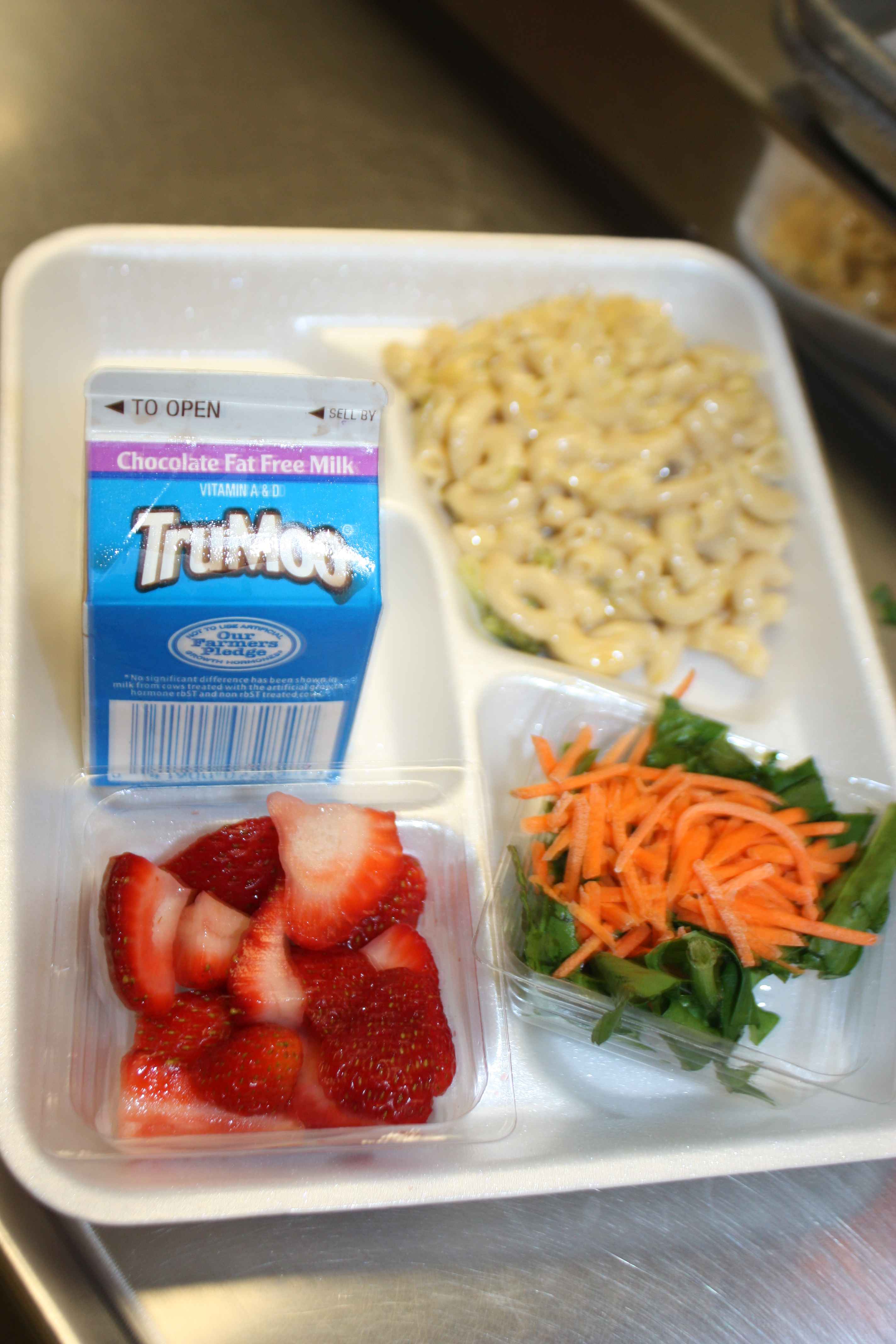
Speaking of videos, the Hurst-Euless-Bedford Independent School District (HEB-ISD) outside Dallas, Texas, uses videos to teach students how to get more fruits and veggies with their 7 Rules of the Salad Bar video. The dedicated school nutrition heroes at HEB-ISD Child Nutrition Services, led by director Mary Beth Golangco Ratzloff, MS, RD/LD, are excellent examples of innovation on many levels beyond their use of online video technology. This elementary school lunch showcases the innovation in product and preparation that will be necessary for all districts to implement the new meal patterns. The milk – fat-free and flavored – represents a dairy industry renovation that meets the nutrition standards with a taste profile that kids love to drink. The “Mac-and-Trees” (made with hidden broccoli!) uses low-fat cheese, along with an innovative high-protein, whole-grain pasta. What delicious ways to get nutrition into kids (but please don’t advertise that it is good for them)!!

COLLABORATION

I am in complete agreement with the First Lady, the Agriculture Secretary, and White House Chef Sam Kass – partnerships will be essential for the successful implementation of the new Nutrition Standards for schools. I believe that we must work together – as school nutrition professionals, school food reformers, school food manufacturers, and school food regulators – so that student will eat the meals they need for strong bodies and sharp minds. A wonderful example of the resources available to help all groups involved in schools is USDA new materials: Healthier Middle Schools: Everyone Can Help. The handouts, videos, and posters reach all school groups (principals, teachers, students, parents, and school food service) with the same positive messages.

What Districts Will Need to Implement New Meal Patterns: Lessons from the Wild West

I don’t have crystal ball, so I can’t tell you any details of the new and improved USDA Nutrition Standards for School Meals. We’ll all learn tomorrow morning when the final regulations are released with the star power of the First Lady and Rachel Ray at Parklawn Elementary School in Virginia.

IMHO the true heroes of the morning event will be Penny McConnell, MS, RD, and the staff of Fairfax Country Public School Nutrition Services who will prepare the lunch for hungry kids. Just like they do every day!

I can tell you what it will take to implement the new meal patterns – whatever they may be – in any district, from LA Unified with hundreds of thousands of students to Gallatin Gateway, Montana, with less than 200. Districts will need:

  • A team of school wellness champions to support changes.
  • An in-depth understanding of the business of school foodservice.
  • A commitment to open and continuous innovation.

I saw all three of these strategies hard at work in Gillette, Wyoming, last week. Campbell County is part of the mining/oil/gas “boom” in eastern Wyoming, where the school district serves 8,400 students (free-reduced about 35%) in an area of about 5,000 square miles.

Celebrating Success in Campbell County School District (CCSD)

In terms of healthy schools for healthy students, CCSD already implements best practices throughout the school day – from breakfast in the classroom to 30 minutes of active recess before lunch. While they are well positioned to implement new meal patterns, it will still be a challenge to work within budget, procure needed food products, and – most importantly – get kids to actually consume what is served!

Campbell County CHAMPIONS for Healthy Kids

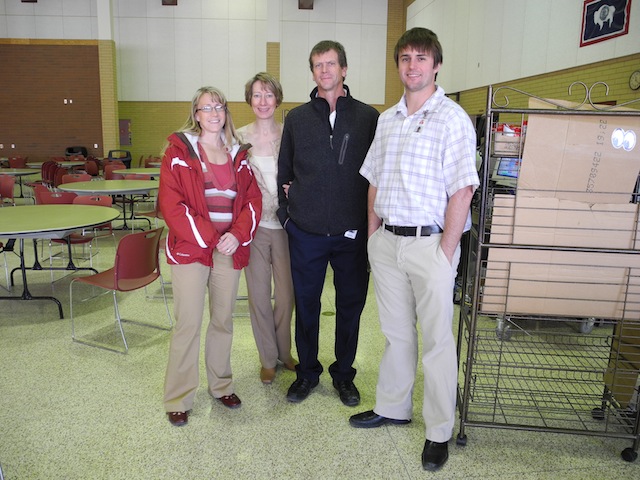
From left to right, four of the folks who support the district’s long term commitment to wellness – Rachel Wilde (TriFit Coordinator), Mike Miller (champion for wellness in Wyoming for several decades), Judy Barbe (WY Action for Healthy Kids Western Dairy Association), and Bryan Young, Director of Nutrition Services.

The BUSINESS of School Foodservice

While Bryan may look young enough to enjoy a student-priced lunch, he brings the business savvy and experience that school nutrition programs will need to implement the new regulations. He came to the job less than a year ago from managing a very popular local restaurant. He’ll need to use every trick in the book to serve even more fruits and veggies with the new pattern, especially considering that he, like many directors, have only about a dollar to spend on food after paying for labor costs. Want more fresh produce, smoothies, and yogurt parfaits? That means higher labor costs too!

On-going INNOVATION and Creativity

Honestly, school nutrition directors have to be nutrition magicians to put these delicious and healthful items on a tray using the budgets they have. And, getting on the food is just the first step – then you have to get the food into the students!!

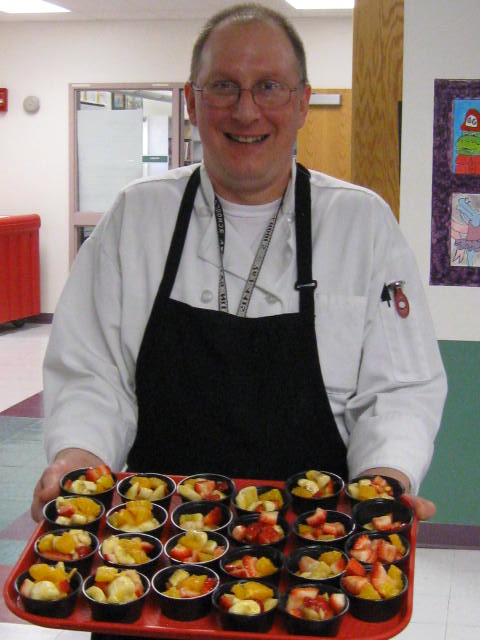
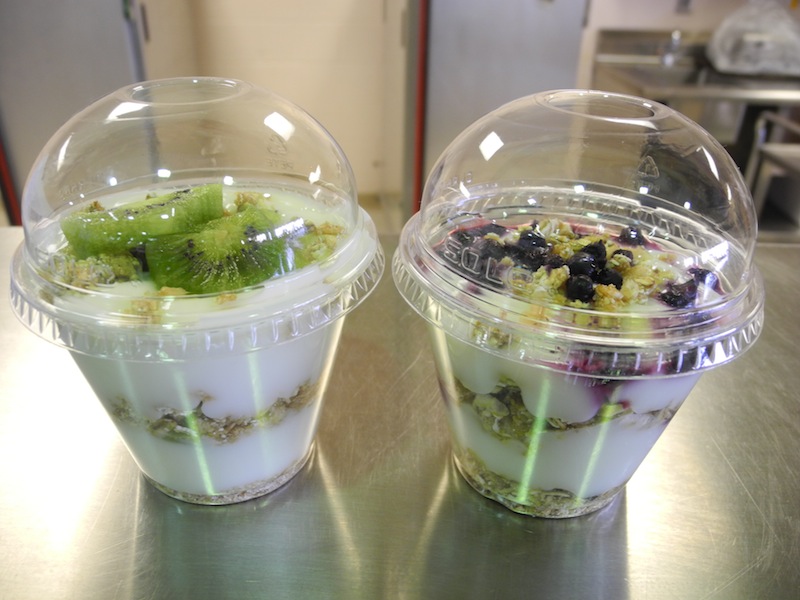
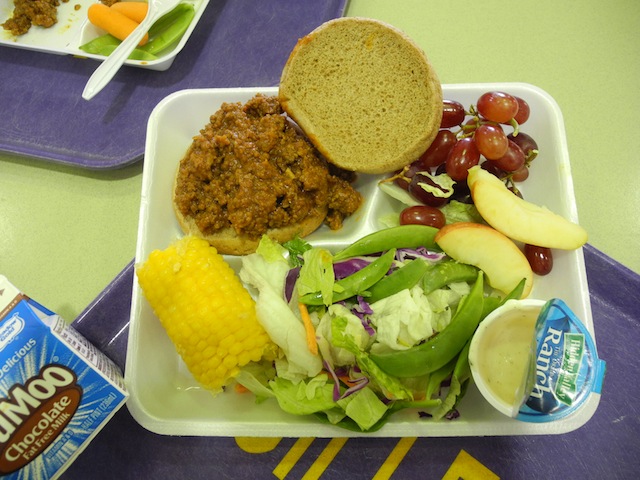
Here is the thing: It’s only nutrition when kids eat it. If food goes into a trashcan, it’s garbage not nutrition. Getting kids to enjoy the healthful meals served in school cafeterias is another magic trick – one that takes marketing creativity, product innovation (like whole wheat buns that kids like!), and presentation, presentation, presentation (love the kiwi on the yogurt parfaits).

KUDOS to Campbell County, Wyoming … and THANKS for a delicious lunch!

Being a BFF of Child Nutrition

Receiving the Friend of Child Nutrition Silver FAME Award from SNA is one of the greatest honors of my professional career. As is the case with any honor, I believe that this one comes with serious responsibility.

Ever since I found out about this FAME award last fall, I‘ve been thinking about how to be the best possible friend of Child Nutrition Programs moving into 2012 . It’s sure to be an intense year – with the new USDA meal patterns, more rule proposals in the pipeline, and continued scrutiny from all sides of the childhood health debate.

To be perfectly honest, I toyed with the idea of giving up my work in child nutrition to reinvent myself as a yoga teacher or dog whisperer. By the end of 2011, I was really worn down by the pizza-as-vegetable food fight, the ongoing debate over flavored milk, and the whole war on childhood obesity.

So, I have taken a few weeks to thoughtfully consider the issues, as well as my own beliefs and actions. I asked myself tough questions about my work with the food industry, my laser focus on the positives in school meals, and – frankly – my own deaf ear to some foods reformers. Although I didn’t always like the answers that I found, I did find my own, independent way through this very divisive – and very important – issue.

First, while I firmly believe that reasonable people can disagree, IMHO the current battle mentality and war analogies are not in the best interest of our children’s future.  I believe that our children deserve our best efforts to work together – as school nutrition professionals, school food reformers, school food manufacturers, and school food regulators. Only by reaching across the divides among us can we find solutions for School Meals That Rock – in all districts across the US – given the realistic limitations on resources of money, time, and space.

So, here is my simple manifesto for 2012 – to be the BFF for Child Nutrition that I can. I promise to:

Consider all the evidence.

  • I promise to look carefully at the science as well as the passion for change. I will share my own views and potential conflicts of interest as honestly as possible.
  • While vigorously supporting outstanding programs, I will also document ways to implement changes in those districts where school meals definitely don’t rock.

Search for common ground.

  • Both the letter and spirit of the 2010 Healthy, Hunger-Free Kids Act and new USDA regulations for meal patterns and competitive foods are critical for kids.
  • Given the realities of federal, state, and local budgets, it is going to take creative collaboration to implement changes in school food programs.

Celebrate every success.

  • School Meals That Rock started as a way to showcase the amazing everyday things that school nutrition heroes are already doing – that will continue.
  • With additional School Meals That Rock formats like this blog and Twitter, I will be able to share more in-depth information with more diverse audiences.

So, thanks for your likes and follows, but most of all, thanks for everything you do for kids. The most important reason for expanding School Meals That Rock is to offer even more ways for you to share the wonderful things that are happening in your school.