What’s really sad about the recent article on the state of U.S. school lunch from the Fed Up campaign is that is so-five-years-ago. Using out-of-date statistics, misleading photos, and images that were not even from high schools, this campaign fails to expose the real truth about school lunch today – that it is awesome and kids are eating it up!
Personally, I’m fed-up with reports on school lunch that ignore the real revolution in cafeterias. Where have these school lunch critics been? Clearly not dining in the districts that are featuring produce from schools gardens – or doing farm-to-school, boat-to-school (in AK, OR and NH), and Montana’s recent beef-to-school campaign. What’s really happening in school lunch is that the nearly 32 million students who eat it daily are getting an incredible variety of often local, increasingly organic produce, lean proteins, whole grains and low-fat dairy products. According to the savvy school nutrition directors who observe their teen customers closely, they are eating it all up!!
Here’s a taste of what’s really happening with teens and school lunch in five Western districts of all sizes and demographics. It’s our first-in-a-series tour from coast-to-coast showcasing School Meals That Rock – today, with a special focus on teens and veggies.
In suburban Lake Stevens, Washington, Schools, just west of the Seattle, Calavero Mid-High piloted a “Build Your Own Salad Lunch” last spring and they now serve 65+ a day. They are expanding this concept to all middle/high schools in October: Students order a custom salad built from lean diced meats, shredded cheeses or seeds for protein, croutons or whole wheat bread-sticks for grain, and a colorful selection of fresh veggies (often local) and dried fruits.

Lake Stevens veggie toppings for a “Build Your Own Salad Lunch”

Lake Stevens customized salad lunch in a bowl
Down I-5, in Eugene, Oregon, Bethel School District, has developed a very impressive Harvest-of-the-Month program. Willamette Valley apples, pears, melons, carrots, bok choy, greens and much more show up on Bethel menus, in sandwiches and throughout variety bars (at least nine different vegetable choices daily at all grade levels).
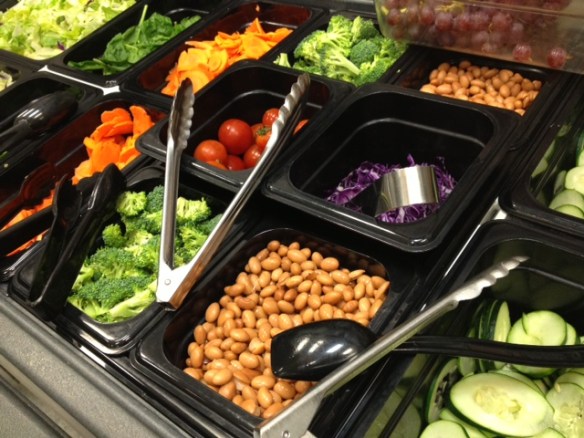
Willamette High School variety bar with regular farm to school options

Bethel Nutrition Services Summer Meal Program Sandwich
In the Solvang, California, Viking Café, Chef Bethany Markee leads a real school food revolution, where they offer a made-from-scratch hot lunch along with grab-n-go options (entrée salads, wrap sandwiches or vegetarian cold items). Thanks to a partnership with Santa Ynez Valley Fruit and Vegetable Rescue, the Viking Café is able to regularly serve fresh, organic produce and thanks to a new school herb garden, the seasonings will soon be very local as well.

Solvang Grab-n-Go Salads

Solvang produce bar often features “rescued” veggies
Across the mountains in the Provo, Utah, Schools, Jenilee McComb, Director and Colleen Dietz, Assistant, have made a commitment to freshly prepared, locally sourced meals in this mid-size district just south of Salt Lake City. They proudly lists the farms and farmers who grow food for their kitchen, so that Provo students know where their food comes from – and taking a few extra seconds to make something look more appealing to the eye has made all the difference.

Provo Whole Wheat Spaghetti with Homemade Marinara

Provo Homemade Roast Pork and Mashed Potatoes
Up in Kalispell, Montana, Public Schools, another medium-sized district close to the Canadian border, Jennifer Montague agrees that presentation and freshness are the keys to getting teens to eat more fruits and vegetables. She believes that young people are discerning customers and they will choose fruits and vegetables if they look appealing and taste good on a regular basis.

Kalispell Hummus Grab-n-Go Salad
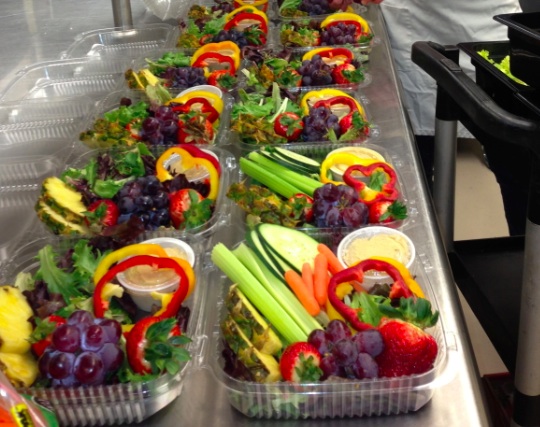
Kalispell Rainbow Grab-n-Go Salads
I am all for getting teens – and even younger students – activated to improve school meals. That’s exactly what the Fuel Up to Play 60 and Alliance for a Healthy Generation programs have been doing for years – with great success. In fact, we have reached the tipping point in school nutrition – and it’s time to use photos like these to inspire lagging districts to make changes.
If you really want to do something, there is no need to use old data and misleading photos. Let’s spend our time showcasing what’s possible and support all school nutrition professionals in serving meals they way districts like Lake Stevens, Bethel, Solvang, Provo and Kalispell are already doing. Jennifer Montague said it best: “If you build it well, they will eat it.”


 School Meals That Rock