31 days of #RealSchoolFood: Celebrating the Season

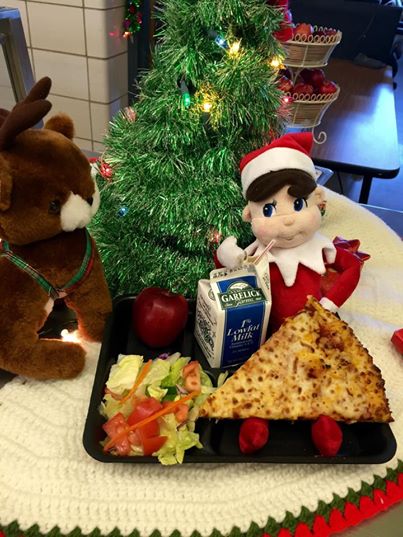
Yesterday’s focus on pizza made us think of Elf on the Shelf at school. What’s the connection you ask? It’s the dedicated and creative folks at Billerica (MA) Public Schools Nutrition Services, headed up by April M. Laskey, SNS, Director of School Nutrition and Dina Wiroll, Nutrition Services Site Coordinator. Yesterday Jimmy the Kitchen Elf, from the Kennedy Elementary School enjoyed pizza, milk, yummy salad and an apple with his reindeer friend. What a fun way to connect school meals to seasonal fun that students may also be doing at home.

Jimmy the Kitchen Elm enjoys a complete school lunch at Kennedy Elementary School, Billerica, Massachusetts

Jimmy the Kitchen Elm enjoys a complete school lunch at Kennedy Elementary School, Billerica, Massachusetts

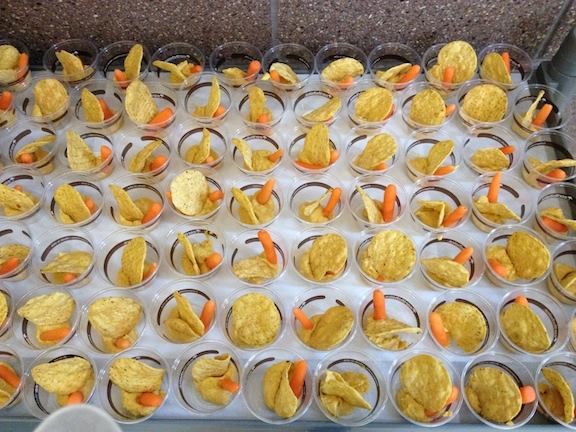
Elves were showing up all over Billerica Nutrition Services this week. On Thursday, as part of Massachusetts Harvest of the Month and BPS Taste it Thursday even the Elf on the Shelf got his yummy roasted carrot ‘fries.’

Elves love Harvest of the Mouth Roasted Carrot Fries in Billerica, Massachusetts

Elves love Harvest of the Mouth Roasted Carrot Fries in Billerica, Massachusetts

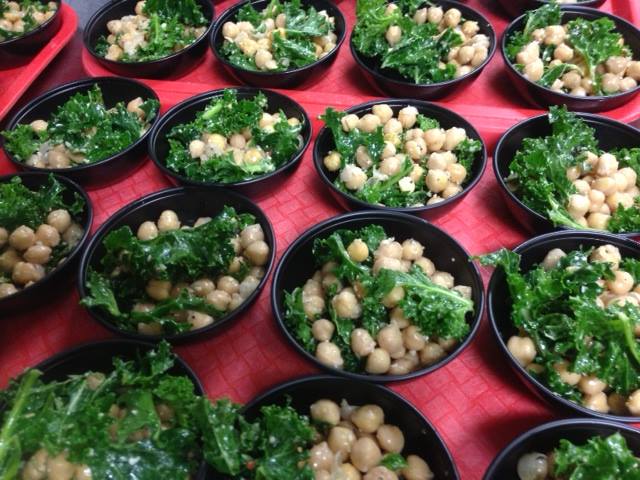
Some of Billerica’s everyday ingredients look positively festive. This lovely Kale Garbanzo Bean Salad is simply dressed with parmesan cheese, lemon juice, olive oil and seasonings. This would look fabulous on a holiday cafeteria line.

Kale Chickpea Salad

Kale Chickpea Salad

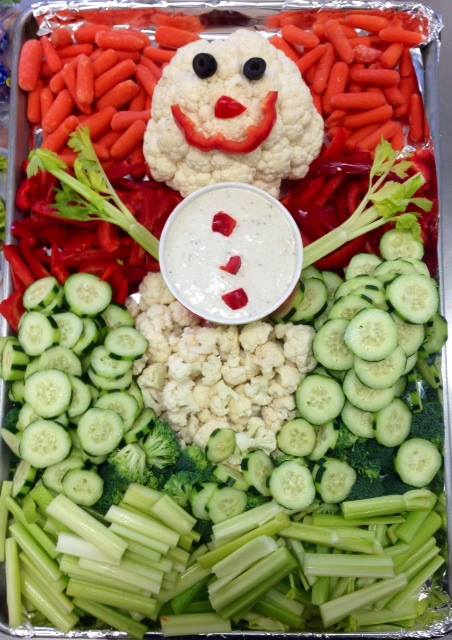
Last December, I had the great pleasure of visiting April and Dina – and eating lunch at Frederick J. Dutile Elementary School. I know it was a special occasion – and, I also know that they regularly make colorful appealing vegetable trays like this for their customers (who really dug into this one!).

Vegetable Snowman, Dutile Elementary, Billerica. Massachusetts

Vegetable Snowman, Dutile Elementary, Billerica. Massachusetts

Even the logo for Billerica Schools Nutrition Services is bright and festive! Be sure and follow this dedicate team of school nutrition professionals on Facebook. Happy holidays!

Billerica logo2

31 days of #RealSchoolFood: Pizza Please!

Kids love pizza – and today’s school pizza is a perfect combination: whole grain crusts (even hand tossed on occasion) + low-fat cheeses + nutrient-rich tomato sauces (sometimes house made) + a variety of toppings found in any self-respecting pizza shop. Some school pizza is so goof-for-you, it’s almost surprising that kids will eat it. But, that’s thing about pizza’s popularity – you can serve up lots of nutrition on a slice!

Here’s a small taste of school pizzas from across the US – for even more deliciousness, visit School Meals That Rock on Pinterest for our School Pizza That Rocks board. One of our long-time favorite pizzas is from Portland (OR) Public Schools Nutrition Services, where farm to school and Harvest of Month are both strong traditions. Roasted Oregon Asparagus Pizza is just a natural in the spring!

Roasted Asparagus Pizza, Portland Public Schools.

Roasted Asparagus Pizza, Portland Public Schools, Portland, Oregon

A flatbread crust is another popular way to do pizzas and many school cooks swear by the Rich’s Whole Grain Flatbreads. Director Jennifer Resier at the QV Cafe in Quaker Valley (PA) Schools adapted an online recipe for these gorgeous (and very popular) Rainbow Flatbread Veggie Pizzas. It’s hard to imagine a student (or adult) who would be attracted to these gems!

Rainbow Flatbread Veggie Pizza, QV Cafe, Quaker Valley Schools, Pennsylvania

Rainbow Flatbread Veggie Pizza, QV Cafe, Quaker Valley Schools, Pennsylvania

We couldn’t talk school pizza with mentioning Mast Way Elementary in Lee, New Hampshire’s Oyster River School District where Jess loves to make pizzas to match holidays, as well as available local veggies. Today was Pizza Friday with a choice of Chicken Fajita Pizza topped with grilled chicken, green/red peppers and spices or the Veggie Pizza (pictured below before baking). What lucky children to have Jess making pizza in the kitchen – and serving it with a fresh garden bar, fruit and local milk!

Veggie Pizza, Mast Way Elementary, Oyster River School District, Lee, New Hampshire

Veggie Pizza, Mast Way Elementary, Oyster River School District, Lee, New Hampshire

31 days of #RealSchoolFood: It’s All About Local

A recent viral post on Eat Local Grown suggested French school lunch put the American National School Lunch Program (NSLP) to shame. I don’t know enough about French school meals to comment, but I can tell you that the American meals pictured were from 2010-2012 and the school nutrition world has change dramatically. The French meals shown could have come from any one of hundreds of schools across America. Why I am so sure that NSLP meals are nutritious, delicious and increasingly locally grown? Because that’s exactly what I document every day on School Meals That Rock – and I have thousands of photos on Facebook, Pinterest and Twitter to prove it.

Thanks to major school nutrition movements including the National Farm to School Network, the numerous state/community farm to school coalitions, U.S. Department of Agriculture Farm to School resources and hundreds FoodCorps Service Members LOCAL SCHOOL LUNCH IS IN! And, we are talking real local, like the 1100 pounds of local sweet potatoes delivered by farmer Pete Jackson to Burke County Schools Farm to School Program. In his very rural Georgia county with one of the highest child poverty rates in the US, Director Donna Martin is growing the local economy by serving local, often organic foods including local grits ground the old-fashioned way.

Burke County

Up in Big Sky country, Montana Food Corps service member have helped to change school meals – and entire community food systems. The Ennis Farm to School initiative has created are now schools gardens, a greenhouse for winter greens and Montana Beef Stroganoff for Montana students. Kids are making and eating Beet and Carrot Patties, as well as the kale and kohlrabi grown on schools grounds. In Kalispell Public Schools director Jennifer Montague and her staff turned local squash into a Lentil-Squash Hummus snack. 

Lentil-Sqaush Hummus, Kalispell, Montana, Public Schools

Lentil-Sqaush Hummus, Kalispell, Montana, Public Schools

Out in Eugene, Oregon, local is an everything thing on student trays. On November 7, 2014, Director Jennie Kolpak posted this photo for Bethel Nutrition Services: “Great lunch today at Malabon Elementary featuring an abundance of Oregon foods, including Vegetarian Chil with Truitt Family beans and Bob’s Red Mill bulgar, homemade Honey Cornbread, our Harvest of the Month (Oregon grown Comice Pears), local roasted Pumpkin Seeds, local milk and a variety of fresh veggies.” I would put this lovely lunch head-to-head with any fancy French school lunch photo.

Local Oregon Lunch at Marabon Elementary, Bethel School District, Eugene, Oregon

Local Oregon Lunch at Malabon Elementary, Bethel School District, Eugene, Oregon

And this is just a tiny sample – tomorrow we’ll feature some of the programs that received funding in the latest round of USDA Farm to School grants. On Tuesday, Agriculture Secretary Tom Vilsack announced more than $5 million in grants for 82 projects spanning 42 states and the U.S. Virgin Islands. It’s all about local #RealSchoolFood across America. It’s time to stop bashing school meals and help support Farm to School in YOUR district!


31 Days of #RealSchoolFood: Lunch Is All About Choices

The recent, but short-lived Twitter hashtag #ThanksMichelleObama, consisted of ‘gross’ tray photos posted by teens. It’s critical to remember that a bad school lunch photo can even be taken in an outstanding program. How is that possible you ask? Because of the “Offer versus Serve” rule in school nutrition programs. This means that specific components must be offered to students, but they do not have to take them all. In school lunch for example, a complete reimbursable meal must include five components but students only have to take three. Beautiful, often unlimited, produce bars (like the one pictured below) may also offered, but students can walk right by them if they want.

New Orleans High School Salad Bar, 2014

New Orleans High School Salad Bar, 2014

Since “Offer versus Serve” is required in high schools (optional in K-8), it is possible for a teen’s tray to look pretty skimpy with the bare minimum servings of bread, meat (or alternate) and a ½ cup fruit or veggie (required for any lunch to be reimbursable). Students can also discard some items before taking a photo or even alter the food to make things look ‘grosser’ than they are. Remember these are teens who want to get their photo to go viral. This poster illustrates the requirements and recommendations in all National School Lunch Program sites.

Offer vs. Serve is required in senior high school lunches

Offer versus Serve is required in senior high school lunches

In fact, most school food service programs – elementary through high school – offer multiple lunch entrées as well as different fruit and vegetable side dishes. Students often have a vegetarian choice as well as beef/pork and chicken/turkey – in addition to grad-n-go prepared salads and sandwiches. Savvy school nutrition operators know that their customers, especially teenagers, like choices – and they go to great lengths to provide them. The real trend in high schools is customization – just like teens get to have a quick-serve places like Subway and Pita Pit. Lake Stevens Nutrition Services (WA) is a leader in this style of service, using a wide variety of flavors, ingredients and colors in their ‘Fresh for You’ lines illustrated below. Lucky students who get this every day!! KUDOS to Director Mollie Langum and her staff for offering so many choices!

lake Stevens, Washington, Fresh for You Bars

lake Stevens, Washington, Fresh for You Bars

31 Days of #RealSchoolFood: Breakfast Changes Everything

As I walked off an airplane yesterday in Denver, the large Food NetworkNo Kid Hungry sign was straight in front of me. The only thing that would have made it a more appropriate greeting would have been my other mantra: Breakfast. Every Student. Every Day. 

Denver International Airport, December 1, 2014

Denver International Airport, December 1, 2014

Breakfast does change everything for children. Breakfast changes their ability to focus, concentrate and learn – to listen to their teachers rather than their stomachs. Breakfast changes behavior too. Hungry children are often anxious, distracted and attention seeking. Breakfast changes school attendance patterns as well. A November 24, 2014, article in JAMA Pediatrics confirmed that a Breakfast in the Classroom program can dramatically increase breakfast participation and improve school attendance as well.

The accompanying editorial “Continued Promise of School Breakfast Programs for Improving Academic Outcomes: Breakfast Is Still the Most Important Meal of the Day” summarizes the research to date. The authors conclude with the powerful statement that … “innovative breakfast programs, with their wide reach and high implementation rates, have the potential to address the achievement gap in the United States.” A 2013 report, Ending childhood hunger: A social impact analysis prepared by Deloitte for No Kid Hungry reached basically the same conclusion: Breakfast Changes Lives

Breakfast Changes Lives, 2013 No Kid Hungry Report

Breakfast Changes Lives, 2013 No Kid Hungry Report

The good news for hungry students and their families is that #RealSchoolFood is not just for lunch it’s for breakfast too! School nutrition directors are meeting the challenge of the new Breakfast Meal Pattern with all whole grain-rich cereals, breads, bagels and more – and additional servings of fruit available to every child. Read all about how districts are managing – with limited budgets – to provide brain fuel for students in my article on School Breakfast 2014: Can Cafeterias Rise and Shine? in the November 2014 issue of the School Nutrition Magazine (page 72).

Rise and Shine with School Breakfast article begins on page 72

Rise and Shine with School Breakfast article begins on page 72

While a simple grab-and-go breakfast of whole grain cereal, milk and fruit offers nutrient-rich fuel for learning, many schools go way beyond the basics. Such programs are regularly featured on the School Nutrition Foundation’s Beyond Breakfast blog and the American Association of School Administrator’s Courageous Conversations with superintendents. You can also find more than a hundred photos, tips and recipes ideas on the School Breakfasts That Rock Pinterest board. Breakfast changes everything by putting a smile on a child’s face!

Breakfast in the Classroom, Goddard Elementary Worcester, Massachusetts

Breakfast in the Classroom, Goddard Elementary Worcester, Massachusetts


S.M.I.L.E. for Kids: It’s 31 Days of #RealSchoolFood

The recent, but short-lived Twitter hashtag #ThanksMichelleObama, was one more in a long series of efforts to vilify U.S. school nutrition programs. I’m not exactly sure why school meals continue to be a favorite target, but I do know that it’s now time to recognize the improvements and support the #RealSchoolFood enjoyed in thousands of school cafeterias every day.

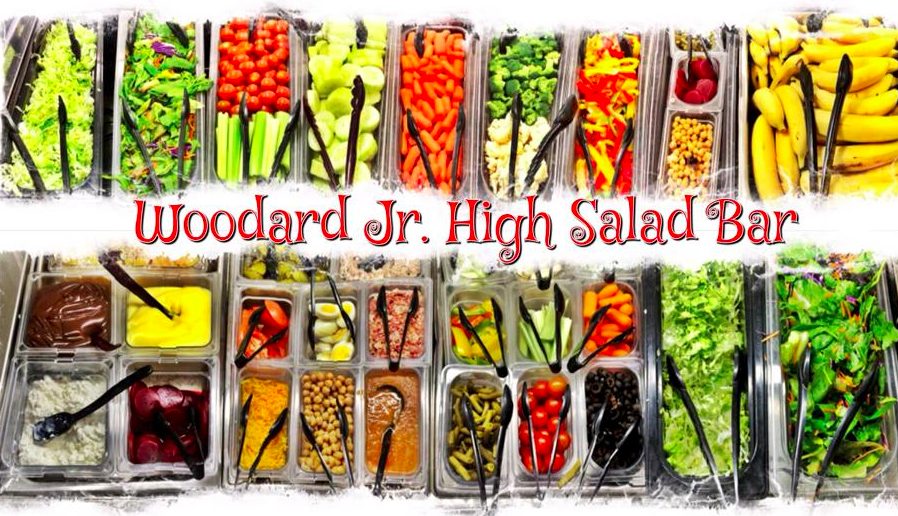
The 2010 Healthy, Hungry-Free Kids Act (HHFKA) – with new nutrition standards and revised meal patterns – means that schools are now leading the charge to improve the eating habits of American youth. And, the HHFKA is just one of many ‘ingredients’ making school meals something that lunch ladies and ‘food dudes’ are proud to serve from coast to coast. As Health Assistant Marlene Gleim says about Manager Loli Preciado and staff at Woodard Jr. High (Yuma (AZ) Child Nutrition Department), “These ladies cook as if you were going to eat in their actual home. Food made right from the heart!”

Salad Bar, Woodard Jr. High, Yuma, Arizona

Salad Bar, Woodard Jr. High, Yuma, Arizona

Does every school nutrition program deserve a five-star review? No. Is every school meal perfectly balanced? No. While there is room for improvement in some districts, bashing, blaming and pointing fingers doesn’t help. It merely perpetuates a stereotype that no longer represents the norm in school lunch or any other meal.

For the next 31 days, every day of December, School Meals That Rock will tell the #RealSchoolFood story with photos – from breakfast to supper, soup to nuts, farm to school, seed to salad bar and much more. Have concerns about food in your district? We’ll offer more specific ideas about what you can do to enhance the food served in any cafeteria.

Why? Because 20 million American children eat a free or reduced price school lunch every day. I believe that they deserve the best nutrition possible to fuel their education and their future. 

It's Only Nutrition When They Eat or Drink It

It’s Only Nutrition When They Eat or Drink It

#GiveThanks 4 #RealSchoolFood: Let’s stop bashing #SchoolLunch

Dear #ThanksMichelleObama, Katie Couric, DoSomething.org, Mrs. Q, Jamie Oliver and all #SchoolLunch haters across the USA:

It’s time for the bashing of school meals to stop … once and for all! Why? For starters … since the 2010 Healthy, Hunger-Free Kids Act, the School Breakfast Program (SBP) and National School Lunch Program (NSLP) have had a complete upgrade. Fresh, house-made meals – increasingly local and sometimes organic – are becoming the norm from coast to coast. This gorgeous #RealSchoolFood lunch from Sanders Elementary, Jefferson County Public Schools, includes #farmtoschool BBQ Chicken and Butternut Squash.

2014 Farm to School Lunch in Jefferson County Public Schools (KY)

2014 Farm to School Lunch in Jefferson County Public Schools (KY)

I am deeply saddened that not every school lunch looks or tastes this good and I absolutely want every child in America to have access to meals like this. So, #ThanksMichelleObama, if your school lunch leaves something to be desired, get off Twitter and go talk to your School Wellness Committee/Council about how improvements can happen. If your meals are really gross and inedible, contact your state office of child nutrition (list is online here) and report them. If you want the report it to me anonymous, tweet it to SchoolMealsThatRock@gmail.com and I will report them for you.

The National Farm to School Network is another really good reason to stop bashing school meals. With grants from USDA’s Farm to School Program, incredible changes in food systems are happening in communities small and large. Using 2011-12 data, the USDA Farm to School Census reported $385,771,134 in school meals dollars were directed to supporting local farmers in local communities. And we are talking the complete meal … beef, chicken, eggs, cheese, grains, fruits and veggies, plus milk that usually comes from local cows. Here’s what was on the menu when Alachua County Schools, Florida, kicked off their brand new Food Hub, established with a Farm to School grant and putting student to work growing food for school cafeterias. This looks like a menu from the latest foodie find in Chicago … but it is school lunch in North Florida!

2014 Menu for Food Hub Kickoff event, Alachua County Schools, Florida

2014 Menu for Food Hub Kickoff event, Alachua County Schools, Florida

The most difficult part of writing a blog post about school meals today is that there are so many outstanding examples … it’s difficult to choose just one or two or three. I can share hundreds gorgeous photos of #RealSchoolFood from every US state. You don’t have to take my word for it … you can see photographic evidence on School Meals That Rock Facebook page and scroll through thousands of examples on Pinterest. Seriously, go spend 10 minutes on School Meals That Rock Pinterest boards and you’ll see the deliciousness for yourself.

School Meals ROCK on Pinterest

School Meals ROCK on Pinterest


School Lunch 2014 – Fresh, Local, Tasty and Totally on Trend

School nutrition – everything from meals and snacks to gardens and education – continues to be a hot topic. Everyone – from the First Lady and Katie Couric to Jamie Oliver and 5-star generals – is talking about the importance of school meals for children’s health, academic performance and well-being. All of this media attention, new USDA regulations, and dramatic changes in school nutrition are truly tasty news for the millions of families who want healthful foods for their children.

House-made pizza with local tomatoes and basil from the Oyster River (NH) school garden

House-made pizza with local tomatoes and basil from the Oyster River (NH) school garden

As we head into National School Lunch Week 2014, it’s clear that programs from coast to coast have embraced the slogan “Get into the Game of School Lunch.” The National School Lunch Program (NSLP), which serves 30+ million students every day, is taking school lunch to delicious new levels. Thanks to the 2010 Healthy Hunger-Free Kids Act, thousands of dedicated school nutrition professionals and hundreds of health, nutrition and industry partners, students now have access to an amazing variety of:

  • Fresh fruits and vegetables, often local, sometimes from as close as a school garden. In the Oyster River School District (NH), they make pizza made with local veggies and school-grown herbs.
  • Whole grains, including freshly baked whole wheat rolls, whole grain rich pasta, and gluten-free options. In Lake Stevens, WA, students can customize brown rice and pasta bowls with their favorite veggies, meats and sauces.
  • Lean proteins like local beef, black bean burritos, humus and chef salads with eggs, cheese and chicken. Fort Bragg (CA) Schools join Sitka (AK) and Oregon districts in serving locally caught fresh food in boat to school programs.
  • Greek yogurt parfaits and berry smoothies in addition to low-fat/fat-free milk with every meal. Yogurt bars with fresh fruit are being served in Gooding, ID, and Windham-Raymond, ME.
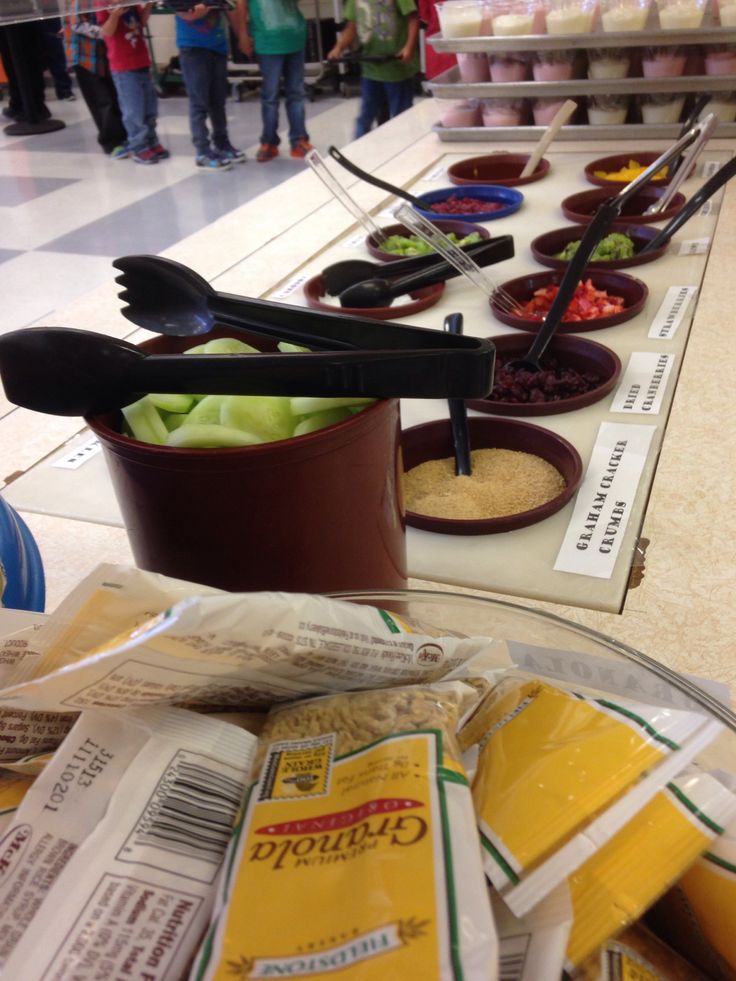
Gooding (ID) serves a yogurt bar with whole grain granola and fruit toppings

Gooding (ID) serves a yogurt bar with whole grain granola and fruit toppings

That’s a tiny taste of how schools help students to be well-nourished, healthy, and ready to succeed. What’s next on the horizon? With USDA’s Smart Snacks in School rule being implemented nationwide, other foods on campus will be healthier too! Parents with busy schedules can trust the options offered for breakfast, lunch and snacks at school. Kid-friendly things are happening in school kitchens and cafeterias all across the country – and your children can “Get in the Game” during NSLW and all year-long!

If you have questions about your school’s meals or wonder when you school will offer the options listed above, discuss your concerns directly with the school’s nutrition director first. Listen carefully to what they are already doing and find out how you can work together for the future health of all students. The real school nutrition revolution has been going on for years. “Lunch ladies” (and gentlemen) have been working hard to serve up school meals with delicious nutrition to fuel strong bodies and smart brains.

Lake Stevens (WA), Customized 'Power Bowls' with fresh, local produce

Lake Stevens (WA), Customized ‘Power Bowls’ with fresh, local produce


Does the current school food fight benefit hungry kids and hard-working nutrition professionals?

To all my friends and colleagues in the school nutrition world: AASA, AFHK, AHG, AND, CSPI, CIA, SNA, USDA, agriculture, industry and food advocates of all flavors … 

Those who know me professionally know that I have devoted my life to excellence in child nutrition programs. You know how strongly I believe that every child in American deserves to be well nourished and ready to succeed.

Those who know me personally will understand that my family situation (caring for my father in hospice at his home in California) prevents me from jumping into the current whirlwind of school lunch politics. I do not have the time or energy to sort through the conflicting claims and feeding frenzy of media messages to choose a particular side in this food fight. From what I have read, there are valid points on all sides. School meals are a complicated, nuanced issue, one that does not benefit from polarizing tweets and political rhetoric.

I am taking the “side” that I know best – one that often gets lost as the food fight heats up. I am supporting those who eat and cook school meals that rock. Millions of American children depend on school meals for the nourishment they need to succeed in academics, arts and athletics. Very often the quality of school breakfast, lunch, supper and snack far exceeds what they are fed at home or choose for themselves out in the world.

School Lunch, Bethel School District, Eugene, OR

School Lunch, Bethel School District, Eugene, Oregon

Thousands of dedicated, hardworking school nutrition professionals do their best every day to serve the healthiest meals possible –with reams of regulations, serious financial constraints, and complaints from every corner. I am not naïve; I know that nutrition nirvana in not found in every school. I also know that school nutrition programs do not serve “unlimited pizza and french fries every day,” kill kids with junk food, or want to roll back ten years of delicious improvements in school meals. Most are trying to develop farm to school contracts, plant school gardens and write grants for new kitchen equipment, while also helping kids to make healthier choices at school and home.

Farmer Delivers Vegetables to Moharimet School, Oyster River District, Durham, New Hampshire

Farmer Delivers Vegetables to Moharimet School, Oyster River District, Durham, New Hampshire

If I could wave a magic wand, I would ask everyone who cares about kids’ nutrition to take a deep breath, step back and think about how we can truly support school meals that rock. How can we find the middle ground without getting involved in a raucous election year debate that is more about being right than feeding hungry kids? How can we learn from districts that make smart nutrition work – recognizing vast differences among states and communities – to help those that are struggling? One nutrition solution does not fit all, but solutions in one district can help to inspire excellence in others.

We need many hands – from field to fork – to continue the positive changes in school nutrition programs. Legislators, farmers, ranchers, manufacturers, dietitians, chefs, superintendents, school nutrition professionals, parents and students need to talk with each other more –and yell about each other less. If everyone agrees that some flexibility in the meal standards probably makes sense, then let’s sit down and figure how to make that happen.

I doubt anyone inside the beltway is going to listen to my advice. Positions are now entrenched and politics are driving decisions more than science. For everyone else, if you want to get involved in school nutrition, here are my suggestions.

  • Go eat a meal in your local school to experience the daily reality of feeding hundreds of hungry kids in minutes rather than hours.
  • Spend some time in a school kitchen listening to what works under current guidelines and where flexibility would be helpful.
  • Join your local school wellness committee, anti-hunger coalition or local food group to create strategies that work.

What am I going to do? Continue my virtual tour inviting Katie Couric – and anyone else who cares – to do school lunch in cafeterias around the country. Every day I discover a new school serving amazing choices, a new program planting actual seeds of healthy food or a new hero teaching children to cook delicious nutrition.
There’s No Need To Ban Flavored Milk From Schools

As a Registered Dietitian (RD) who has dedicated 30+ years of work and volunteer life to child nutrition, I believe flavored milk has a place in school meals. Disclosure: I am proud to work with the National Dairy Council and regional dairy councils, including Western Dairy Association. However, all the opinions here are my own. This blog was first published as Guest Blog: No Need to Remove Flavored Milk.

First, the facts about today’s flavored milk in schools: This is not the chocolate milk served ten – or even five – years ago. Dairy processors have responded to nutrition concerns and continually renovate their products.

Gonzales Unified, Monterrey (CA) Home-style Chile Verde, Beans, Rice and fresh local tortillas

Monterrey (CA) Home-style Chile Verde, beans, rice and fresh local tortillas

Secondly. the real nutrition issues: While some US children are getting too many calories for their activity levels, many are under-nourished. The 2010 Dietary Guidelines for Americans listed four nutrients of concern for both children and adults: calcium, vitamin D, potassium and dietary fiber. Our low consumption of these nutrients can affect our health today and in the future.

Just like white milk, flavored milk provides three of the four nutrients of concern – all of them except dietary fiber. All types of milk are excellent sources of calcium and vitamin D, and good sources of potassium. All are nutrient-rich beverages, packed with many other nutrients kids need for strong bodies – protein and phosphorus, along with vitamins A, B12, riboflavin and niacin.

Banning flavored milk could potentially lead to a small reduction in calories consumed by kids at school. However, it also can have serious unintended consequences as documented in the recent study of 11 Oregon school districts. When flavored milk was removed, total daily milk sales declined by nearly 10 percent. Although white milk sales increased by 161 cartons per day, almost 30 percent was thrown away. Eliminating chocolate milk was also associated with about 7 percent fewer students eating school lunches.

I am not surprised by these results. They confirm previously published studies and the experience in many cafeterias. Flavored milk bans do all the wrong things in child nutrition programs. We need more nutrient-rich food for hungry students, more students who are well-nourished and ready to learn – and fewer expensive-to-replace nutrients dumped into trashcans.

Lake Stevens (WA), Customized 'Power Bowls' with fresh, local produce

Lake Stevens (WA), Customized ‘Power Bowls’ with fresh, local produce

Finally, working together to improve nutrition in schools: There has been a revolution in school nutrition programs across the USA, but we have still have plenty of work to do, especially in low-income, at-risk communities.

  • Want kids to consume less sugar at school? Let’s provide nutrition education for families (lots of sugar is brought to cafeterias from home). Let’s implement USDA’s Smart Snacks in School rules and shift the focus toward smarter choices everywhere on school campuses. Flavored milk is not the most significant source of added sugar in children’s beverages by a long shot. Soft drinks, sport drinks and juice drinks have more sugar and fewer nutrients.
  • Want students to drink more white milk? Forget bans. Let’s institute positive nutrition and culinary education into the curriculum, Let’s use smart marketing techniques to make white milk the more convenient choice at the front of milk coolers. Let’s not put nutrient-rich milk in the garbage and throw important nutrients out with misplaced concerns about small amounts of sugar.
  • Want healthier kids, schools and communities? Let’s put our passion for child nutrition toward effective partnerships on positive ways to improve access to delicious nutrient-rich at school and at home. Let’s look for ways to get kids active before, during and after school with programs like safe routes to school and active recess. Fuel Up To Play 60 is great way to bring nutrition and physical activity to schools – along with grants to purchase equipment and training to implement sustainable changes.

Let’s stop wasting our time, resources and food on negative nutrition campaigns. Let’s work together to make the learning connection for all children – because we know that healthier students are better students.