School Success: What’s HEALTH got to do with it?

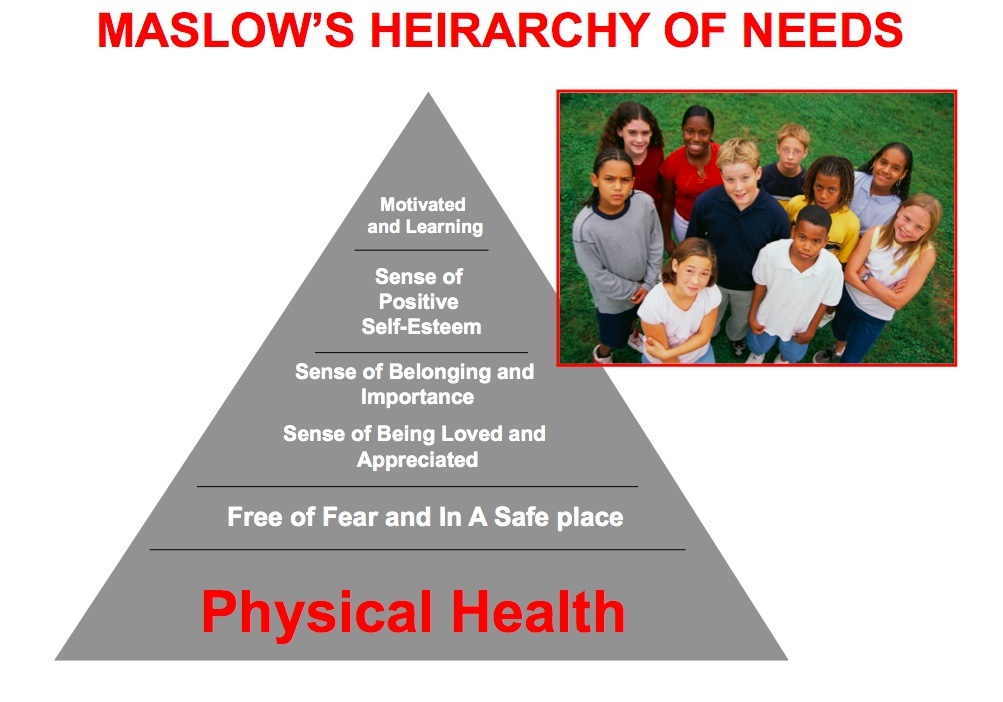
While news about childhood obesity often makes the headlines, three other interrelated — and equally critical issues — are often not as familiar. While you may not have heard as much about student under-nutrition, food insecurity and inactivity, a growing body of research suggests that these issues can have a significant — and negative — impact on the children and adolescents in schools. It is critical to understand how addressing these physical health issues, identified as the foundation for learning in Maslow’s hierarchy of needs, can help to support classroom performance and academic success in any district.
Physical Health = Foundation for Learning

As a few statistics will show, there are compelling reasons to address the physical health needs of America’s children today. In terms of nutrition, the overwhelming majority of children in the U.S. (98 percent) do not consume adequate servings from all food groups, missing nutrient-rich foods essential for growth and development. According to the 2010 Dietary Guidelines for Americans, four nutrients (calcium, vitamin D, potassium and fiber) are of “public health concern,” meaning these nutrient gaps are so big they affect children’s health today and in the future.

The Partnership for a Healthier America (PHA) also notes that there is a crisis of physical inactivity among our nation’s youth. The PHA September 2012 Policy Snapshot reports that only 42 percent of children ages six to 11 and 29 percent of high school students get the recommended 60 minutes of daily physical activity.
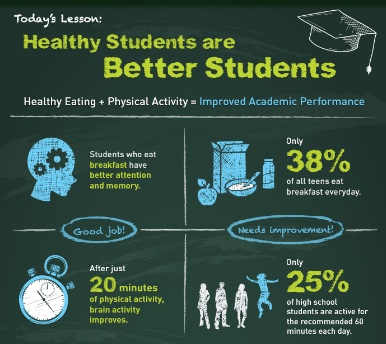
Nearly 17 million American children live in food insecure homes, not always certain when or where they will have their next meal. Recent surveys suggest that as many as half of school children skip breakfast regularly. There is also growing awareness among policy makers that food insecurity and the high rates of childhood obesity in the U.S. may be interrelated problems. The fact that children can be both overweight and food insecure is counter intuitive – and the reasons are both complex and not completely understood.


We do know that food insecurity affects students’ health, development, behavior and school performance. Food insecure students tend to have lower math scores, difficulty concentrating, more fatigue and are more likely to repeat a grade level. Children and teens struggling with food security are also more likely to experience difficulty getting along with others, irritability and school suspensions.
Wellness Impact Report

                        Wellness Impact Report

We also know that improving children’s eating habits and physical activity levels leads to health benefits. While multiple factors influence a child’s ability to learn in school, researchers and educators now recognize that skipping breakfast and a sedentary lifestyle may also affect a student’s cognition and achievement. GENYOUth’s Wellnes Impact Report explores the connections between nutrition, physical activity and academic achievement. Here is what they talked about and how it can make a difference in your district.

BREAKFAST BOOSTS BRAINPOWER

Mothers across the country have recognized the importance of breakfast for decades — and researchers have now confirmed both the health and cognitive benefits of eating well in the morning. Breakfast helps to combat childhood obesity, encourages healthy eating, and gets kids ready to learn. Unfortunately, for many families, breakfast gets squeezed out by the morning hustle and bustle — or, sadly, by the lack of food in the house. When students come to school hungry for whatever reason, they are listening to their stomachs rather than their teachers. They may have trouble concentrating on work in the classroom and often end up in the nurse’s office complaining of stomach pains and headaches. Research has shown that school breakfast programs can help prevent these problems and that they can help improve math grades, reduce school absences and rates of tardiness, and decrease emotional/behavioral problems.

Breakfast Changes Lives

                                           Breakfast Changes Lives

Expanding programs can bring all the benefits of breakfast to your schools. Flexible breakfast service — like Grab-n-Go and Breakfast in the Classroom — can help increase participation without losing valuable instructional time. Your local dairy council can work directly with your school to help implement the right breakfast program for your district. Fuel Up To Play 60 and other grants are available to help implement school breakfast programs and dairy council staff members are eager to help your district take full advantage of valuable funding, implementation and promotion resources.

ACTIVITY AFFECTS COGNITION

The Wellness Impact Report also documents the positive relationships between physical activity at school and several indicators of academic achievement, classroom behavior and cognitive function. According to researchers, the normally sedentary school day can be activated in multiple effective ways, including physical education, active recess, walking or biking to/from school, and before/after school programs like walking clubs, as well as physically active classroom lessons and energizing breaks.
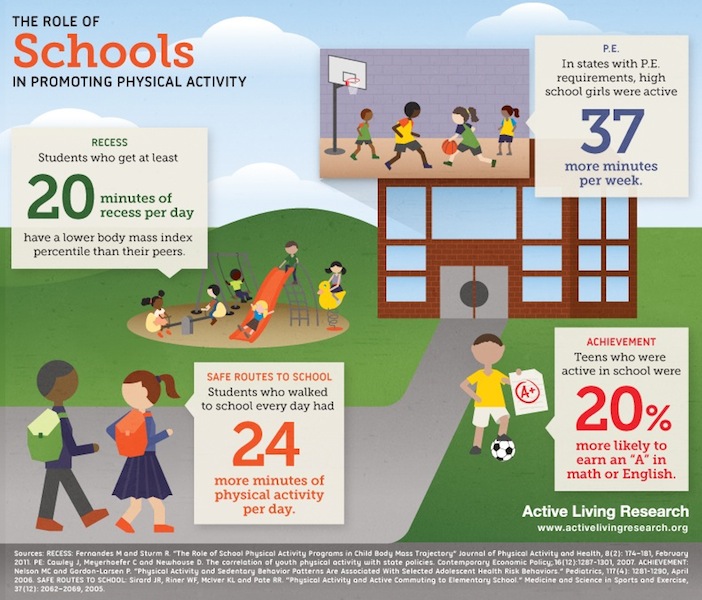
Activity in Schools

                                                         Activity in Schools

Your district’s physical education (PE) professionals are your best resource for all the ways to increase activity in and out of the classroom. If you want to see some excellent examples of classroom energizers for elementary and middle school students, Eat Smart, Move More North Carolina were developed as part of the North Carolina State Board of Education’s Healthy Active Children Policy.

STUDENT LEADERS MAKE A DIFFERENCE

While everyone has a role to play in creating healthier, smarter school environments, student empowerment is a critical component for success. According to the Learning Connection Summit leaders, one of the key principles of game-changing improvements in school nutrition and physical activity is to focus on youth leadership for maximum impact. That is the goal of Fuel Up to Play 60 (FUTP60), developed by the NDC and NFL, in collaboration with the U.S. Department of Agriculture. FUTP60 now engages over 11 million students in 73,000 schools. A recent survey of adults involved in those schools indicated that 70 percent believe the program is helping youth make healthier food choices and 62 percent say it is helping increase the amount of time students being physically active at school.

And, THAT is what it’s all about: Creating healthier school environments to create healthier students who are fit, healthy and ready to learn! Sincere thanks to Southeast United Dairy Industry Association, Inc. (SUDIA) for their support of the original draft of this article, published in the SEEN Magazine of the Southeast Education Network

Smart Snacks for Schools: We All Have Homework to Do for Kids’ Health

On February 1, 2013, the US Department of Agriculture (USDA) announced the long-anticipated proposed rule on competitive foods in schools, now known as Smart Snacks in Schools. Published in the Federal Register on February 8th, the rule is now open for a mandatory 60-day public comment period, which closes on April 9, 2013. The overall reaction has been positive, although many folks are probably still trying to digest the details of the 160-page document.

Changes in allowed snacks according to USDA

Changes in allowed snacks according to USDA

If your schedule does not permit a long read, several good summaries are available online. There is a very readable Q-and-A format in USDA Summary, excellent materials from a webinar by USDA and Food Research Action Center (FRAC), and the School Nutrition Association page with links and member-only comment section. The more you read, the more you’ll know. What follows is my personal, big picture reaction to the proposal and what it will really mean in local schools.

THE GOOD NEWS

There’s lots of good news in the proposed rule, starting with more fruits, veggies, low-fat dairy foods, whole grains, and lean proteins. Anyone who cares about kids’ health knows that there is still plenty of room for improvement in the options that kids have outside of school meals covered by USDA’s 2012 Nutrition Standards. Other positive aspects of Smart Snacks in Schools:

THE REALITY CHECK

While Smart Snacks in Schools represents another significant step toward creating healthy school nutrition environments, it’s also important to note what it does not do. It does not cover foods brought from home, foods for classroom parties or any foods sold after regular school hours (athletic events, after-school fundraisers, etc.).

  • In fact, most of the effect from this rule will be seen in cafeteria a la carte lines, as well as on some vending and fundraisers held during school hours.
  • Compliance and monitoring will an issue outside of cafeterias; school nutrition programs know how to do the required record keeping, but it is not clear who can – or even wants to – be effective as “food police” in the wider school campus.
Students enjoy smart snacks in Ellensburg, Washington, thanks to Fuel Up To Play 60 Program

Students enjoy smart snacks in Ellensburg, Washington, school cafeteria – with support from Fuel Up To Play 60 Program

OUR HOMEWORK ASSIGNMENTS

Last October, after the 2012 Nutrition Standards for School Lunch went into effect, Jane Brody wrote “There’s Homework to Do on School Lunches” in the New York Times. Her basic premise was that the federal regulations and standards are just the beginning – and that homes and schools also have work at improving how children eat. I believe the same is true for this issue.

To build strong bodies and smart brains, children also need smart snacks at home, smart snacks brought from home to school, and smart snacks served in concession stands at sporting events. A healthy school nutrition environment will take more than new regulations – it will require a culture of wellness. To create that culture will require us all to do some additional homework: Making comments on the proposed rule at eRulemaking Portal (on or before April 9, 2013) is a good first step. (Select Food and Nutrition Services from the agency drop-down menu and, in the docket ID column of the search results, select FNS-2011-0019.)

If we care about smart snacks at school, here’s what I believe we all need to do:

  • Support  a culture of wellness in your local district, for example, by serving a School Health Advisory Council (SHAC) or helping with a HUSSC application.
  • Use smart strategies to inspire, motivate and educate everyone in schools about smart snacks for reasons they care about, because not everyone is focused on childhood obesity:
    • Make smart snacks about fun and great taste for kids.
    • Make smart snacks about fitness and sports success for coaches, athletes and boosters clubs.
      • Make smart snacks about learning and behavior for classroom teachers and administrators.
      • Make smart snacks about successful fundraisers that make money for clubs and organizations.
      • Make smart snacks the cool thing to do at school rather than something that the government is making us do!!
    • Fruit Snack sold at West High Track Meet concessions in Billings, Montana

      Fruit Snack sold at West High Track Meet concessions in Billings, Montana

School Breakfast Makes Sense for School Success

As a mom, registered dietitian (RD) and national school nutrition expert, I’ve been a broken-record about breakfast for decades. I can honestly say that I talk about breakfast at school in every one of the many presentations I give every year from coast-to-coast. The reasons are both simple and profound:

  • Breakfast helps fuel smart brains by improving students’ ability to focus and pay attention in class. Hungry children cannot listen to their teachers because they are listening to their stomachs. A 2012 Share Our Strength survey reported that 3 out of 5 teachers say they have “children in their classrooms who regularly come to school hungry.”
  • Breakfast helps build strong bodies by providing nutrients most American children are currently missing. The 2010 Dietary Guidelines for Americans identified four nutrients of concern – calcium, vitamin D, potassium and fiber. A nutrient-rich school breakfast helps students grow strong and play hard – and it turns out that physical activity also helps them perform better in the classroom.
Erza enjoys breakfast in the classroom, Minneapolis, MN

Erza enjoys breakfast in the classroom, Minneapolis, MN

Schools across the Midwest are serving up breakfast to thousands of hungry kids every day in school cafeterias, classrooms, and even hallways – where students can pick up a nutrient-rich, grab-n-go breakfast to kick-start their morning. It’s been such a pleasure to work with Midwest Dairy Association’s School Nutrition Institute this year, helping school nutrition professionals learn creative ways to revitalize breakfast so that every student is ready to learn in the classroom.

National School Breakfast Week – March 4 through 8, 2013 – is the perfect time to find out what’s happening with school breakfast in your community. I know you’ll be impressed with the quick, simple, delicious choices – like yogurt parfaits with fruit and granola, whole grain cereal with low-fat milk and fresh fruit, or breakfast burritos with eggs and cheese. It’s so reassuring to know that school breakfast programs across the Midwest are dedicated to building smart brains and strong bodies for school success.

Breakfast Bar in Parkside Elementary, Grants Pass, OR

Breakfast Bar in Parkside Elementary, Grants Pass, OR

Originally published on Midwest Dairy’s blog, Dairy Makes Sense on Monday, March 4, 2013

Comfort Food: Please pass the peas – and the love

Eating is not merely a material pleasure. Eating well gives a spectacular joy to life and contributes immensely to goodwill and happy companionship. It is of great importance to the morale.” [Elsa Schiaparelli, Shocking Life, 1954]

Shortly after September 11, 2001, I had to write my regular newspaper column. Then – like today – it seemed trivial to write about fat and sugar, or even nutrition standards in school meals. These issues are unrelated to the rhythms of life after such a tragedy. Today, as I listen and read our broken-hearted country’s reactions, I – like you – am trying to put this tragedy into the context of my family’s life. So, I have gone back to rewrite that 9/11 column and share it with you.

I believe that food, and nutrition, have important roles in our lives as we move through personal grief and national tragedy, which is what I realized back in 2001. Through what seemed like a river of tears, I invited friends to dinner and began to make bread – to make bread by hand, not by machine. In kneading dough, baking bread, preparing dinner and setting the table, I began to feel calmer and more settled – the solace of simple things in troubled times.

Again today, I listen carefully to wise thoughts from religious leaders, poets, counselors, musicians and others. Many themes for healing, recovery and how to talk to your children begin to emerge. Some words are mentioned repeatedly – family, ritual and community among them. Naturally, from my professional perspective, these themes keep bringing me back to food.

In terms of food, the important things are the simple things: meals prepared for loved ones; nurturing food given generously; homegrown produce eaten in the garden; and bread, the staff of life, broken together. In the words of the wisest dietitian I know, Ellyn Satter: “Eating is about regard for ourselves, our connection with our bodies, and our commitment to life itself.” [Secrets of Feeding a Healthy Family, Kelcy Press, 1999]

Pea Wreath-3

My thoughts today are not about what to eat, but about how to eat. Since the beginning of human culture, eating together has been important to families and communities – and the rituals that bind us together. Think about those words – and special meals come to mind. Meals like Iftar, Thanksgiving, Passover and Christmas, shared meals like church potlucks and office parties, celebratory meals like birthdays and anniversaries.

Sadly, in our fast food culture, everyday meals have too often been seen as something to get through quickly – so that we can get on to something more important. In this troubled time, there may be nothing more important than rediscovering the joy and security of good food eaten with others.

As we pray for the families in Newtown, cooking and eating together are among the simple things that can comfort us all. Nourishment, communication and stronger family bonds are as close as our kitchens and dining rooms.

  • Cook together. Preparing food is a loving way to share time and bring generations together. Measuring, stirring, and chopping can be as comforting as any other routine, everyday task. Kneading bread can be downright therapeutic. I loved the FB photo of my friend Lisa Bunce making gingerbread houses with her Connecticut family on the night after the shootings.
  • Eat together. Make family meals a real priority as often as you can. If you live alone, reach out to family, friends, or co-workers – and break bread together. Eat together at home, eat together at restaurants, eat together at work, eat together at a picnic. I am so grateful that I am traveling to California tomorrow – arriving in time for dinner with my father, stepmother, brothers, sister and beloved nephew.
  • Turn off the television. Even in normal times, television makes it hard to eat well. The repetitive images of the school where children died – or any tragedy – can literally make us sick to our stomachs. A psychologist on NPR said that small children might actually believe that the event is happening over and over again. Even for adults, I fear that our inner child also feels like it is happening over and over and over again.
  • Return to rituals. Families have many rituals for meals – prayers, a moment of silence, joining of hands, candles or other festive touches, like flowers and special dishes. Making rituals part of everyday meals ties us to the past and to hope for the future. Take a break from the news and focus on the tastes, smells and textures of food.
  • Take time to share. Slow down and share – food, fellowship, memories, tears, laughter and the joy of time together. Even the smallest children can share in conversations around a table. Give everyone time to share what is important to them. By joining with others, you can begin to take comfort from the nourishing food and loving companionship.

Food to a large extent is what holds a society together and eating is closely linked to deep spiritual experiences.” [Peter Farb, Consuming Passions: The Anthropology of Eating, 1983]

Wreath apple heart2

Snow Pea Wreath: www.tasteofhome.com/Recipes/Snow-Pea-Holiday-Wreath

Apple Wreath: www.bhg.com/christmas/wreaths/christmas-wreaths/#page=28

SUPER Breakfast, SUPER Oatmeal, SUPER BOWL Challenge

For the first time ever SCHOOL MEALS THAT ROCK is offering some SUPER PRIZES – for your participation in FUEL UP TO PLAY 60 SUPER BOWL BREAKFAST CHALLENGE.

From November 5th through December 3rd, you will have the chance to win one of FOUR $50 GIFTS CARDS from the NFL Gift Shop. All you have to do is check the weekly questions on FACEBOOK School Meals That Rock and post your answers – and, of course, get your school excited about entering the FUEL UP TO PLAY 60 SUPER BOWL BREAKFAST CHALLENGE. Rules for entering the challenge are pasted below and on the FUTP60 website.

HERE’S HOW YOU CAN WIN A $50 GIFT CARD:

  • Respond to this blog post with a BREAKFAST or OATMEAL comment … or post a BREAKFAST or OATMEAL comment on FACEBOOK: School Meals That Rock or on Twitter @SchoolMealsRock.
  • Every week, a winner will be drawn randomly from all those who post an answer to the weekly question.
  • You may post as many different answers as you like on FACEBOOK: School Meals That Rock or on Twitter @SchoolMealsRock.
  • Winners of the gift cards – and a selection of answers – will be posted here throughout the month of November, along with FUEL UP TO PLAY 60 resources and success stories. 

This week’s questions is a simple, but critical, one:

  • In your own words (25 or less), why is OATMEAL an awesome breakfast food for students and teachers?  

NOTE: The gift card give-away is sponsored by FUTP60, a partnership of the NFL and National Dairy Council Although I do consulting work for National Dairy Council (and dairy affiliates across the US), I am not receiving any compensation for participating in this contest.

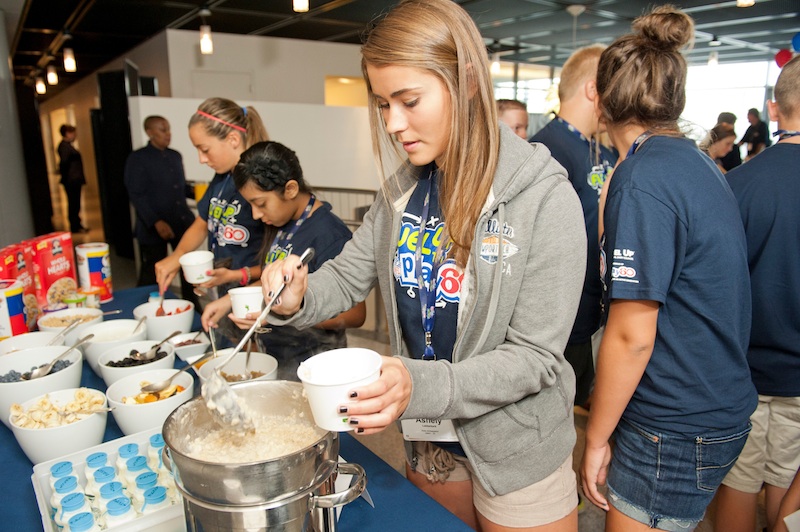
Students enjoy oatmeal breakfast bar at a FUTP60 Youth Summit

Breakfast is one of the most important meals of the day, and it can be the most fun, too! How do you want to fuel up your school with oatmeal? Propose your big idea for an awesome breakfast event at school, and your school could win big…SUPER BOWL big. If you are selected as one of the TWO national winners, you get a VIP, all-expenses paid trip to Super Bowl XLVII in New Orleans! Your school will also get to turn their idea into a reality! So, what are you waiting for? Show us how you want to enjoy oatmeal at your school! Tips for creating a ‘Super Bowl’ worthy submission:

1. Design a fun proposal. You can use one of the templates provided to describe your suggested breakfast event. Photos and drawings are optional. You can also submit a video or digital recording of your proposal. Your event doesn’t have to occur in order to be eligible for the prize – we’re just looking for great ideas! 

2. Request an Oatmeal Starter Kit. To get you excited for the challenge, we’re giving away free oatmeal! Ask your Program Advisor or Teacher to request a kit for your school. Supplies are limited, so hurry!

3. Be creative. If you need suggested ideas for oatmeal events, your school could do: a recipe cook-off, taste-test, or a breakfast club. Think big and have fun – the options are endless. You could have a toppings bar, or add food color for your favorite NFL team! You can get bonus points for NFL flair!

4. Get to work! Use the templates provided or grab a digital camera/video recorder and show us how your school wants to enjoy oatmeal to start the day. 

5. Keep it clean. Make sure there is no swearing, violence or other inappropriate behavior featured in your submission. 

6. Be original. If you want to include music in your submission, don’t use music, videos or pictures that belong to someone else. If you could hear it on the radio or see it on TV, it can’t be used in your submission.

7. Watch the clock. Try to keep your entry short and sweet!

8. Promote the program. Wear Fuel Up to Play 60 gear or show us your inspirational posters or other Fuel Up to Play 60 materials hanging in your classroom.

 9. Be descriptive. Include a description with your entry, letting us know why you think it completes the Challenge.

10. Be on time! Don’t want until the last minute to send in your Challenge entry! Be sure to get your entry completed and uploaded online as soon as you get it done. This ensures you will be in the running for the national prizes and exclusive digital rewards!

Good luck, fuel up and get moving! And remember, we’re giving away tickets to Super Bowl XLVII in New Orleans and the chance to turn your idea into a reality! 

YUMMMMMMY … it’s oatmeal for breakfast!!

Food Insecurity: A Real Reason Kids May be Hungry at School – and What We Can Do About It: Part 3 of 3

For millions of American children, school lunch is often their best – and sometimes – only real meal of the day. According to Feeding America, 16.7 million children lived in food insecure households in 2011. The numbers can tell the scope, but the not very painful effects of food insecurity for children. 

School nutrition professionals know that Mondays and Fridays are often the worst days of the week for food insecure children. On Monday morning, many children really are “starving” after a weekend without enough food to fill their stomachs well. At school breakfast on Monday morning, children can seem insatiable and want more than one serving. How would you feel after a weekend without enough to eat?

On Friday’s school lunch, food insecure children may tend to overeat and/or to hoard food that they can scavenge from other student’s trays. This not bad behavior or a hunger game. It is a very real and natural response to being deprived of food. It is the body’s response to being chronically underfed, as documented in Ansel Keyes classic study of starvation in healthy young men.

Middle school students wait for breakfast in Billings, Montana

We do not completely understand the complex interactions of food insecurity, obesity and undernutrition, especially in their effect on children. The Food Research and Action Center (FRAC) offers an excellent summary of the key factors that make low-income and food insecure families more vulnerable to overweight and obesity, including:

  • Cycles of food deprivation and overeating
  • Lack of access to healthy, affordable foods
  • Fewer opportunities for physical activity
  • High levels of stress
  • Limited access to health care

While we have a national discussion about the merits of the 2010 Healthy, Hunger-Free Kids Act and the the 2012 Nutrition Standards for School Meals, we must never forget those students who are truly hungry – not just YouTube sensations because they didn’t approve of their new food options in the cafeteria. Whether you call it childhood hunger or family food insecurity, this is a real and tragic problem in our country.

In terms of what we can do, there is no better role model than Senator George McGovern, who passed away today after a decades of public service. We can each look around our own communities and ask a simple question: What is the most effective thing that I can do to end hunger? 

With gratitude for your decades of service

Delicious Celebrations of School Nutrition Success: Farm-2-School + National School Lunch Week

Schools are doing truly incredible things to serve local, fresh – and yes, organic – foods that kids love to eat. To see super salad bars, hyper-local apples (grown five miles from school!), and a lunch with Sautéd Cabbage that students devoured, please visit School Meals That Rock on Facebook. This gorgeous tray from the award-winning Portland (OR) Public Schools is just a tiny taste of the delicious school feast that you can see there. Everything on this tray in OREGON GROWN – and the pear is ORGANIC!! Please take a tour School Meals That Rock and see the amazing food that is loving prepared and served by America’s School Nutrition HEROES!!

Whole Wheat Pizza, cauliflower, organic pear and low-fat milk ALL from Oregon, served in Portland Public Schools to celebrate HealthierUS School Challenge Awards

Some Very Real Reasons Why Kids May Be Hungry at School – and What We Can Do About It: Part 2 of 3

As discussed in Part 1, there are several reasons why students may be hungry after lunch at school. First, skipping breakfast means that some students are over-hungry and hard to fill up at lunch. Secondly, the typical recess-after-lunch schedule often means that kids rush through their meal in order to get out of the cafeteria and play.

There are simple solutions to these issues: Offering breakfast at school and scheduling recess before lunch are two easy, proven ways to improve both nutrition and performance in the classroom. The third reason for hungry kids may take a bit more effort to solve, but we must take it seriously if we want students to be fit, healthy and ready to succeed.

Reason #3:  School cafeterias are often, loud, crowded and rushed.

SOLUTION: Comfortable cafeterias that are positive, pleasant places to eat

Too many cafeterias are run like juvenile detention facilities rather than welcoming cafes. Adults patrol the aisles telling children to be quiet and eat up quickly. The mentality is  “herd-‘em-in, herd-’em-out” – or “eat it and beat it” – not a productive way to optimize children’s nutrition, especially when expecting them to eat new foods. 

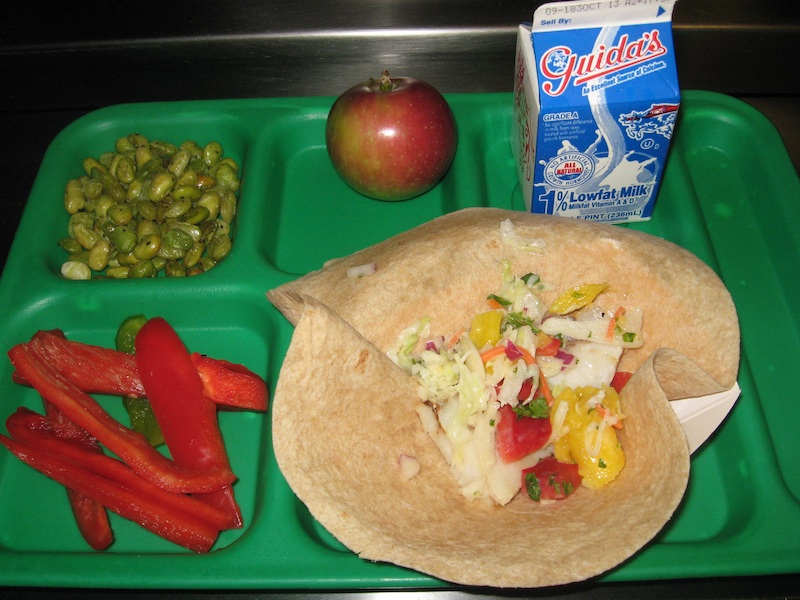
Pawtucket, Rhode Island, Fresh Fish Taco Tray

Child health experts agree that students need adequate lunchtimes to get the benefits of school meals. Middle school students in New Jersey and Minneapolis have recently made news by bringing attention to the simple facts: Kids need time to eat and to socialize with their friends. When they are rushed, they may throw away foods that take more time to eat, like whole fruits.

According to a 2004 National Food Service Management Institute publication, lunch  intake for elementary students was better when they had recess before lunch and a longer lunch period. When the lunch period time was 30 minutes versus 20 minutes, elementary students:

  • Eat 21 percent more food by weight.
  • Waste 40 percent less food by weight.
  • Consume 16 percent more calories.
  • Consume 56 percent more calcium.

In some cafeterias today, scchool nutrition directors report that children are still eating off their trays while being herded out of the cafeteria. Making school cafeterias positive places to enjoy meals and classrooms for smart eating is another key to reducing complaints about hungry children. Mealtime should be a:

  • Time to relax and socialize, while nourishing bodies and minds
  • Chance to fill nutrient gaps and refuel for afternoon classes
  • Learning lab for healthy eating habits and acceptable mealtime behaviors

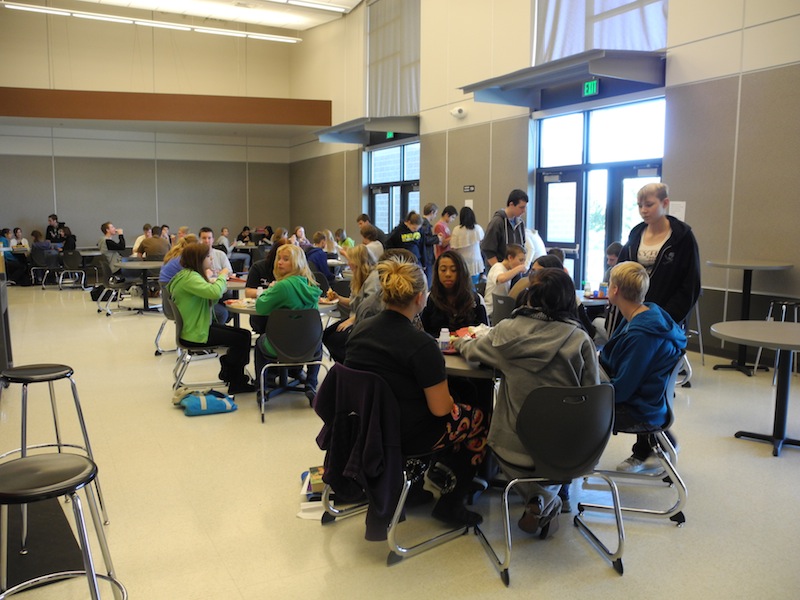
Renaissance High School, Meridian, Idaho, Cafeteria

A calm, comfortable cafeteria does not happen by accident. Like any other important aspect of a successful school, it requires effective teamwork and communication among administrators, teachers, aides, food service, students, and parents. Montana Team Nutrition has information and materials for creating positive, pleasant mealtimes in schools and childcare, based on Ellyn Satter’s Division of responsibility in feeding.

The smartest schools have instituted programs that encourage students to try new foods and get more adults into cafeterias to help provide positive role models. Middle school students in Pawtucket (RI) now act as fruit and vegetable ambassadors and a long-running successful Food Coach Program in Hopkins (MA) trains parents and other adults to make a difference in the cafeteria.

James John Elementary, Portland Oregon, Teaches Cafeteria Manners

Some Very Real Reasons Why Kids May Be Hungry at School – and What We Can Do About It: Part 1 of 3

I’ve watched the videos from the hungry teen athletes in Kansas and Jon Stewart’s amusing Starved By the Bell segment. I’ve read about the boycotts and heard dedicated school nutrition professionals talk seriously about getting their high schools out of the National School Lunch Program.

I’m very sorry that meals for kids at school are once again fodder for YouTube videos and late night TV. I’m even sorrier that school nutrition has become a political football like so many other issues. I am sorriest for the thousands of school nutrition heroes who have been trying to make the 2012 USDA Nutrition Standards work and the millions of low-income children who reply on schools cafeterias to provide their best meals of the day.

There are some very real reasons why students, especially teens, may be hungry during the school day. If everyone focused on finding real solutions, we could work together to benefit all students – improving their nutrition, health and academic performance. Here are two of the very real reasons that kids may be hungry at school – stay tuned for more reasons in parts 2 and 3.

Greek Pizza with hummus on whole grain crust, Johnston, Rhode Island, High School

Reason #1: Kids, especially teens, are hungry because they don’t eat breakfast.

SOLUTION: Breakfast every day for every student

According to the 2011 Kellogg’ Breakfast in America Survey, breakfast eating dips as kids grow older; 77 percent of young children eat breakfast every day, but this falls to 50 percent in the middle-school years and 36 percent among high school students. If you don’t eat breakfast, the new calorie ranges may not be enough to be both a breakfast and a lunch. And, more importantly, you will have found it hard (if not impossible) to concentrate and learn in your morning classes.

Schools need breakfast programs that are convenient for kids and practical for school food service. There are lots of successful models: Grab-and-Go breakfast options, like new kiosks planned for Medford (MA) schools, breakfast in the classroom being successfully implemented in districts coast to coast, and cafeteria breakfast bars with made-to-order breakfast burritos, as seen in my hometown of Billings, Montana.

Made-to-Order, Breakfast Burrito Bar, Senior High School, Billings, Montana

Reason #2: Most school schedule recess after lunch, so kids rush to get outside.

SOLUTION: Recess Before lunch

When kids are eager for recess, they often dump hunger-satisfying foods into the trash. It’s only nutrition WHEN they eat or drink, so we should maximize scheduling to get the food into the kids. Honestly, it’s not rocket science that children would be hungrier and thirstier when they have the chance to play first – and that exactly what schools report according to Starving for Recess, a 2011 District Administration article.

Scheduling Recess Before Lunch (RBL) isn’t rocket-science either and there are plenty of resources from Montana Team Nutrition to help schools with the process. RBL can even save money since many schools report significant decreases in garbage removal costs when students are active first, eating more food and drinking more milk afterward.

Recess Before Lunch Guide, Montana Team Nutrition (2008)

True School Nutrition HEROES: Excellence Beyond the Regulations

There’s been lots of talk recently about how The School Day Just Got Healthier with USDA’s Nutrition Standards in the National School Lunch and School Breakfast Programs that went into effect on July 1, 2012. Media stories abound with a generally positive tone – although many reporters wonder if students will actually eat the healthier options. I wrote about the new guidelines right here on August 24 in USDA New-trition Guidelines for School Meals: Business as usual – and a whole new ballgame.

Fortunately for students, teachers, families, farmers and ranchers, some of the best news in school nutrition has nothing to do with the regulations! Incredibly positive things are happening in kitchens, cafeterias, and schoolyards from coast-to-coast – thanks to dedicated and visionary school nutrition heroes. Sometimes they make the headlines, but often as not, they labor quietly in their districts without attracting much fanfare or hoopla.
Here’s a taste of truly delicious news from four districts on the frontiers of school nutrition excellence. Literally spread from coast-to-coast, these districts are focused on serving the freshest, best tasting meals to students in the most positive, pleasant atmosphere possible. This is what we need — to get nutrient-rich food into kids; it is only nutrition WHEN they eat or drink it!

More school cafeteria makeovers

The typical noisy school cafeteria – with an “eat it and beat it” environment – is not conducive to trying new foods or enjoying a balanced meal. Cafeteria renovations, like those in Palm Beach County, Florida, often focus on creating a trendy café atmosphere. At McKay Elementary School in Beaverton, Oregon – with support from anOregon Dairy Council Fuel Up To Play 60 grant, the school nutrition program went a step farther, making their cafeteria decorations match their nutrition marketing and education efforts, to help students “Eat a Rainbow.”

More school garden produce served in cafeterias

In some areas, school gardens are becoming almost the norm. New Jersey could be called the “School Garden State” with more than 242 schools growing vegetables and fruits for nutrition and/or education. Denver Public Schools Food and Nutrition Services, with support from urban agricultural groups, has taken school gardening to a whole new level. As recently announced on their Facebook page: “I am extremely proud to announce our 2012 Garden To Cafeteria schools! DPS Food and Nutrition Services will be purchasing produce from the 21 school gardens listed. Your students will then see that produce in their lunchroom salad bars! “ Now that is hyper-local!
 
More chefs in school kitchens

Thanks to First Lady Michelle Obama’s Let’s Move! Initiative, Chefs Move to Schools, founded in May 2010, has meant a real upgrade in the culinary skills of school nutrition professionals. Chefs provide culinary boot camps for school cooks in several states and encourage “junior chefs” through many school assembly programs, like the one with Chef Virginia Willis in Marietta, Georgia. In Maplewood Richmond Heights School District (MO), Chef Robert Rusan has truly set a higher bar for school food. It’s hard to describe the comprehensiveness of the MRHS Healthy Foods program in a short paragraph. Just imagine a school nutrition program that makes its own fresh mozzarella cheese, builds an outdoor pizza oven, and harvests aqua-ponic lettuce.

More student involvement in school nutrition

While all the schools described so far involved students to some degree, Slater Jr. High School in Pawtucket, Rhode Island and Foodservice Director Solange Morrisette, have kicked it up a notch with their Fruit and Vegetable Ambassador program. According to the USDA blog post, “the students came up with several fun ways to get their peers excited about eating fruits and vegetables. These ideas included the fruit and veggie taste testing, a fruit and veggie eating contest, a cafeteria remodel, and creating rap songs about healthy eating.” In this photo, guest farmer Shelly Pezza taught the future ambassadors about the benefits of eating local produce – which will soon show up on their salad bars.
Dayle Hayes, MS, RD (Registered Dietitian), is Past-Chair of the School Nutrition Services Dietetic Practice Group (DPG) of the Academy of Nutrition and Dietetics. She helps agencies and organizations create healthier school environments across the country. You can follow her onFacebook and Twitter, and read in-depth analysis of school issues on her blog School Meals That Rock.