3 Secrets for Getting Kids to Make Smart Food Choices

[Thanks to Kern Halls of Ingenious Culinary Concepts for originally publishing this on his new blog.]

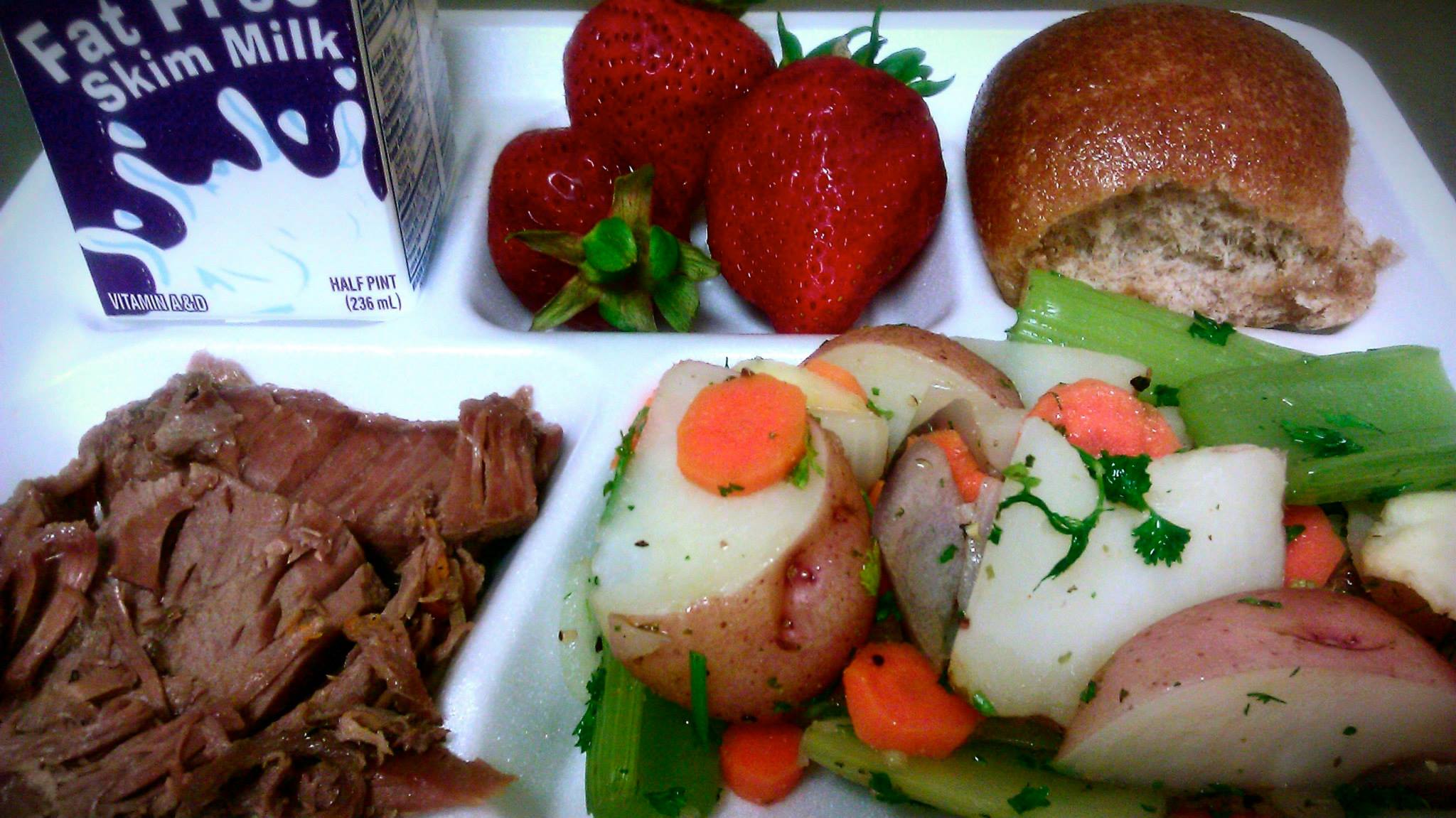
As school nutrition professionals, we are required to serve certain food items – and we want our customers to enjoy nutrient-rich, “good-for-them” meals and snacks.  While there is never any guarantee that every child is going to like every food (do you?!), there are some fundamental, “secret” strategies for helping children make smarter food choices at school. Here are three of my favorites:

1.    Presentation, presentation, presentation.

We all eat with our eyes – and our nose and ears – long before we ever put the food in our mouths. School-aged customers are looking for colorful, eye-appealing choices that smell wonderful – and maybe even “sizzle” in the skillet. A recent study with pre-teen children indicated that the young people preferred greater food diversity than adults. On average, they preferred seven different items on their plates and six different colors. This study is one of many from Cornell University’s Food and Brand Lab that indicate the importance of presentation to children, including on school lunch lines.

Want children to eat “what’s good for them”? Make sure that it looks, smells and sounds incredibly delicious!

From Kalispell, Montana, these rainbow salads would appeal to any student!!

From Kalispell, Montana, these rainbow salads would appeal to any student!!

2.    Taste, taste, taste.

This should go without saying: Taste reigns supreme in the food world. While you can get kids to take a bite or two of almost anything, you will not get them to repeat the experience or truly enjoy the food unless it tastes good. How do you get food to go from OK to WOW in terms of taste buds? The “secret” is culinary skills – planning, storing, preparing, seasoning and cooking to maximize flavor and texture. Culinary boot camps, guest chefs and chefs on staff have become popular for good reasons. They all help school meals move beyond their reputation for processed blandness to more complex, sophisticated and spicy foods that appeal to today’s consumers.

Want children to eat “what’s good for them”? Make sure your food tastes so wonderful that they want to come back for more tomorrow.

Denver (CO) Public Schools served Albondigas with zucchini, bell peppers, onions, potatoes, cilantro and carrots, as well as homemade turkey meatballs. Students at Schmitt Elementary raved about them on the playground and at other schools students asked for seconds!

Denver (CO) Public Schools served Albondigas with zucchini, bell peppers, onions, potatoes, cilantro and carrots, as well as homemade turkey meatballs. Students at Schmitt Elementary raved about them on the playground and at other schools students asked for seconds!

3.    Service with a smile.

Anyone who has every worked in any kind of foodservice with any age customers knows the value of a smile. In school cafeterias, the smiles of the school nutrition professionals directly translate into improved academic performance. That’s because S.M.I.L.E. stands for School Meals Improve Learning Environments. When children are well nourished, they are ready to succeed – better able to focus, concentrate and learn in the classroom. Good customer service is one of most effective ways to insure that children will enjoy whatever is served at school breakfast, lunch and snack – whether they know that it is good for them or not!!

Want children to eat “what’s good for them”? Remember to S.M.I.L.E. and invite your customer to enjoy the appealing, delicious food you have prepared. 

In Lake Stevens, Washington, their "Build a Rainbow" Salad Bar is served with many smiles.

In Lake Stevens, Washington, their “Build a Rainbow” Salad Bar is served with many smiles.

Six Back-to-School Lunch Spots: Where I would take Julia Child for a bite (Part 1, Western states)

As a devoted fan of Julia Child since the days of the earliest days of The French Chef on black and white TV, I know that she was always a culinary and educational trendsetter. Back in 1995, she was a co-founder of Days of Taste®, a national discovery-based program of The American Institute of Wine & Food for 4th and 5th graders. “In this age of fast and frozen food, we want to teach school children about real food – where it is grown and how it is produced – so that they can develop an understanding and appreciation of how good food is supposed to taste.”

Last week was the 101st anniversary of Julia Child’s birth – an event that I always honor personally and professionally. As I was updating the daily entries on School Meals That Rock, I realized how much Julia Child would love to see the very real revolution that has take place in school meals. Fresh, local, lovingly prepared and beautifully served breakfasts, lunches, snacks and even suppers are served across the USA, not just in a few foodie enclaves like Portland (OR) and Berkeley (CA), but in a wide range of school nutrition programs with a real commitment to good food for hungry students.

If I could do some culinary time travel and take Julia to lunch, as Bob Spitz was lucky enough to do in Dearie, here are six school cafeteria hot spots we would hit in the Western states. These schools vary widely in location, demographics and staff training, but all have one thing in common: They are among the growing trend of districts dedicated to serving made-from-scratch food, supporting local farmers and ranchers, and teaching children how good food tastes.

Image

Lake Stevens, Washington, Mollie Langum, Nutrition Supervisor

Mollie and her staff are true farm-to-table champions, as showcased in their “I Made A Rainbow at the Salad Bar” event. Washington-grown produce is not just for special occasions though; it’s an every day item in Lake Stevens cafeterias (just east of the metro Seattle area). With the right kind of “peer pressure,” students help promote produce, with giant strawberry costumes and as 5th grade fruit/veggie ambassadors.

ImageBethel, Oregon, Jennie Kolpak, RD, Nutrition Supervisor

Down I 5, in Eugene, Oregon, Jennie has developed a very impressive Harvest-of-the-Month program. Willamette Valley apples, pears, melons, carrots, bok choy and more show up on Bethel menus. This made-to-order Willamette High School panini with balsamic marinated veggies is just one delicious example. This year, they are going “hyper-local” with a new commercial size greenhouse on school grounds.

ImageSolvang, California, Chef Bethany Markee, Viking Café

Trading fine dining for a cafeteria, Bethany leads a Central California school food revolution – as this Honey Roasted Organic Fennel for the salad bar clearly shows. Thanks to a partnership with Santa Ynez Valley Fruit and Vegetable Rescue, the Viking Café is able to regularly serve fresh, organic produce and thanks to a new school herb garden, the seasonings will soon be very local as well.

ImageChandler, Arizona, Catherine Giza, Director and Wes Delbridge, RD, Supervisor

I bet Julia would appreciate the high-tech side of this large multi-cultural district with its trend-setting iPhone app. And, I know that she would be equally impressed with their personal touch on the 250 hand-tossed pizzas with whole grain, made-from-scratch dough and homemade marinara sauce!

ImageProvo, Utah, Jenilee McComb, Director and Colleen Dietz, Assistant

Breakfast or lunch, Provo’s cafeterias serve freshly prepared, locally sourced meals to the lucky students in this mid-size district just south of Salt Lake City. The school nutrition professionals in each school take justifiable pride in their award-winning program and the Facebook page proudly lists the farms and farmers who grow food for their kitchen. Provo students know where their food comes from!

ImageEnnis, Montana, Tammy Wham, Director and Natasha Hegmann, FoodCorps

It might take us a bit longer to get to Ennis, a southwestern Montana community of less than 1,000 with about 400 students K-12. However, I can guarantee that it would be worth the drive! Tammy and her cooks make nearly everything from scratch and thanks to Montana FoodCorps they now have a greenhouse and school garden (with club and summer camp) for incredible, edible produce year-round!

School Meals Rock Nutrition Trends: Way Ahead on Whole Grains

According to the National Restaurant Association 2013 What’s Hot culinary forecast, Whole Grains in Kids Meals ranks number 10 in the Top Ten Trends for 2013 by American Culinary Federation. Child nutrition issues also hits the number 3 and 5 spots on the NRA list.

Child Nutrition hits 3 of 10 Top Trends for 2013

Child Nutrition hits 3 of 10 Top Trends for 2013

When it comes to whole grains, schools are really cooking on all burners and in ovens from coast-to-coast. From all the evidence I see, schools are way out in front of most restaurant meals when it comes to kid-appealing whole grains. While schools nutrition programs have been gradually adding more whole grains for years, the new USDA Meal Patterns mandated by the 2010 Healthy, Hungry-Free Kids Act for really accelerated the process, especially in the past two years. Just think of this – starting in July 2014, ALL grains served in school breakfast and lunch meals must be whole-grain rich.

An article in the May 2013 issue of the School Nutrition Association magazine highlights that creative and delicious ways that school nutrition professionals have responded to the challenge of adding whole grains to children’s meals. Several of my favorite school nutrition heroes are featured, including Doris Demers, the director in Oyster River, New Hampshire.

SNA Magazine , May 2013

SNA Magazine , May 2013

My favorite example of Doris’s creativity with whole grains in this school lunch from January 2013. The Beef Stew (made with local grass-fed beef and local root vegetables) is served in a made-from-scratch mini-bread bowl. How cool is that!!

Oyster River, NH, Beef Stew, January 2013

Oyster River, NH, Beef Stew, January 2013

I could go on-and-on-and-on with photos of whole grain pizza crusts, entrees served over brown rise and whole grain pasta, and salads made with quinoa, barley and other more “exotic” grains – so little space, so much whole grain goodness. However, it is also important to note that food manufacturers have also make a whole lot of changes to their school-focused products so that children are able to enjoy whole grains in foods they love, like waffles, sandwich buns, and pizza crust. Here are just two examples of the products that I saw while visiting Ohio schools last week.

Mini-waffles served for Breakfast in the Classroom, Reynoldsburg, OH

Mini-waffles served for Breakfast in the Classroom, Reynoldsburg, OH

Beef Sliders served on whole grain buns from a local commercial bakery, Pinkerington, OH

Beef Sliders served on whole grain buns from a local commercial bakery, Pinkerington, OH

I have to post one more example of whole grains from Douglas County School District in Colorado. Director Brent Craig and Chef Jason Morse are doing a great grain job, like this Roasted Veggie Pizza on a commercial whole grain crust with balsamic glaze. Like I said, schools a way out in front on this trend!!

Whole Grain Pizza from Douglas County, CO

Whole Grain Pizza from Douglas County, CO

Reflections on Revolutions, Reynoldsburg and Rosemary

Food Revolution Day 2013

Food Revolution Day 2013

Today is Food Revolution Day 2013 and I’ve been pondering Jamie Oliver’s quote and my visit to a Reynoldsburg, Ohio, elementary school this week. Actually, I completely support Mr. Oliver on every sentiment in theses sentences. I too want children to know about growing food, cooking recipes, enjoying meals and nourishing their bodies well. But, even more than all these things, I want every student to be fed and ready-to-learn.

In a middle America, lower-income (62 percent free/reduced eligible), ethnically diverse elementary school this week, I saw a school breakfast that exceeded USDA guidelines, but one that might make Jamie Oliver cringe: heat-n-serve mini-waffles in a pouch, fruit juice and milk, much of it flavored. While food purists might wish for steel cut oats, local fruit and unflavored milk, I watched 400+ children grab breakfast in less than 10 minutes, quietly settle into morning classroom routines, and throw almost nothing into trashcans.

Breakfast in the Classroom

Breakfast in the Classroom

While there wasn’t the time, the space or the resources for nutrition perfection, there was an absolute commitment to serving children nutrient-rich calories so that they could focus, concentrate and learn. And, universal breakfast in the classroom at Slate Ridge Elementary is clearly working since it has been named a “School of Promise” by the Ohio Department of Education for three years in a row. This award recognizes high performance in schools with at least 40 percent economically disadvantaged students.

And Jaime, I can assure you that the breakfast offerings themselves are radically different than what might have been served 10 or even 5 years ago – thanks to a combination of food activism, federal regulations, and industry reformulations. Those mini-waffles were 100% whole grain, low-fat, trans-fat-free, and moderate in sugar and sodium. The juice was 100% orange and the flavored milk was fat-free with 10 grams of sugar (less than 3 teaspoons) per 8 oz. Admittedly, not nutrient nirvana – but balanced nutrition for hundreds of young children who might have otherwise had to listen to their stomachs growl instead of focusing on their teachers’ voices.

Are other schools serving meals more in line with today’s culinary trends and foodie ideals? Absolutely, there are schools that make breakfast smoothies with non-fat yogurt and spinach and others that bake whole grain muffins from scratch. Provo, Utah, serves yogurt parfaits and fresh fruits for breakfast – and just this week posted pictures of rosemary chicken made with “hyper-local” herbs grown in their own high school greenhouse. While I frequently praise Provo and other cutting-edge districts for their culinary excellence, I also admire every step that districts like Reynoldsburg are taking to insure that every child has access to breakfast every day. Sometimes we have to serve our revolutions one-step at a time or in the wise words of Teddy Roosevelt “Do what you can, with what you have, where you are.” Once you have the basics in place – like breakfast for every child, every day – then you can make improvements one delicious, fresh, local step at a time.

Rosemary Grown-in-a-School Chicken

Rosemary (Grown-in-a-School Greenhouse) Chicken

School Meals Rock Nutrition Trends: Michigan Team Nutrition Feeds New Palates

What’s up next on School Meals That Rock? Trends, trends and more trends! I always look forward to the April issue of Food Technology magazine from the Institute of Food Technologists, where Contributing Editor, A. Elizabeth Sloan takes a perceptive and creative look at the top trends in food. In 2013, Sloan named the #1 trend “A Repositioned Palate,” highlighting how American’s are enjoying more complex flavor profiles and bolder flavors like as tangy, smoky, herbal, sour and bitter. She also notes how foodies are savoring their eating experiences defined by freshness and distinctive flavors.

April 2013, Food Technology Top Tend Trends

April 2013, Food Technology Top Tend Trends

School nutrition programs all across the country reflect this trend with new flavors and new recipes, culinary boot camps and junior chef competitions. Michigan Team Nutrition and Chef Dave Mac have been at the forefront of this trend for years – offering chef trainings, quantity cookbooks and even a YouTube recipe channel. Chef Dave knows a lot about combining flavor and nutrition on a school nutrition budget with recipes like Sweet Thai Chili Chicken, Turkey Florentine Wrap and Whole Grain Fiesta Rice.

Layers of flavor and nutrition in a kid-approved menu

Layers of flavor and nutrition in a kid-approved menu

The good news is that you can access the Michigan Team Resources and use them in your own program:
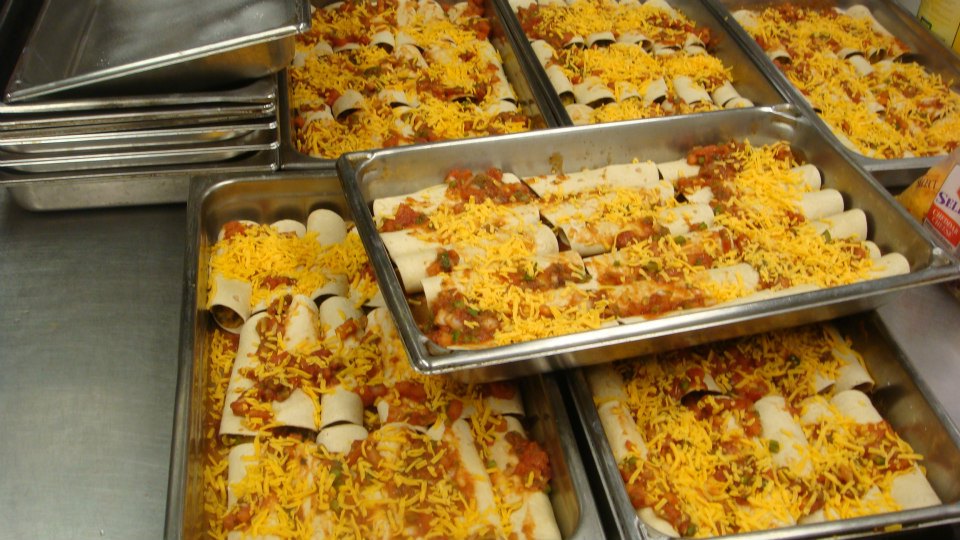
The Whole Enchilada, Holland Chef Showcase

The Whole Enchilada, Holland Chef Showcase

Student chef makes Michigan salads with dried cherries, of course!

Student chef makes Michigan salads with dried cherries, of course!

School Meals Rock Nutrition Trends: Florida Chefs Put on “The Ritz”

What’s up next on School Meals That Rock? Trends, trends and more trends! I recently gave presentations in Michigan and Rhode Island on trends in food and nutrition using School Nutrition as examples. Over the next two weeks (or so), we’re going to explore the trends and share photos of school examples. Hope you’ll check in regularly to find out what is rockin’ in school meals!

According to the National Restaurant Association 2013 What’s Hot culinary forecast, Healthful Kids Meals rank number 3 in the Top Ten Trends for 2013 by both American Culinary Federation chefs and fast food operators. Child nutrition also hits the number 5 and 10 spots on the NRA list.

Child Nutrition hits 3 of 10 Top Trends for 2013

Child Nutrition hits 3 of 10 Top Trends for 2013

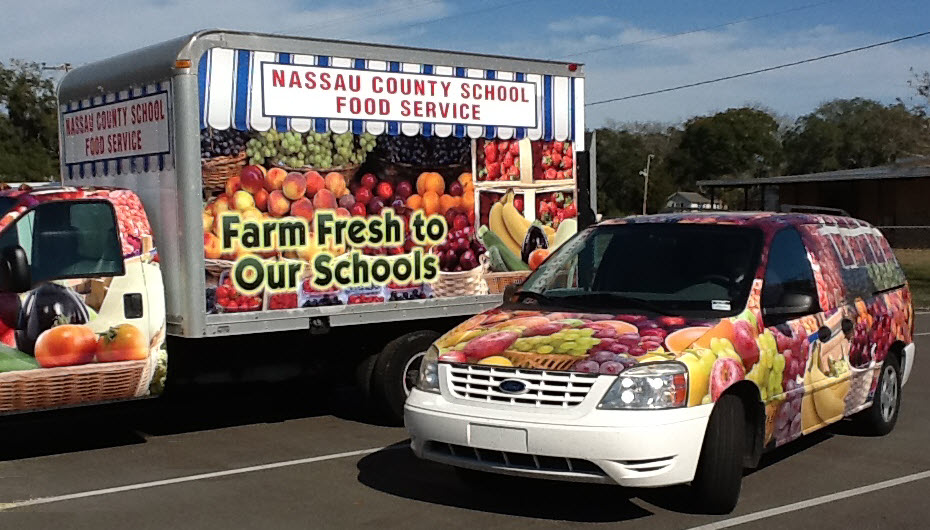
Thanks to a pilot Chefs Move to Schools program the Nassau County (FL) Schools are hitting multiple trends out of the park with help from Executive Chef Thomas Tolxdorf and his culinary team from The Ritz Carlton, Amelia Island. More than 800 students from Nassau District Schools’ Fernandina Beach High School recently enjoyed a lunch that was healthful, included whole grains, and featured locally grown produce. Some lucky students even got in on the cooking action!

(Left to right) Thomas Tolxdorf, executive chef of The Ritz Carlton, Amelia Island, Amari Forrest, Fernandina Beach High School (FBHS) student, Allyn Graves, director of school food service of Nassau County School Board, Bishop Richards, FBHS student, Laura Perkins, FBHS student, Michael Gass, chef and culinary teacher at FBHS and Glenn Wright, chef at The Ritz Carlton, Amelia Island.

(Left to right) Thomas Tolxdorf, executive chef of The Ritz Carlton, Amelia Island, Amari Forrest, Fernandina Beach High School (FBHS) student, Allyn Graves, director of school food service of Nassau County School Board, Bishop Richards, FBHS student, Laura Perkins, FBHS student, Michael Gass, chef and culinary teacher at FBHS and Glenn Wright, chef at The Ritz Carlton, Amelia Island.

The menu included whole grain pasta with fresh tomato sauce with the option of Italian turkey sausage; a side of fresh spring vegetables tossed with olive oil and herbs, fresh green salad, homemade rolls and whole-wheat low-fat oatmeal cookies. Now, that’s a lunch I would gladly eat myself!

“We are excited about Executive Chef Tolxdorf and his team’s interest in partnering with
us and preparing such a meal for our students. We look forward to expanding this initiative into more schools next year and working directly with our food managers,” said Allyn Graves, director of school food services for Nassau District Schools. Nassau District Schools’ Food Service serves more than 1,600,000 meals and snacks each year – all meeting USDA’s strict nutritional requirements each year. Many meals include fresh produce from local farms in a 150 mile radius of the district. The department has received the prestigious Florida Healthy School District Silver level honor from the Coordinated School Health Partnership and is a cosponsor for Florida Action for Healthy Kids.

Nassau County (FL) Schools Feature Local Produce

Nassau County (FL) Schools feature local produce

Guest Chefs and Student prepare lunch

Guest Chefs and students prepare fresh lunch in Fernandina Beach High School

Food Insecurity: A Real Reason Kids May be Hungry at School – and What We Can Do About It: Part 3 of 3

For millions of American children, school lunch is often their best – and sometimes – only real meal of the day. According to Feeding America, 16.7 million children lived in food insecure households in 2011. The numbers can tell the scope, but the not very painful effects of food insecurity for children. 

School nutrition professionals know that Mondays and Fridays are often the worst days of the week for food insecure children. On Monday morning, many children really are “starving” after a weekend without enough food to fill their stomachs well. At school breakfast on Monday morning, children can seem insatiable and want more than one serving. How would you feel after a weekend without enough to eat?

On Friday’s school lunch, food insecure children may tend to overeat and/or to hoard food that they can scavenge from other student’s trays. This not bad behavior or a hunger game. It is a very real and natural response to being deprived of food. It is the body’s response to being chronically underfed, as documented in Ansel Keyes classic study of starvation in healthy young men.

Middle school students wait for breakfast in Billings, Montana

We do not completely understand the complex interactions of food insecurity, obesity and undernutrition, especially in their effect on children. The Food Research and Action Center (FRAC) offers an excellent summary of the key factors that make low-income and food insecure families more vulnerable to overweight and obesity, including:

  • Cycles of food deprivation and overeating
  • Lack of access to healthy, affordable foods
  • Fewer opportunities for physical activity
  • High levels of stress
  • Limited access to health care

While we have a national discussion about the merits of the 2010 Healthy, Hunger-Free Kids Act and the the 2012 Nutrition Standards for School Meals, we must never forget those students who are truly hungry – not just YouTube sensations because they didn’t approve of their new food options in the cafeteria. Whether you call it childhood hunger or family food insecurity, this is a real and tragic problem in our country.

In terms of what we can do, there is no better role model than Senator George McGovern, who passed away today after a decades of public service. We can each look around our own communities and ask a simple question: What is the most effective thing that I can do to end hunger? 

With gratitude for your decades of service

Delicious Celebrations of School Nutrition Success: Farm-2-School + National School Lunch Week

Schools are doing truly incredible things to serve local, fresh – and yes, organic – foods that kids love to eat. To see super salad bars, hyper-local apples (grown five miles from school!), and a lunch with Sautéd Cabbage that students devoured, please visit School Meals That Rock on Facebook. This gorgeous tray from the award-winning Portland (OR) Public Schools is just a tiny taste of the delicious school feast that you can see there. Everything on this tray in OREGON GROWN – and the pear is ORGANIC!! Please take a tour School Meals That Rock and see the amazing food that is loving prepared and served by America’s School Nutrition HEROES!!

Whole Wheat Pizza, cauliflower, organic pear and low-fat milk ALL from Oregon, served in Portland Public Schools to celebrate HealthierUS School Challenge Awards

Some Very Real Reasons Why Kids May Be Hungry at School – and What We Can Do About It: Part 2 of 3

As discussed in Part 1, there are several reasons why students may be hungry after lunch at school. First, skipping breakfast means that some students are over-hungry and hard to fill up at lunch. Secondly, the typical recess-after-lunch schedule often means that kids rush through their meal in order to get out of the cafeteria and play.

There are simple solutions to these issues: Offering breakfast at school and scheduling recess before lunch are two easy, proven ways to improve both nutrition and performance in the classroom. The third reason for hungry kids may take a bit more effort to solve, but we must take it seriously if we want students to be fit, healthy and ready to succeed.

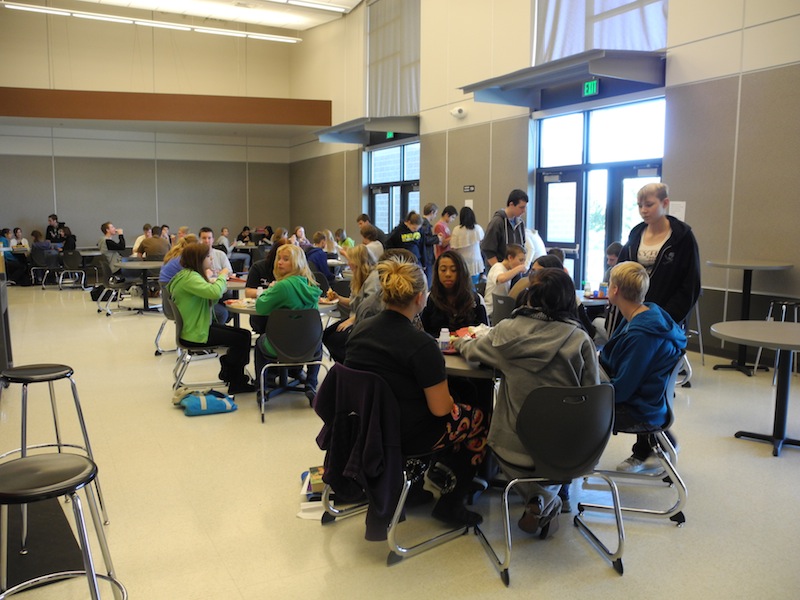
Reason #3:  School cafeterias are often, loud, crowded and rushed.

SOLUTION: Comfortable cafeterias that are positive, pleasant places to eat

Too many cafeterias are run like juvenile detention facilities rather than welcoming cafes. Adults patrol the aisles telling children to be quiet and eat up quickly. The mentality is  “herd-‘em-in, herd-’em-out” – or “eat it and beat it” – not a productive way to optimize children’s nutrition, especially when expecting them to eat new foods. 

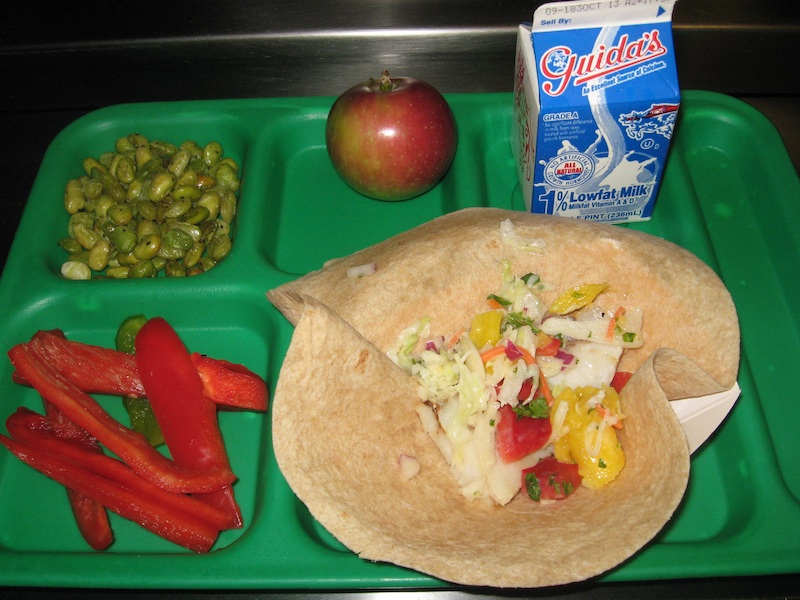
Pawtucket, Rhode Island, Fresh Fish Taco Tray

Child health experts agree that students need adequate lunchtimes to get the benefits of school meals. Middle school students in New Jersey and Minneapolis have recently made news by bringing attention to the simple facts: Kids need time to eat and to socialize with their friends. When they are rushed, they may throw away foods that take more time to eat, like whole fruits.

According to a 2004 National Food Service Management Institute publication, lunch  intake for elementary students was better when they had recess before lunch and a longer lunch period. When the lunch period time was 30 minutes versus 20 minutes, elementary students:

  • Eat 21 percent more food by weight.
  • Waste 40 percent less food by weight.
  • Consume 16 percent more calories.
  • Consume 56 percent more calcium.

In some cafeterias today, scchool nutrition directors report that children are still eating off their trays while being herded out of the cafeteria. Making school cafeterias positive places to enjoy meals and classrooms for smart eating is another key to reducing complaints about hungry children. Mealtime should be a:

  • Time to relax and socialize, while nourishing bodies and minds
  • Chance to fill nutrient gaps and refuel for afternoon classes
  • Learning lab for healthy eating habits and acceptable mealtime behaviors

Renaissance High School, Meridian, Idaho, Cafeteria

A calm, comfortable cafeteria does not happen by accident. Like any other important aspect of a successful school, it requires effective teamwork and communication among administrators, teachers, aides, food service, students, and parents. Montana Team Nutrition has information and materials for creating positive, pleasant mealtimes in schools and childcare, based on Ellyn Satter’s Division of responsibility in feeding.

The smartest schools have instituted programs that encourage students to try new foods and get more adults into cafeterias to help provide positive role models. Middle school students in Pawtucket (RI) now act as fruit and vegetable ambassadors and a long-running successful Food Coach Program in Hopkins (MA) trains parents and other adults to make a difference in the cafeteria.

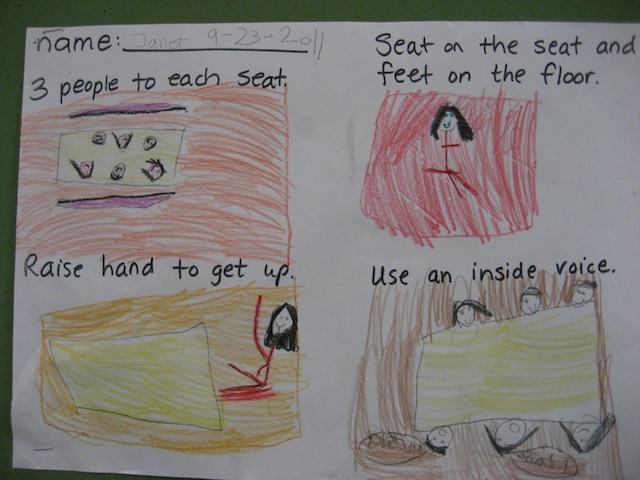
James John Elementary, Portland Oregon, Teaches Cafeteria Manners

Some Very Real Reasons Why Kids May Be Hungry at School – and What We Can Do About It: Part 1 of 3

I’ve watched the videos from the hungry teen athletes in Kansas and Jon Stewart’s amusing Starved By the Bell segment. I’ve read about the boycotts and heard dedicated school nutrition professionals talk seriously about getting their high schools out of the National School Lunch Program.

I’m very sorry that meals for kids at school are once again fodder for YouTube videos and late night TV. I’m even sorrier that school nutrition has become a political football like so many other issues. I am sorriest for the thousands of school nutrition heroes who have been trying to make the 2012 USDA Nutrition Standards work and the millions of low-income children who reply on schools cafeterias to provide their best meals of the day.

There are some very real reasons why students, especially teens, may be hungry during the school day. If everyone focused on finding real solutions, we could work together to benefit all students – improving their nutrition, health and academic performance. Here are two of the very real reasons that kids may be hungry at school – stay tuned for more reasons in parts 2 and 3.

Greek Pizza with hummus on whole grain crust, Johnston, Rhode Island, High School

Reason #1: Kids, especially teens, are hungry because they don’t eat breakfast.

SOLUTION: Breakfast every day for every student

According to the 2011 Kellogg’ Breakfast in America Survey, breakfast eating dips as kids grow older; 77 percent of young children eat breakfast every day, but this falls to 50 percent in the middle-school years and 36 percent among high school students. If you don’t eat breakfast, the new calorie ranges may not be enough to be both a breakfast and a lunch. And, more importantly, you will have found it hard (if not impossible) to concentrate and learn in your morning classes.

Schools need breakfast programs that are convenient for kids and practical for school food service. There are lots of successful models: Grab-and-Go breakfast options, like new kiosks planned for Medford (MA) schools, breakfast in the classroom being successfully implemented in districts coast to coast, and cafeteria breakfast bars with made-to-order breakfast burritos, as seen in my hometown of Billings, Montana.

Made-to-Order, Breakfast Burrito Bar, Senior High School, Billings, Montana

Reason #2: Most school schedule recess after lunch, so kids rush to get outside.

SOLUTION: Recess Before lunch

When kids are eager for recess, they often dump hunger-satisfying foods into the trash. It’s only nutrition WHEN they eat or drink, so we should maximize scheduling to get the food into the kids. Honestly, it’s not rocket science that children would be hungrier and thirstier when they have the chance to play first – and that exactly what schools report according to Starving for Recess, a 2011 District Administration article.

Scheduling Recess Before Lunch (RBL) isn’t rocket-science either and there are plenty of resources from Montana Team Nutrition to help schools with the process. RBL can even save money since many schools report significant decreases in garbage removal costs when students are active first, eating more food and drinking more milk afterward.

Recess Before Lunch Guide, Montana Team Nutrition (2008)