Create Healthier Schools with AFHK Grants for Healthy Kids

I am a long time fan of and volunteer for Action for Healthy Kids, which is currently welcoming schools to apply for 2014-2015 School Grants for Healthy Kids. The grants will range from $500 to $5,000 and are designed to help schools create or expand school breakfast programs, pilot universal breakfast programs or enhance their physical activity programs.

In addition to financial support, through funding from its sponsors, AFHK will provide the roughly 1,000 chosen schools with significant in-kind contributions in the form of programs, school breakfast and physical activity expertise and support to engage volunteers. The organization also will provide schools management expertise and support to develop strong alternative and universal breakfast or physical activity programs. Bottom line: Your school will get monies, support and technical assistance – a winning combo!

School Grants for Healthy Kids proven to improve school health environments

Past School Grants for Healthy Kids recipients have great stories to tell. For example: Trimble County Middle School in Bedford, Ky., reports a steady increase in their Universal Breakfast program participation and overall sick complaints/nurse visits down school-wide. Trimble County has also received compliments from the student body and notes that the breakfast program has helped ease a financial burden for families.

Universal Breakfast is a great program. I see the number of students that come through my serving line that are hungry and are not getting healthy meals at home. This is a great way to show that someone does care,” said Jackie Goode, Trimble County Middle School cafeteria manager.

A grant from School Grants for Healthy Kids can do the same for your school.

Grants will be available in select states. Award amounts will be based on building enrollment, project type, potential impact, and a school’s ability to mobilize parents and students around school wellness initiatives. Applications must be filed by May 2, 2014. The deadline will not be extended.

Learn more: If you’re interested for your school, attend an hour-long introductory webinar Thursday, March 20, 2014  at 3 p.m. ET, 2 p.m. CT, 1 p.m. MT and noon PT to get tips for applying. You can register.

Archived sessions also will be available. Once you have all the information you need, start the application process and apply before the May 2, 2014 deadline.

Trimble County Promote School Breakfast

Trimble County Promote School Breakfast

Why You Should Support School Breakfast, Even If Your Kid Eats At Home

It’s National School Breakfast Week and the buzz about breakfast at school is louder than ever this year. I’ve also been hearing pushback from parents who feed their children home – “our family doesn’t need school breakfast, why should we support that program?

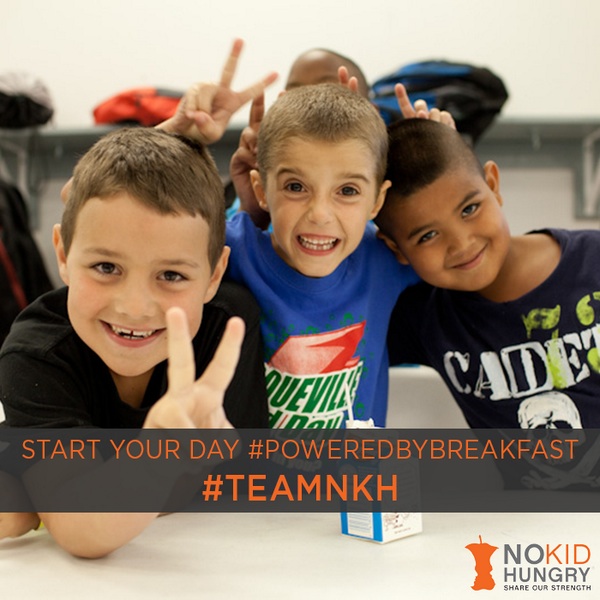
Every student should start the day powered by breakfast

Every parent in America has probably used this phrase many times: “Breakfast is the most important meal of the day.” If you recognize the multiple benefits of breakfast for strong bodies and smart brains, that’s great. If you make certain that your children never leave home without a breakfast of whole grains, fresh fruit and Greek yogurt or backyard eggs, that’s awesome for your kids. Their metabolism got a great kick-start and their brains have the fuel they need to focus on the teacher and learn new information – until lunchtime – every day.

But what about Jane, Johnny, Sam, Suzy and all the other students sitting around your child’s desk or table at school? Did they have a balanced breakfast? Did they have breakfast at all? In fact, did they have anything nutritious since they ate lunch at school the day before? Why should you care what your child’s classmates have or have not eaten? Why should you support a breakfast program at your school even if your kids will never need it?

According to Share Our Strength’s Teacher Report 2013, the answers are quite shocking:

  • Too many children are too hungry to learn. 87 percent of principals see hungry children in their schools at least once a week and 73 percent of teachers have students who regularly come to school hungry because there isn’t enough food at home.
  • Hungry children cannot listen to the teacher because they are listening to their stomachs. When children come to school without a morning meal, it impacts their ability to concentrate, their attention span, and their classroom behavior. In the Share Our Strength report, 90 percent of educators say breakfast is critical to academic achievement.
  • Even if your family is blessed with a perfect breakfast every day, other inattentive, unfocused, under-nourished children can affect your child’s ability to succeed at school. It happens directly when hungry children need more of the teacher’s time -and indirectly when your child is distracted from the lessons at hand.

PoweredByBreakfast-3

The important connection between breakfast and school performance is well known. When standardized tests are given, every school in America tells students to “get a good night’s sleep and eat good breakfast.” Unfortunately, breakfast during test week is too little too late! Children need breakfast every day to get new information and skills into their brains, not just to get them out on test day.

Here are three things that every parent can do to support breakfast, classroom performance and successful schools for every child — including their own:

  • Digest the facts about breakfast and hungry children in America. The 2013 and 2012 Teacher Reports are good places to start. You may also want to Map the Meal Gap in your state or county. A 2013 USDA report estimated that 1 in 5 American children (21.6 percent) live in food insecure homes. In my opinion, it is a moral imperative that we change this fact. Even if you do not agree, think of all the educational problems that hunger causes in classrooms from coast to coast.
  • Explore expert views on the power of school breakfast. Many forward-thinking educational groups understand the breakfast research. On March 3, 2014,
    five leading education organizations and the Food Research and Action Center (FRAC) announced the Breakfast for Learning Education Alliance to encourage schools and states to increase school breakfast participation. The alliance includes the major national associations representing parents (PTA) and virtually everyone who works in schools – teachers, principals and administrators. Honestly, can all these groups be wrong about such a simple and effective program.
  • Advocate for breakfast in your community. Students from every income level benefit from a balanced morning meal every day, whether they eat it at home or school. Fuel Up to Play 60, a national program to improve school nutrition and fitness, has made healthy breakfast choices and effective school breakfast programs a priority. Check out their breakfast “plays” and you’ll find fun ways to get all students more excited about getting a smart start on every day.

While your child may not need a school breakfast program, their friends and classmates may not have that luxury for a myriad of reasons. Breakfast is a simple, cost-effective way for high-performing schools to help every child be well nourished and ready to learn. That’s a strategy that I support as a mom, a Registered Dietitian (RD) and a taxpayer.

March is National Nutrition Month – and a great time to make sure your family is powered by breakfast. My takes on better breakfast bites can be found at Make Time for Breakfast and 4 Tips for Better Breakfasts from Kids Eat Right and the Academy for Nutrition and Dietetics.

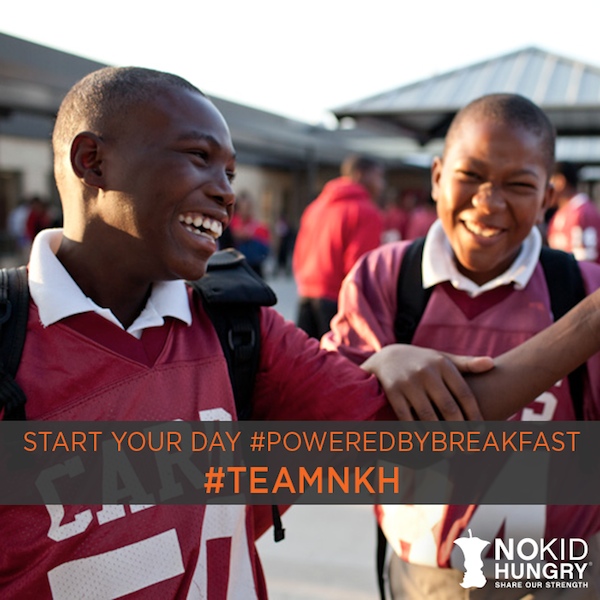
PoweredByBreakfast-2

Follow Dayle Hayes, MS, RD on Twitter: www.twitter.com/SchoolMealsRock      

Eat, Play, Learn: Y is for YAY!

To celebrate the publication of Proceedings of the Learning Connection Summit: Nutrition, Physical Activity, and Student Achievement, I’m offering a short daily post during February on the ABCs of the health and academics.

Y is for YAY! 

I admit that I was struggling with what to use for Y – and then my latest blog for the Huffington Post was published today on the Parents page: 6 Secrets Every Parent (and School) Should Know About Academic Success, by Dayle Hayes, MS, RD. Hope you will take time to read it online – or below!

You would do anything to insure your children’s academic success, right? Helping with homework, meeting with teachers, arranging for tutors — whatever it takes to give them that little extra boost. You also care about your kids’ health — and want them to eat right and get enough physical activity to stay healthy.

What you may not know is how closely connected academic success is to what kids eat and how active they are. Experts in both education and health are beginning to realize that more attention to children’s bodies will also help their brains work better. Whether you call it the Learning Connection or the Wellness Impact, the message to parents and schools is clear: Eating smarter and moving more are essential for optimal performance and behavior in the classroom. Here are six ways you and your school district can work together to help all students succeed.

1. Start with Breakfast, Every Day

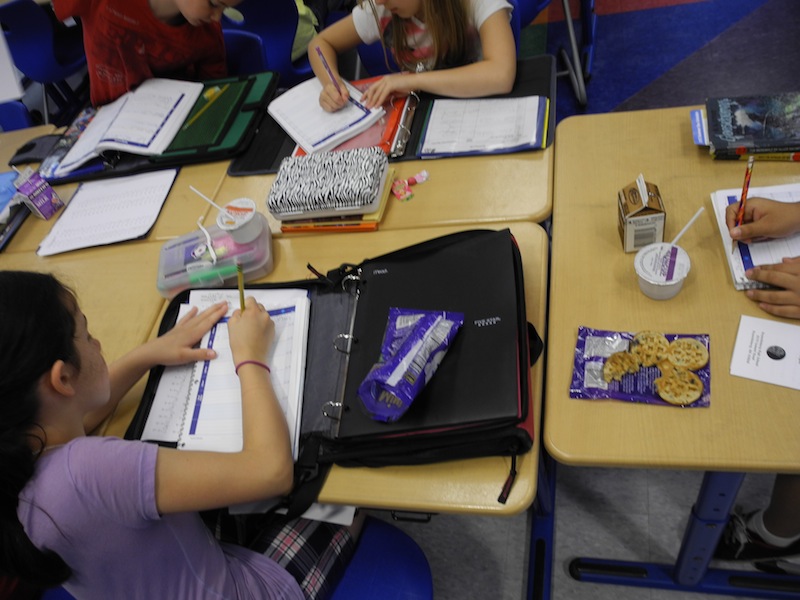
We all know that mornings can be crazy busy and some kids just aren’t hungry before school. But, this is a no brainer — literally! Without fuel for morning classes, students cannot focus, concentrate and learn. At home or school (or even in a car or bus), breakfast changes everything. Any breakfast is better than no breakfast and a bowl of whole grain cereal with milk and fruit can actually be a good source of key nutrients. Even if your kids eat at home in the morning, your support for school breakfast is critical for those children who need it. One kid who is too hungry to learn can disrupt an entire classroom. On the other hand, breakfast in the classroom, like this one in Reynoldsburg (OH), helps students fuel up for learning.

2014-02-20-3Desk.JPG

2. Safe Routes to School

Some of the hottest research on activity and brain function comes out of Dr. Charles Hillman’s lab at the University of Illinois. Brain imaging and other tests show that a simple 20-minute walk can improve a student’s performance in both reading and math. Takeaway for caring parents? Walking (or biking) to school means your kids arrive with brains that are ready to learn. Concerned about their safety? Get your workout by walking or biking with them — or get involved in a Safe Routes to School group. For example, our community is having a Walk-Bike Summit in March.

3. Active Recess Before Lunch

Physical activity at recess is good for kids brains (and their bodies) for the exactly the same reasons as walking or biking to school. However, recess before lunch has been shown to have some other very important benefits. When children are active before coming to the cafeteria, they eat better and behave better. Studies show that they actually eat more entrée, vegetables and fruits — and drink more milk. When kids rush through lunch so they can run out to play, lots of food goes into the garbage can and students are short-changed on afternoon fuel. Breakfast helps children learn in the morning, but lunch is just as necessary for afternoon classes.

4. Comfortable Cafeterias

As just noted, there is a critical academic reason to be concerned about those half-eaten lunches that your children bring home — and the full garbage cans in some school cafeterias. Sadly, many cafeterias are not pleasant, positive places to enjoy a meal. The good news is that they can be. All they need is a bit of bright décor and adults who are trained to encourage appropriate conversations rather than just patrolling between the tables and telling everyone to hurry up and eat. Parents can help create Comfortable Cafeterias by eating with their children and making positive, pleasant mealtimes part of a local wellness policy.

5. Classroom Energizers

Remember that brain research about the benefits of a 20-minute walk? Short bouts of aerobic activity in the classroom can also work wonders. A short activity break re-energizers young brains and their bodies too. Research shows that a brain break can be especially valuable when transitioning from one topic to another. Free online programs like Jammin’ Minute and Move to Learn can bring fun videos and activity tips into any classroom. Check with your children’s teachers to see if they are taking advantage of this effective and educational technique. Teachers are finding that the few minutes spent on activity actually add minutes of instructional time and putting a smarter student in the chair.

6. Smart After-School Snacks

Since children are all-day learners, they need regular refueling throughout the day, including after-school snacks — for sports, homework and academic enrichment programs. Many snack foods (candy, chips, soft drinks, etc.) do not offer the lasting power that kids need. USDA’s Smart Snacks in Schools regulations are coming to school-day sales this fall — and it is important that students have access to the same nutrient-rich foods after the school day ends. Fruits and veggies are always good, but protein power is even more important. Yogurt, string cheese, nuts, nut butters, sliced deli meats, beef jerky, hard cooked eggs and hummus can all be incorporated into at home or on-the-go smart snack routines. Programs like Fuel Up to Play 60 can engage students as leaders, like these middle schoolers in Naches (WA), in making changes in what their school offers for meals, snacks and physical activity.

2014-02-20-Naches.jpg
Next time you review a report card or discuss your child’s performance at school, be sure that nutrition and fitness are part of the conversation. Using the Learning Connection to your advantage can make a significant impact on their school success.
Eat. Play. Learn. X is for XIGUA or 西瓜 / (watermelon)

To celebrate the publication of Proceedings of the Learning Connection Summit: Nutrition, Physical Activity, and Student Achievement, I’m offering a short daily post during February on the ABCs of the health and academics.

X is for XIGUA or 西瓜 / (watermelon)

Honestly, I just couldn’t come up with X word for the Learning Connection. I’ve been thinking about it all month – and the only one that came to me was the the Chinese word for watermelon. So, we’re going with XIGUA – and a lovely spring garden, a sight for hungry eyes after months of winter and polar vortices.

Thanks to Watermelon.org for a little spring

Thanks to Watermelon.org for a little flowering spring

Eat. Play. Learn. W is for WELLNESS Policies

To celebrate the publication of Proceedings of the Learning Connection Summit: Nutrition, Physical Activity, and Student Achievement, I’m offering a short daily post during February on the ABCs of the health and academics.

W is for WELLNESS Policies

School WELLNESS was the hot topic today at the White House. According to the USDA press release:

“Today, First Lady Michelle Obama joins U.S. Department of Agriculture Secretary Tom Vilsack to announce proposed guidelines for local school wellness policies. The bipartisan Healthy, Hunger-Free Kids Act of 2010 mandated that the USDA set guidelines for what needed to be included in local school wellness policies in areas such as setting goals for nutrition education and physical activity, informing parents about content of the policy and implementation, and periodically assessing progress and sharing updates as appropriate.”

I’ve been a fan of strong, effective Local Wellness Policies since they were first required in the Child Nutrition Reauthorization Act of 2004. The changes mandated by the Healthy Hunger-Free Kids Act of 2010 have the real potential to strengthen wellness environments in schools. However, they have to be implemented – rather than just sitting on the shelf in someone’s office. The key is a strong, effective wellness committee – administrators, teachers, nutrition staff, parents and students – working together.

Need a model wellness policy? I highly recommend the South Dakota Model Wellness Policy, developed by a coalition of South Dakota school and health professionals – and approved by their State Board of Education in September 2012. It meets all the requirements – and provides links to many resources. 

South Dakota School Wellness Model Policy

South Dakota School Wellness Model Policy

Eat. Play. Learn. V is for VEGETABLES

To celebrate the publication of Proceedings of the Learning Connection Summit: Nutrition, Physical Activity, and Student Achievement, I’m offering a short daily post during February on the ABCs of the health and academics.

V is for VEGETABLES

Yesterday several friends sent me a nice meme of children in a garden with the words: “Share this if you think every school should have a garden” Of course, I think that every school should have a garden! I also believe that VEGETABLES fresh from the garden are perhaps the best way to get kids eating more produce – and I am quite certain that garden-based learning is one of the best way to teach nutrition.

However, I have also visited dozens of school gardens and greenhouses – filled with a variety of VEGETABLES at all times of the year – and I know for a fact that successful school gardens take a lot of hard, every day work. There is planning, teaching, planting, teaching, weeding, teaching and harvesting and then teaching some more.

True, there are tons of school garden resources (some of my favorites are listed below). And, in many states, there are even grants – but it still takes an amazing number of dedicated green thumbs to make a school garden grow VEGETABLES for hungry kids. As my friend Alyssa Densham says, “School gardens don’t grown themselves!”

Some of these school garden resources may be more appropriate for certain parts of the country than others. Check them out with these quick links:

Every successful school garden is the work of many green thumbs

Every successful school garden is the work of many green thumbs

Eat. Play. Learn. U is for USDA Team Nutrition

To celebrate the publication of Proceedings of the Learning Connection Summit: Nutrition, Physical Activity, and Student Achievement, I’m offering a short daily post during February on the ABCs of the health and academics.

U is for USDA Team Nutrition

USDA – the US Department of Agriculture – has been developing and distributing nutrition education materials for many years. In my opinion, the recent garden-based nutrition resources from USDA’s Team Nutrition are the best they have ever produced. I am a serious fan of the very fun posters that visually express the theme of the Dig In! unit – “the world of possibilities found in growing and eating fruits and vegetables.” It’s hard to pick of favorite, but if I had to, it would probably be the Race Car poster pictured below.

As we near the end of Eat. Play. Learn. posts for February 2014, this USDA Team Nutrition poster seems to pull it all together: Eat more fruits and vegetables, Play with nutrition in fun ways, and Learn about the possibilities in growing in the garden. The Dig In! materials are designed to be “Standards-Based Nutrition Education from the Ground Up.” The ten inquiry-based lessons were created to engage 5th and 6th graders in growing, harvesting, tasting and learning about fruits and vegetables. Putting up a fun USDA poster is a great first step. Using the curriculum materials in a classroom and connecting them to school meals served in the cafeteria might actually impact a child’s eating habits. You can download all the Dig In! materials from the USDA Team Nutrition website – and Team Nutrition schools can order hard copies. Do a kid a favor – check out Dig In! and help them get excited about growing gardens!

USDA Dig In! Posters: Race Car (black beans, blueberries, broccoli, carrots, celery, green beans, oranges, peaches, red bell pepper, rhubarb, sugar snap peas)

USDA Dig In! Posters: Race Car (black beans, blueberries, broccoli, carrots, celery, green beans, oranges, peaches, red bell pepper, rhubarb, sugar snap peas)

Eat. Play. Learn. T is for TIME

To celebrate the publication of Proceedings of the Learning Connection Summit: Nutrition, Physical Activity, and Student Achievement, I’m offering a short daily post during February on the ABCs of the health and academics.

T is for TIME

Let’s be honest: Many school cafeterias are not conducive to a pleasant dining experience  (that’s why few adults want to eat in them). Many barely give kids enough TIME to eat and drink what’s on their tray. I have been in a few school lunchrooms with the feel of a prison – adults patrolling the aisles, prohibitions on talking to your friends, and stoplights when things get “out of hand.”

The most important question about school breakfast and lunch meals is how do we get the food into kids? My manta is that is it only nutrition when a child eats or drinks it. If school food goes into a trashcan, it’s garbage, not nutrition.

If we want children who are well-nourished and ready to learn, we have to create more positive and pleasant mealtimes in schools. If we truly believe that school nutrition programs are critical for children’s overall health, we have to give more TIME and attention to HOW we feed children in school as well as to WHAT we feed them. Here are three tried-and-true tips for getting more fuel for learning into students and less food into trashcans:

  1. Schedule recess before lunch. Research shows that the best sequence for children is playing first, then eating, and finally learning in the classroom.
  2. Establish reasonable ‘eat-tiquette’ expectations. Like anything else in school, children can learn to behave well in the cafeteria.
  3. Provide TIME to eat and adult role models. Create a comfortable cafeteria where administrators, teachers, aides, parents and grandparents want to eat with kids.

We need a new approach to HOW meals are served in school cafeterias. The “herd-em-in/herd-em-out” mentality is not the path toward healthful eating habits. If our goal is competent eaters who make smart choices for lifetime health, we have to do better.  We have to allow enough TIME for children to eat in pleasant, positive places, like this dining room in MacFarlane Park Elementary Magnet School, Tampa, Florida. Every child should have at least 15 to 20 minutes of seat TIME to enjoy a school lunch.

MacFarlane Park Elementary Magnet School located in Tampa, Florida

MacFarlane Park Elementary Magnet School located in Tampa, Florida

Eat. Play. Learn. S is for Smart Snacks in Schools

To celebrate the publication of Proceedings of the Learning Connection Summit: Nutrition, Physical Activity, and Student Achievement, I’m offering a short daily post during February on the ABCs of the health and academics.

S is for SMART SNACKS in Schools

Starting in fall 2014, the US Department of Agriculture (USDA) interim rule on competitive foods, SMART SNACKS in Schools, goes into effect. In my opinion, there’s lots of good news in the rule, starting with more fruits, veggies, low-fat dairy foods, whole grains, and lean proteins. Based on experience with existing standards, like the 6,640+ HealthierUS School Challenge (HUSSC) winners and Alliance for a Healthier Generation (AHG) districts, the proposed rule is realistic and can benefit kids’ health.

We also need a reality check about the rule does and does not do. While SMART SNACKS in Schools represents another significant step toward healthy school nutrition environments, it does not cover foods brought from home, foods for classroom parties or any foods sold after regular school hours (athletic events, after-school fundraisers, etc.). Compliance and monitoring will be an issue outside of cafeterias. Fortunately, the AASA (American Association of School Superintendents) has a Competitive Foods Policy Initiative to build necessary support for strong policies.

After the 2012 Nutrition Standards for School Lunch went into effect, Jane Brody wrote “There’s Homework to Do on School Lunches” in the New York Times. Her basic premise was that the federal regulations and standards are just the beginning – and that homes and schools also have work at improving how children eat. I believe the same is true for this issue.

To build strong bodies and smart brains, children also need SMART SNACKS at home, SMART SNACKS brought from home to school, and SMART SNACKS served in concession stands at sporting events. A healthy school environment will take more than new regulations – it will require a culture of wellness – designed to support the connection between nutrition and academic success.

USDA Smart Snacks in Schools

USDA Smart Snacks in Schools

Eat. Play. Learn. R is for RECESS

To celebrate the publication of Proceedings of the Learning Connection Summit: Nutrition, Physical Activity, and Student Achievement, I’m offering a short daily post during February on the ABCs of the health and academics.

R is for RECESS (Before Lunch) 

Physical activity at RECESS is good for kids brains (and their bodies) for the same reasons as walking/biking to school and PE classes are. According to the 2012  American Academy of Pediatrics Policy Statement on The Crucial Role of Recess in School:

“… safe and well-supervised recess offers cognitive, social, emotional, and physical benefits that may not be fully appreciated when a decision is made to diminish it. Recess is unique from, and a complement to, physical education—not a substitute for it. The American Academy of Pediatrics believes that recess is a crucial and necessary component of a child’s development and, as such, it should not be withheld for punitive or academic reasons.”

RECESS before lunch has been shown to have some additional very important benefits. When children are active before coming to the cafeteria, they eat better and behave better. Studies show that they actually eat more entrée, vegetables and fruits – and drink more milk. When kids rush through lunch so they can run out to play, lots of food goes into the garbage can and students are short-changed on afternoon fuel. Breakfast helps children learn in the morning, but lunch is just as necessary for afternoon classes.

I’m proud to say that Montana Team Nutrition has been real leader in RECESS Before Lunch, publishing both A Guide to Success and research: Scheduling Recess Before Lunch: Exploring the Benefits and Challenges in Montana Schools.

Montana Team Nutrition Recess Before Lunch (RBL) Guide

Montana Team Nutrition Recess Before Lunch (RBL) Guide