Create Healthier Schools with AFHK Grants for Healthy Kids

I am a long time fan of and volunteer for Action for Healthy Kids, which is currently welcoming schools to apply for 2014-2015 School Grants for Healthy Kids. The grants will range from $500 to $5,000 and are designed to help schools create or expand school breakfast programs, pilot universal breakfast programs or enhance their physical activity programs.

In addition to financial support, through funding from its sponsors, AFHK will provide the roughly 1,000 chosen schools with significant in-kind contributions in the form of programs, school breakfast and physical activity expertise and support to engage volunteers. The organization also will provide schools management expertise and support to develop strong alternative and universal breakfast or physical activity programs. Bottom line: Your school will get monies, support and technical assistance – a winning combo!

School Grants for Healthy Kids proven to improve school health environments

Past School Grants for Healthy Kids recipients have great stories to tell. For example: Trimble County Middle School in Bedford, Ky., reports a steady increase in their Universal Breakfast program participation and overall sick complaints/nurse visits down school-wide. Trimble County has also received compliments from the student body and notes that the breakfast program has helped ease a financial burden for families.

Universal Breakfast is a great program. I see the number of students that come through my serving line that are hungry and are not getting healthy meals at home. This is a great way to show that someone does care,” said Jackie Goode, Trimble County Middle School cafeteria manager.

A grant from School Grants for Healthy Kids can do the same for your school.

Grants will be available in select states. Award amounts will be based on building enrollment, project type, potential impact, and a school’s ability to mobilize parents and students around school wellness initiatives. Applications must be filed by May 2, 2014. The deadline will not be extended.

Learn more: If you’re interested for your school, attend an hour-long introductory webinar Thursday, March 20, 2014  at 3 p.m. ET, 2 p.m. CT, 1 p.m. MT and noon PT to get tips for applying. You can register.

Archived sessions also will be available. Once you have all the information you need, start the application process and apply before the May 2, 2014 deadline.

Trimble County Promote School Breakfast

Trimble County Promote School Breakfast

Why You Should Support School Breakfast, Even If Your Kid Eats At Home

It’s National School Breakfast Week and the buzz about breakfast at school is louder than ever this year. I’ve also been hearing pushback from parents who feed their children home – “our family doesn’t need school breakfast, why should we support that program?

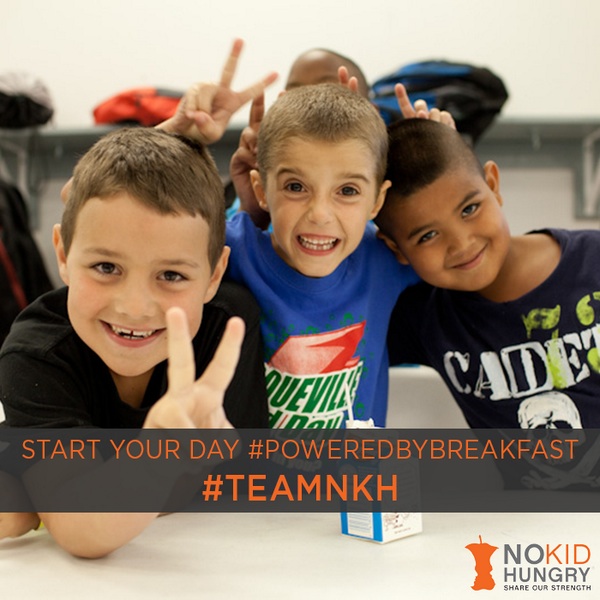
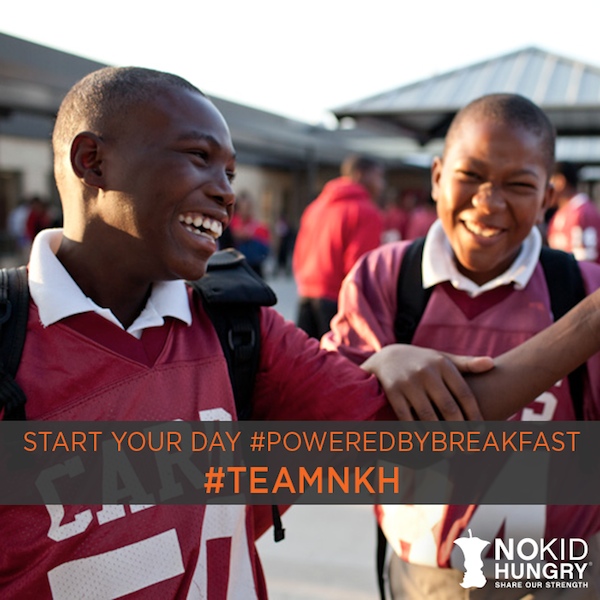
Every student should start the day powered by breakfast

Every parent in America has probably used this phrase many times: “Breakfast is the most important meal of the day.” If you recognize the multiple benefits of breakfast for strong bodies and smart brains, that’s great. If you make certain that your children never leave home without a breakfast of whole grains, fresh fruit and Greek yogurt or backyard eggs, that’s awesome for your kids. Their metabolism got a great kick-start and their brains have the fuel they need to focus on the teacher and learn new information – until lunchtime – every day.

But what about Jane, Johnny, Sam, Suzy and all the other students sitting around your child’s desk or table at school? Did they have a balanced breakfast? Did they have breakfast at all? In fact, did they have anything nutritious since they ate lunch at school the day before? Why should you care what your child’s classmates have or have not eaten? Why should you support a breakfast program at your school even if your kids will never need it?

According to Share Our Strength’s Teacher Report 2013, the answers are quite shocking:

  • Too many children are too hungry to learn. 87 percent of principals see hungry children in their schools at least once a week and 73 percent of teachers have students who regularly come to school hungry because there isn’t enough food at home.
  • Hungry children cannot listen to the teacher because they are listening to their stomachs. When children come to school without a morning meal, it impacts their ability to concentrate, their attention span, and their classroom behavior. In the Share Our Strength report, 90 percent of educators say breakfast is critical to academic achievement.
  • Even if your family is blessed with a perfect breakfast every day, other inattentive, unfocused, under-nourished children can affect your child’s ability to succeed at school. It happens directly when hungry children need more of the teacher’s time -and indirectly when your child is distracted from the lessons at hand.

PoweredByBreakfast-3

The important connection between breakfast and school performance is well known. When standardized tests are given, every school in America tells students to “get a good night’s sleep and eat good breakfast.” Unfortunately, breakfast during test week is too little too late! Children need breakfast every day to get new information and skills into their brains, not just to get them out on test day.

Here are three things that every parent can do to support breakfast, classroom performance and successful schools for every child — including their own:

  • Digest the facts about breakfast and hungry children in America. The 2013 and 2012 Teacher Reports are good places to start. You may also want to Map the Meal Gap in your state or county. A 2013 USDA report estimated that 1 in 5 American children (21.6 percent) live in food insecure homes. In my opinion, it is a moral imperative that we change this fact. Even if you do not agree, think of all the educational problems that hunger causes in classrooms from coast to coast.
  • Explore expert views on the power of school breakfast. Many forward-thinking educational groups understand the breakfast research. On March 3, 2014,
    five leading education organizations and the Food Research and Action Center (FRAC) announced the Breakfast for Learning Education Alliance to encourage schools and states to increase school breakfast participation. The alliance includes the major national associations representing parents (PTA) and virtually everyone who works in schools – teachers, principals and administrators. Honestly, can all these groups be wrong about such a simple and effective program.
  • Advocate for breakfast in your community. Students from every income level benefit from a balanced morning meal every day, whether they eat it at home or school. Fuel Up to Play 60, a national program to improve school nutrition and fitness, has made healthy breakfast choices and effective school breakfast programs a priority. Check out their breakfast “plays” and you’ll find fun ways to get all students more excited about getting a smart start on every day.

While your child may not need a school breakfast program, their friends and classmates may not have that luxury for a myriad of reasons. Breakfast is a simple, cost-effective way for high-performing schools to help every child be well nourished and ready to learn. That’s a strategy that I support as a mom, a Registered Dietitian (RD) and a taxpayer.

March is National Nutrition Month – and a great time to make sure your family is powered by breakfast. My takes on better breakfast bites can be found at Make Time for Breakfast and 4 Tips for Better Breakfasts from Kids Eat Right and the Academy for Nutrition and Dietetics.

PoweredByBreakfast-2

Follow Dayle Hayes, MS, RD on Twitter: www.twitter.com/SchoolMealsRock      

Eat, Play, Learn: Y is for YAY!

To celebrate the publication of Proceedings of the Learning Connection Summit: Nutrition, Physical Activity, and Student Achievement, I’m offering a short daily post during February on the ABCs of the health and academics.

Y is for YAY! 

I admit that I was struggling with what to use for Y – and then my latest blog for the Huffington Post was published today on the Parents page: 6 Secrets Every Parent (and School) Should Know About Academic Success, by Dayle Hayes, MS, RD. Hope you will take time to read it online – or below!

You would do anything to insure your children’s academic success, right? Helping with homework, meeting with teachers, arranging for tutors — whatever it takes to give them that little extra boost. You also care about your kids’ health — and want them to eat right and get enough physical activity to stay healthy.

What you may not know is how closely connected academic success is to what kids eat and how active they are. Experts in both education and health are beginning to realize that more attention to children’s bodies will also help their brains work better. Whether you call it the Learning Connection or the Wellness Impact, the message to parents and schools is clear: Eating smarter and moving more are essential for optimal performance and behavior in the classroom. Here are six ways you and your school district can work together to help all students succeed.

1. Start with Breakfast, Every Day

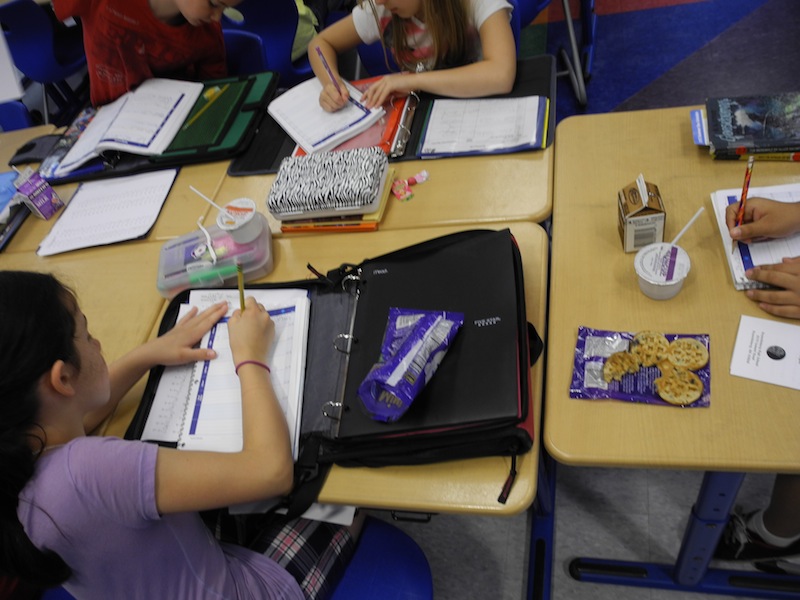
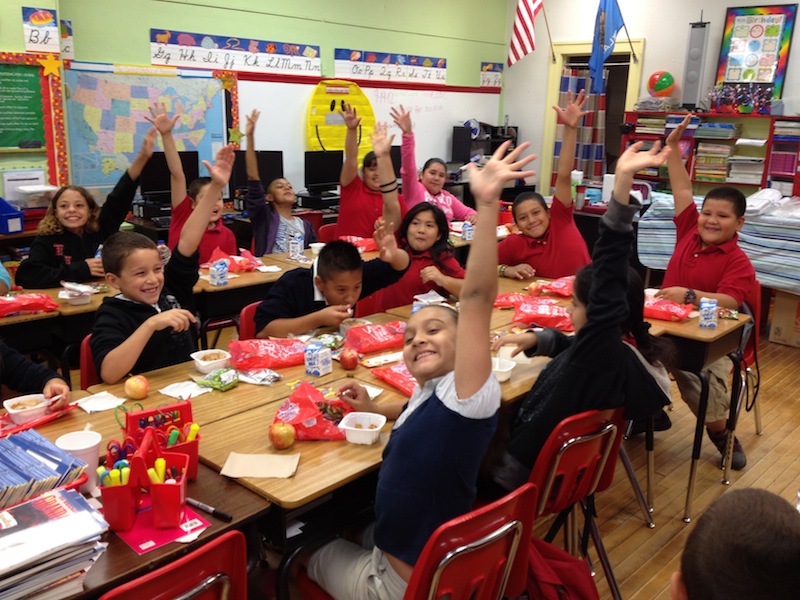
We all know that mornings can be crazy busy and some kids just aren’t hungry before school. But, this is a no brainer — literally! Without fuel for morning classes, students cannot focus, concentrate and learn. At home or school (or even in a car or bus), breakfast changes everything. Any breakfast is better than no breakfast and a bowl of whole grain cereal with milk and fruit can actually be a good source of key nutrients. Even if your kids eat at home in the morning, your support for school breakfast is critical for those children who need it. One kid who is too hungry to learn can disrupt an entire classroom. On the other hand, breakfast in the classroom, like this one in Reynoldsburg (OH), helps students fuel up for learning.

2014-02-20-3Desk.JPG

2. Safe Routes to School

Some of the hottest research on activity and brain function comes out of Dr. Charles Hillman’s lab at the University of Illinois. Brain imaging and other tests show that a simple 20-minute walk can improve a student’s performance in both reading and math. Takeaway for caring parents? Walking (or biking) to school means your kids arrive with brains that are ready to learn. Concerned about their safety? Get your workout by walking or biking with them — or get involved in a Safe Routes to School group. For example, our community is having a Walk-Bike Summit in March.

3. Active Recess Before Lunch

Physical activity at recess is good for kids brains (and their bodies) for the exactly the same reasons as walking or biking to school. However, recess before lunch has been shown to have some other very important benefits. When children are active before coming to the cafeteria, they eat better and behave better. Studies show that they actually eat more entrée, vegetables and fruits — and drink more milk. When kids rush through lunch so they can run out to play, lots of food goes into the garbage can and students are short-changed on afternoon fuel. Breakfast helps children learn in the morning, but lunch is just as necessary for afternoon classes.

4. Comfortable Cafeterias

As just noted, there is a critical academic reason to be concerned about those half-eaten lunches that your children bring home — and the full garbage cans in some school cafeterias. Sadly, many cafeterias are not pleasant, positive places to enjoy a meal. The good news is that they can be. All they need is a bit of bright décor and adults who are trained to encourage appropriate conversations rather than just patrolling between the tables and telling everyone to hurry up and eat. Parents can help create Comfortable Cafeterias by eating with their children and making positive, pleasant mealtimes part of a local wellness policy.

5. Classroom Energizers

Remember that brain research about the benefits of a 20-minute walk? Short bouts of aerobic activity in the classroom can also work wonders. A short activity break re-energizers young brains and their bodies too. Research shows that a brain break can be especially valuable when transitioning from one topic to another. Free online programs like Jammin’ Minute and Move to Learn can bring fun videos and activity tips into any classroom. Check with your children’s teachers to see if they are taking advantage of this effective and educational technique. Teachers are finding that the few minutes spent on activity actually add minutes of instructional time and putting a smarter student in the chair.

6. Smart After-School Snacks

Since children are all-day learners, they need regular refueling throughout the day, including after-school snacks — for sports, homework and academic enrichment programs. Many snack foods (candy, chips, soft drinks, etc.) do not offer the lasting power that kids need. USDA’s Smart Snacks in Schools regulations are coming to school-day sales this fall — and it is important that students have access to the same nutrient-rich foods after the school day ends. Fruits and veggies are always good, but protein power is even more important. Yogurt, string cheese, nuts, nut butters, sliced deli meats, beef jerky, hard cooked eggs and hummus can all be incorporated into at home or on-the-go smart snack routines. Programs like Fuel Up to Play 60 can engage students as leaders, like these middle schoolers in Naches (WA), in making changes in what their school offers for meals, snacks and physical activity.

2014-02-20-Naches.jpg
Next time you review a report card or discuss your child’s performance at school, be sure that nutrition and fitness are part of the conversation. Using the Learning Connection to your advantage can make a significant impact on their school success.
Eat. Play. Learn. M is for MICHIGAN

To celebrate the publication of Proceedings of the Learning Connection Summit: Nutrition, Physical Activity, and Student Achievement, I’m offering a short daily post during February on the ABCs of the health and academics.

M is for MICHIGAN

I’ve had the pleasure of participating in several Michigan healthy school events over the years and I am honored to be invited back in March (23-27) to present a series of four “First Fuel” School Breakfast Challenge trainings across the state. The Michigan goal is to have 60 percent or more of free/reduced lunch participants also eating a school breakfast by 2015. The recently released Food Research and Action Center’s (FRAC) 2014 School Breakfast Scorecard found reported that Michigan’s rate of school breakfast participation is 53 percent of lunch participation – an increase of 2 percent since 2010.

While the Michigan school breakfast goal is ambitious, they have strong support and the right partners for the job. At the Michigan Department of Education, support comes from the very top, since Superintendent Mike Flanagan is a strong and vocal advocate for school breakfast as the foundation for academic success. I know several other states that wish they had such a knowledgable and supportive state superintendent! Other active partners in the “First Fuel” School Breakfast Challenge include the Michigan Team Nutrition Program, which has a extensive reach on Twitter and Facebook, as well as Michigan Blue Cross Blue Shield and United Dairy Industries of Michigan who are offering $250,000 in grants for marketing and equipment. I am looking forward to being part of the Michigan work to insure that all children are well-nourished and ready to learn.

FRIST FUEL Promotes School Breakfast

FIRST FUEL Promotes School Breakfast

Eat. Play. Learn. L is for LUNCH

To celebrate the publication of Proceedings of the Learning Connection Summit: Nutrition, Physical Activity, and Student Achievement, I’m offering a short daily post during February on the ABCs of the health and academics.

L is for LUNCH

We hear lots of talk about breakfast being the most important meal of the day, especially for children in school. And, when we talk about childhood hunger, most of the conversation is again about insuring that food insecure children have access to school breakfast. But, what about school lunch? Is lunch any less important than breakfast at school?

School lunch is just as important for focus, concentration and learning as breakfast – just in the afternoon instead of the morning. More children have access to school lunch than school breakfast, but sadly many children may not have enough time or the right atmosphere to actually eat and enjoy the lunch they are served. Experts agree that students need at least 15 to 20 minutes of seat time for lunch. Unfortunately many children have 10 minutes or less to sit and eat at lunchtime – and often the cafeteria is loud or managed more like a prison with whistles, lights out and silence for bad behavior.

The good news is that some schools are creating Comfortable Cafeterias, which encourage students to socialize and enjoy their lunch – without being pressured to eat or to hurry. I have worked with Montana Team Nutrition on resources for Pleasant and Positive Mealtimes. The goal is make cafeterias inviting places for children to eat – so that the food goes into them rather than into trash cans. It is only nutrition when they eat or drink it!

Just look at the wonderful tray that this student in Bethel, Oregon, chose on the lunch line and consider for a moment how long it will take her to eat it – even without distractions from other students and cafeteria aides! With a a beautiful lunch like this, children need time and encouragement to eat, so they can pay attention and learn in the afternoon.

First Grade Student in Bethel School District, Eugene, Oregon

First Grade Student in Bethel School District, Eugene, Oregon

Eat. Play. Learn. H is for HUNGRY.

To celebrate the publication of Proceedings of the Learning Connection Summit: Nutrition, Physical Activity, and Student Achievement, I’m offering a short daily post during February on the ABCs of the health and academics.

H is for HUNGRY

When I hear that schools are closed for days in a row, my immediate thought is about what those children will eat when they do not have access to school meals. If children regularly come to school hungry, it means that they do not have access to food at home. And, when the weather is bad, their families may be even less able to shop for groceries or visit a food bank. Honestly, for millions of American children, a snow day may be a hungry day. Preliminary 2013 USDA data shows that an average of 18.9 million children ate a free school lunch daily and 10.1 million ate a school breakfast on average.

The numbers in the previous paragraph also tell another story as well – that is the enormous ‘breakfast gap’ of 8.8 million children who are eligible but are not receiving a free breakfast. These are the children who may to be too hungry to learn as reported in the deeply disturbing Hunger in Our Schools: Teachers Report 2013 by No Kid Hungry: Share Our Strength. If nearly 73 percent of teachers regular try to teach hungry children, we are a very serious educational problem in our schools. The simple fact is that hungry children cannot focus, concentrate and learn. School breakfast is one obvious solution and I applaud the administrators and educators who are ramping up their efforts to expand the program. Michigan State Superintendent of Schools Mike Flanagan is is a true nutrition hero for promoting the “First Fuel” Breakfast Challenge in his state – and I am proud to be part of the Michigan Team Nutrition training for this effort. Too hungry to learn is unacceptable for any child in Michigan, Montana or any other US state.

SHARE OUR STRENGTH’S TEACHERS REPORT 2013

SHARE OUR STRENGTH’S
TEACHERS REPORT 2013

Eat. Play. Learn. F is for FUEL Up

To celebrate the publication of Proceedings of the Learning Connection Summit: Nutrition, Physical Activity, and Student Achievement, I’m offering a short daily post during February on the ABCs of the health and academics.

F is for FUEL Up

I’ve been a serious fan of FUEL Up to Play 60 since its 2007 kickoff. I’ve seen the frontline benefits in my hometown (Billings, Montana) and in many states across the USA. I wrote the SNA toolkit: Make Fuel Up to Play 60 Work For Your School Nutrition Program and know for certain that the program can enhance school environments, nutrition programs and academic achievement.

In my playbook, FUEL Up to Play 60 scores a touchdown because, at the school level, all plays are planned and implemented by students themselves! If we want to raise a healthier generation of Americans, it is today’s youth who need to make a commitment to wellness in their own lives. FUEL Up to Play 60 grants and resources support and inspire young folks to make the program’s tagline a reality. Here are three examples of how student leaders are making health happen in their schools.

  • EAT HEALTHY. The FUEL Up to Play 60 Willow Creek team (pictured below) served yogurt parfaits and whole-wheat breakfast burritos made with turkey sausage during a National School Breakfast week celebration.
  • GET ACTIVE. The creativity of FUEL Up to Play 60 teams really shines when it comes to fitness fun – and the added minutes of physical activity have helped kids get fit and schools meet the criteria for USDA’s HealthierUS School Challenge.
  • MAKE A DIFFERENCEFUEL Up to Play 60 helps motivate me to stay in the school wellness game. When kids make presentations to school boards, start grab-n-go breakfast carts or plant school gardens, I believe that real change is possible.

Want more details FUEL Up to Play 60 plays or help in bringing the program to your school? Contact your state/regional dairy council and check the FUEL Up to Play 60 website.

Willowcreek Middle School, Lehi, Nevada, Goes BIG with FUTP60!

Willowcreek Middle School, Lehi, Utah, Goes BIG with FUTP60!

Eat. Play. Learn. E is for ENVIRONMENT

To celebrate the publication of Proceedings of the Learning Connection Summit: Nutrition, Physical Activity, and Student Achievement, I’m offering a short daily post during February on the ABCs of the health and academics.

E is for ENVIRONMENT

In the school wellness ‘biz,’ we talk a lot about creating a healthy school environment. In fact, it’s probably safe to say that most of my professional work and a significant portion of my volunteer time has been devoted to promoting a culture of wellness in K-12 schools. A quote from the The Wellness Impact: Enhancing Academic Success through Healthy School Environments captures the key issues.

“… the vital importance of improved nutrition and increased physical activity in creating an environment that enriches students’ readiness to learn.”

So what exactly is a healthy school environment? How can you tell that you are in a healthy environment when you walk into a school? Actually, I think that you can see aspects of a healthy environment before you even get to a school building! Here are just a few of my favorite way to identify a school where students can be fit, well-nourished and ready to learn.

  • Students (and sometimes families) fill the sidewalks as they walk to school.
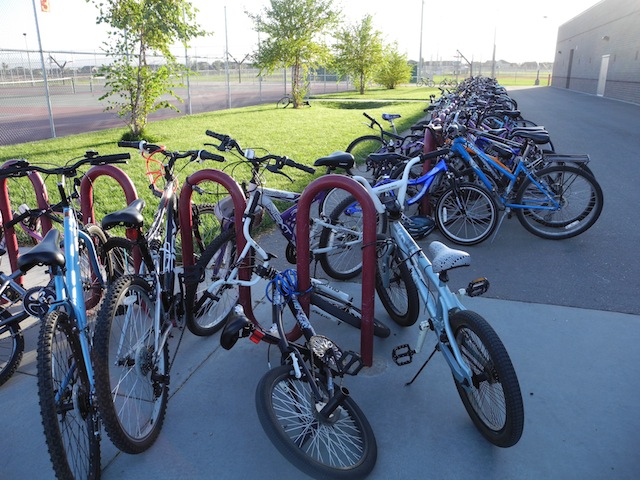
  1. School bike racks are full or overflowing (see photo below from Idaho middle school).
  2. Playgrounds and sports fields are full of children and adults playing together.
  3. Gardens have a prominent place on the school campus.
  4. Wonderful aromas of food cooking/baking/roasting waft through the hallways.
  5. Hallway walls have artwork, signs or markers to encourage physical activity.
  6. Banners or signs identify awards and recognition for nutrition and fitness.
  7. Breakfast is served in the classroom to every child who needs it.
  8. Food presentations are eye-appealing, colorful and customer-focused.
  9. Cafeteria is bright and cheerful; students socializing with inside voices.
  10. Adults are sitting and eating with children rather than patrolling the tables.
  11. Any snack food sales offer many options from MyPlate food groups.
  12. Fun after-school physical activities are available to children of all abilities.

These are just a few of my favorite things in a healthy school environment. What are yours?

Full Bike Racks at Heritage Middle School in Meridian Idaho

Full Bike Racks at Heritage Middle School in Meridian, Idaho

Eat. Play. Learn. C is for CLASSROOM

To celebrate the publication of Proceedings of the Learning Connection Summit: Nutrition, Physical Activity, and Student Achievement, I’m offering a short daily post during February on the ABCs of the health and academics.

C is for CLASSROOM

As they say in real estate, it’s all about location, location, location. Many educators and school administrators are asking if a classroom is the right location for a school breakfast. The answer from superintendents, principals, teachers and students across the country is a resounding YES. From reading the research, visiting the schools and talking with stakeholders, these are the top four reasons that I’m a big believer in – and booster for – breakfast in the classroom (BIC), sometimes called breakfast after the bell.

  1. Serving breakfast in the classroom is a proven strategy for increasing breakfast participation. The Food Research and Action Center’s (FRAC) 2014 School Breakfast Scorecard credits increased numbers of low-income students eating breakfast to strategies like moving it out of the cafeteria into the classroom.
  2. Students like the comfortable atmosphere of their classroom better than a loud cafeteria. Eating in a classroom – with an opt-out option – reduces the stigma of breakfast-for-poor-kids-only. When I talk to students, like those in the photo below, they tell me they like to eat with their friends in a quiet, calm place.
  3. Teachers see positive results when students eat a morning meal in the classroom. The 2013 Too Hungry to Learn report showed that 75% of teachers liked knowing that their students are energized and ready to learn. Seventy-six percent use the time to take attendance, 65% make classroom announcements.
  4. School administrators have also embraced the benefits of serving breakfast in the classroom. In 2013, the American Association of School Administrators (AASA, The Superintendents Association) published an issue of their magazine on Improving Attendance, Health and Behavior: Moving Breakfast Out of the Cafeteria.

Breakfast in the classroom is good for students, educators and administrators. I call that a win-win-win – and clearly this classroom does too.

OKC BIC-4

Eat. Play. Learn. B is for BREAKFAST

To celebrate the publication of Proceedings of the Learning Connection Summit: Nutrition, Physical Activity, and Student Achievement, I’m offering a short daily post during February on the ABCs of the health and academics.

B is for BREAKFAST

Want the low-down on the benefits of breakfast for school-aged children? Just ask those on the front lines of education – classroom teachers. That is what Share our Strength did in the No Kid Hungry 2012 Teacher’s Report Hunger in Our Schools.

Teachers know the realities of hunger in America’s classrooms – and they know the educational, behavioral and health benefits of breakfast (see graph below). What they may not know is that school breakfast also helps to fill the nutrition gaps experienced by US children and teens. According to the 2010 Dietary Guidelines for Americans Advisory Committee Report, American young people, especially teenage girls, have numerous nutrient ‘shortfalls.’ Many are not getting enough vitamin A, C and E, magnesium and phosphorus. Even more are lacking the four nutrients of concern: vitamin D, potassium, calcium and dietary fiber.

The good news it is that a simple school breakfast – fruit, whole grain cereal or bread, and low-fat dairy – helps to fill those nutrient gaps. School breakfast also provides the protein and energy that students need to focus, concentrate and learn until lunch time. Such a simple meal – with so many breakfast benefits!

2012 NKH Teachers Benefits