EVERY DAY GOODNESS: Smart Photos of School Meals (Part 1)

School lunch photos are back in the news. First, there was the story about the FedUp campaign on NPR’s The Salt. My reaction – and their response – are at What School Meals REALLY Look Like Today. Now, USA Today wants to know “What does your school lunch look like?” If you believe, as I do, that media coverage has been skewed to outdated and inaccurate images of school meals, there is something that you can do – something that you must do.

It’s time to flood social media with gorgeous photos of real school meals – the EVERY DAY GOODNESS that is prepared in your kitchens and served in your cafeterias and classrooms! A smart, beautiful photo is worth a thousand words – and thousands of views. That’s why School Meals That Rock is featuring SMART TIPS FOR PHOTOS THAT ROCK. Get your Smartphone or camera ready – and start snapping!

TIP #1: TAKE LOTS OF PHOTOS. Seriously, in order to get great photos that do justice to your great meals, you have to practice. So, just do it today. Take lots of photos and delete all of them if they are not as good as you would like. The only way to get good at taking photos is to practice, practice, practice. There are tons of photo ops in every school kitchen and cafeteria – check out the photo gallery at ITS Meals at Provo School District for tons of examples.
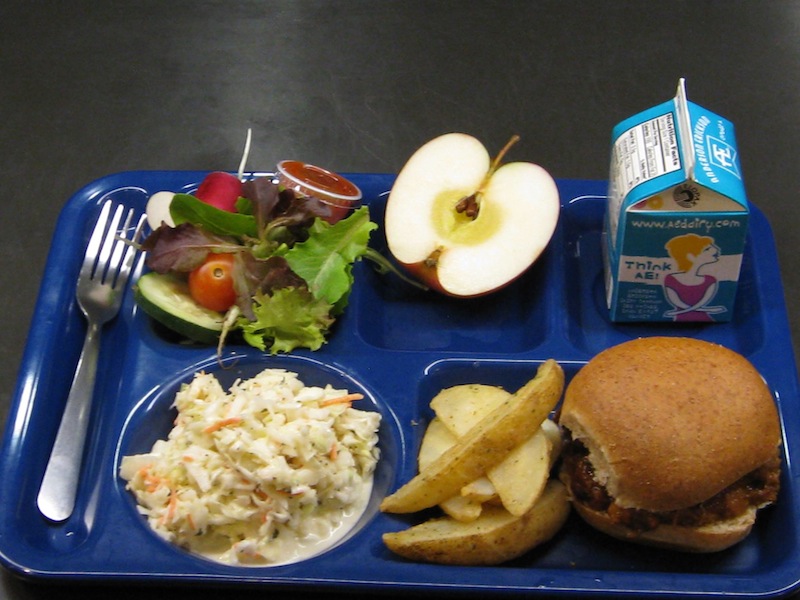
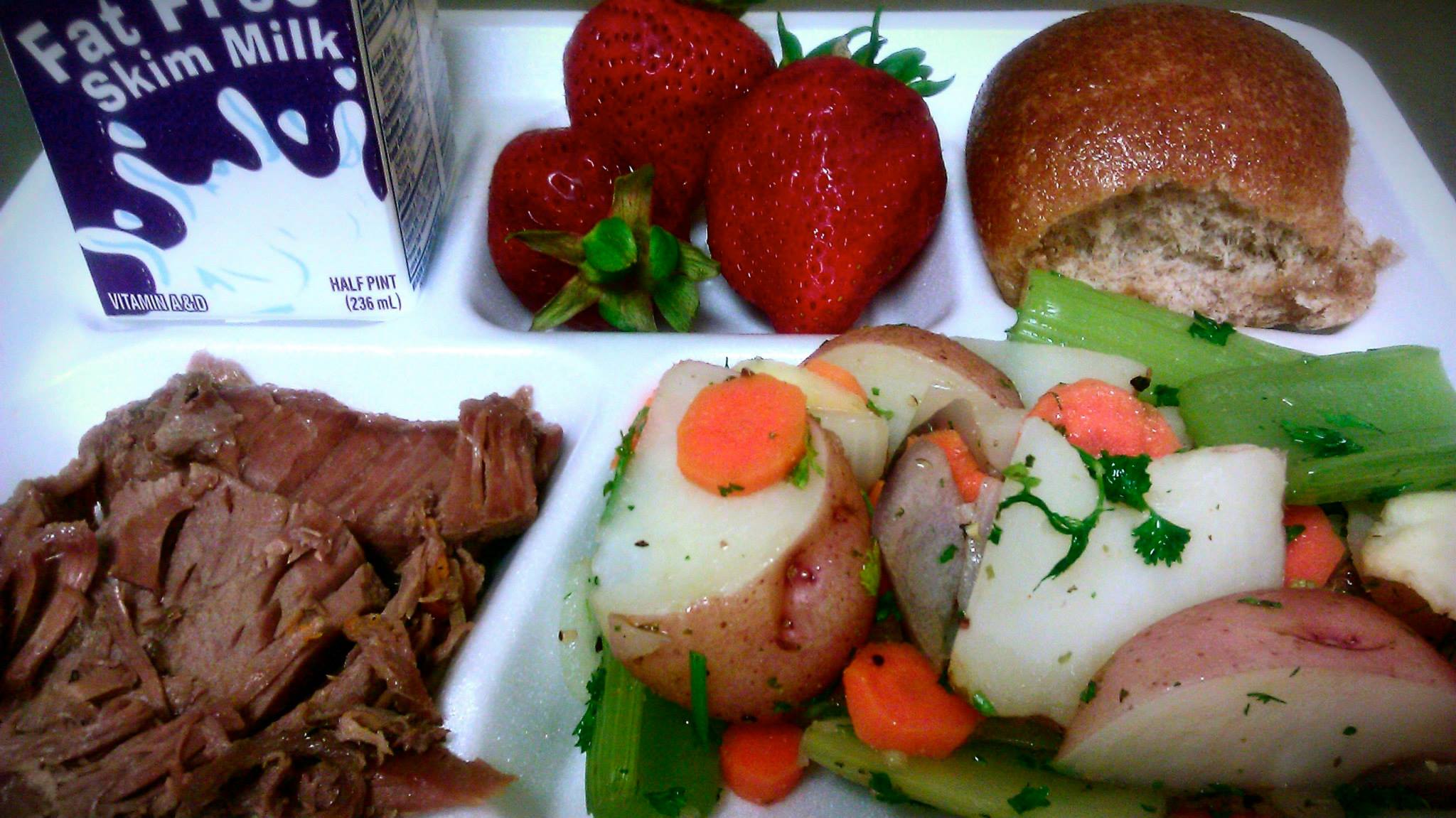
Food Day 2013 tray from Decorah, Iowa

Food Day 2013 tray from Decorah, Iowa

Tip #2: USE A SOLID COLOR TRAY. Deep blue, green and red seem to compliment most school foods best. Natural and black can also work well. Steer away from swirled colors and pastels. Very few foods look delicious on mint green or pink. If you don’t have the right tray, borrow or purchase one to use for daily photos. If you use plates instead of trays, show your meals on plates. The photo above – from a lunch of locally-sourced foods served in Decorah Community Schools in Iowa – rocks for many reasons: The tray color is just one of the them. The meal below may meet all nutrition standards, may be delicious and may even include local foods, but it is hard to see the food for the swirling blue and white colors.

Swirled colors make it hard to showcase delicious food

Swirled colors make it hard to showcase delicious food

Tip #3: KEEP BACKGROUND SIMPLE. Help the viewer focus on the food by eliminating distracting background patterns. One of the best backgrounds is a clean stainless kitchen counter or cafeteria table. While the meal below has some great options, there are too many districting patterns in the background, plus we cannot see what food is in the box. There is also no reason to include the bottle of soy sauce – a carton or bottle of milk would be much better.
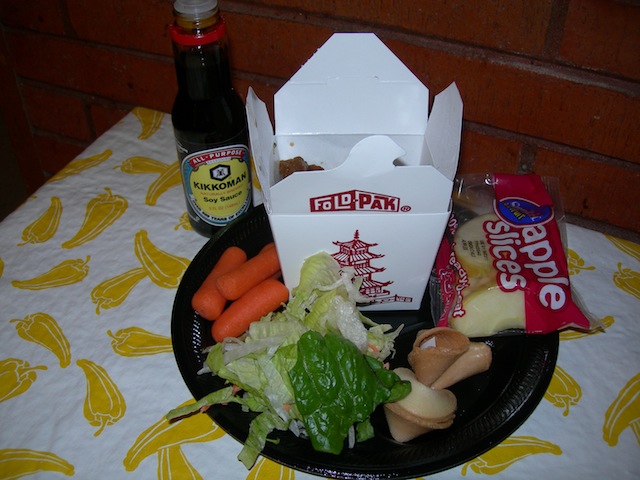
Too many patterns in the background distract from the food

Too many patterns in the background distract from the food

BOTTOM LINE: If you want the world to have a more accurate, current and POSITIVE image of school meals, YOU have to share the EVERY DAY GOODNESS in your cafeterias.

3 Secrets for Getting Kids to Make Smart Food Choices

[Thanks to Kern Halls of Ingenious Culinary Concepts for originally publishing this on his new blog.]

As school nutrition professionals, we are required to serve certain food items – and we want our customers to enjoy nutrient-rich, “good-for-them” meals and snacks.  While there is never any guarantee that every child is going to like every food (do you?!), there are some fundamental, “secret” strategies for helping children make smarter food choices at school. Here are three of my favorites:

1.    Presentation, presentation, presentation.

We all eat with our eyes – and our nose and ears – long before we ever put the food in our mouths. School-aged customers are looking for colorful, eye-appealing choices that smell wonderful – and maybe even “sizzle” in the skillet. A recent study with pre-teen children indicated that the young people preferred greater food diversity than adults. On average, they preferred seven different items on their plates and six different colors. This study is one of many from Cornell University’s Food and Brand Lab that indicate the importance of presentation to children, including on school lunch lines.

Want children to eat “what’s good for them”? Make sure that it looks, smells and sounds incredibly delicious!

From Kalispell, Montana, these rainbow salads would appeal to any student!!

From Kalispell, Montana, these rainbow salads would appeal to any student!!

2.    Taste, taste, taste.

This should go without saying: Taste reigns supreme in the food world. While you can get kids to take a bite or two of almost anything, you will not get them to repeat the experience or truly enjoy the food unless it tastes good. How do you get food to go from OK to WOW in terms of taste buds? The “secret” is culinary skills – planning, storing, preparing, seasoning and cooking to maximize flavor and texture. Culinary boot camps, guest chefs and chefs on staff have become popular for good reasons. They all help school meals move beyond their reputation for processed blandness to more complex, sophisticated and spicy foods that appeal to today’s consumers.

Want children to eat “what’s good for them”? Make sure your food tastes so wonderful that they want to come back for more tomorrow.

Denver (CO) Public Schools served Albondigas with zucchini, bell peppers, onions, potatoes, cilantro and carrots, as well as homemade turkey meatballs. Students at Schmitt Elementary raved about them on the playground and at other schools students asked for seconds!

Denver (CO) Public Schools served Albondigas with zucchini, bell peppers, onions, potatoes, cilantro and carrots, as well as homemade turkey meatballs. Students at Schmitt Elementary raved about them on the playground and at other schools students asked for seconds!

3.    Service with a smile.

Anyone who has every worked in any kind of foodservice with any age customers knows the value of a smile. In school cafeterias, the smiles of the school nutrition professionals directly translate into improved academic performance. That’s because S.M.I.L.E. stands for School Meals Improve Learning Environments. When children are well nourished, they are ready to succeed – better able to focus, concentrate and learn in the classroom. Good customer service is one of most effective ways to insure that children will enjoy whatever is served at school breakfast, lunch and snack – whether they know that it is good for them or not!!

Want children to eat “what’s good for them”? Remember to S.M.I.L.E. and invite your customer to enjoy the appealing, delicious food you have prepared. 

In Lake Stevens, Washington, their "Build a Rainbow" Salad Bar is served with many smiles.

In Lake Stevens, Washington, their “Build a Rainbow” Salad Bar is served with many smiles.

Why You Should Support School Breakfast … from HuffPo Parents

A school nutrition director recently wrote to me about how difficult it was to start a Breakfast in the Classroom program in her Pennsylvania school district. One parent had gone so far as to write a blog about the fact that her child did not need breakfast because “she ate at home.” As the director said in her message to me, “I’m beginning to lose sight of why I ever wanted to do this in the first place. I’m sure that the majority of the students and parents will appreciate my efforts, it’s just those few who tend to bring one down!”

Thanks to Betsy, I was inspired to write my second article for The Huffington Post Parents page on “Why You Should Support School Breakfast, Even If Your Kid Eats at Home.” Check it out and find out the three things that every parent can do to support breakfast at school, like signing up for Fuel Up to Play 60.

My mantra: Breakfast every day for every day. At home or at school, breakfast changes lives – and t’s the very least we can do for education.

Breakfast Changes Lives

Breakfast Changes Lives

Six Back-to-School Lunch Spots: Where I would take Julia Child for a bite (Part 1, Western states)

As a devoted fan of Julia Child since the days of the earliest days of The French Chef on black and white TV, I know that she was always a culinary and educational trendsetter. Back in 1995, she was a co-founder of Days of Taste®, a national discovery-based program of The American Institute of Wine & Food for 4th and 5th graders. “In this age of fast and frozen food, we want to teach school children about real food – where it is grown and how it is produced – so that they can develop an understanding and appreciation of how good food is supposed to taste.”

Last week was the 101st anniversary of Julia Child’s birth – an event that I always honor personally and professionally. As I was updating the daily entries on School Meals That Rock, I realized how much Julia Child would love to see the very real revolution that has take place in school meals. Fresh, local, lovingly prepared and beautifully served breakfasts, lunches, snacks and even suppers are served across the USA, not just in a few foodie enclaves like Portland (OR) and Berkeley (CA), but in a wide range of school nutrition programs with a real commitment to good food for hungry students.

If I could do some culinary time travel and take Julia to lunch, as Bob Spitz was lucky enough to do in Dearie, here are six school cafeteria hot spots we would hit in the Western states. These schools vary widely in location, demographics and staff training, but all have one thing in common: They are among the growing trend of districts dedicated to serving made-from-scratch food, supporting local farmers and ranchers, and teaching children how good food tastes.

Image

Lake Stevens, Washington, Mollie Langum, Nutrition Supervisor

Mollie and her staff are true farm-to-table champions, as showcased in their “I Made A Rainbow at the Salad Bar” event. Washington-grown produce is not just for special occasions though; it’s an every day item in Lake Stevens cafeterias (just east of the metro Seattle area). With the right kind of “peer pressure,” students help promote produce, with giant strawberry costumes and as 5th grade fruit/veggie ambassadors.

ImageBethel, Oregon, Jennie Kolpak, RD, Nutrition Supervisor

Down I 5, in Eugene, Oregon, Jennie has developed a very impressive Harvest-of-the-Month program. Willamette Valley apples, pears, melons, carrots, bok choy and more show up on Bethel menus. This made-to-order Willamette High School panini with balsamic marinated veggies is just one delicious example. This year, they are going “hyper-local” with a new commercial size greenhouse on school grounds.

ImageSolvang, California, Chef Bethany Markee, Viking Café

Trading fine dining for a cafeteria, Bethany leads a Central California school food revolution – as this Honey Roasted Organic Fennel for the salad bar clearly shows. Thanks to a partnership with Santa Ynez Valley Fruit and Vegetable Rescue, the Viking Café is able to regularly serve fresh, organic produce and thanks to a new school herb garden, the seasonings will soon be very local as well.

ImageChandler, Arizona, Catherine Giza, Director and Wes Delbridge, RD, Supervisor

I bet Julia would appreciate the high-tech side of this large multi-cultural district with its trend-setting iPhone app. And, I know that she would be equally impressed with their personal touch on the 250 hand-tossed pizzas with whole grain, made-from-scratch dough and homemade marinara sauce!

ImageProvo, Utah, Jenilee McComb, Director and Colleen Dietz, Assistant

Breakfast or lunch, Provo’s cafeterias serve freshly prepared, locally sourced meals to the lucky students in this mid-size district just south of Salt Lake City. The school nutrition professionals in each school take justifiable pride in their award-winning program and the Facebook page proudly lists the farms and farmers who grow food for their kitchen. Provo students know where their food comes from!

ImageEnnis, Montana, Tammy Wham, Director and Natasha Hegmann, FoodCorps

It might take us a bit longer to get to Ennis, a southwestern Montana community of less than 1,000 with about 400 students K-12. However, I can guarantee that it would be worth the drive! Tammy and her cooks make nearly everything from scratch and thanks to Montana FoodCorps they now have a greenhouse and school garden (with club and summer camp) for incredible, edible produce year-round!

School Success: What’s HEALTH got to do with it?

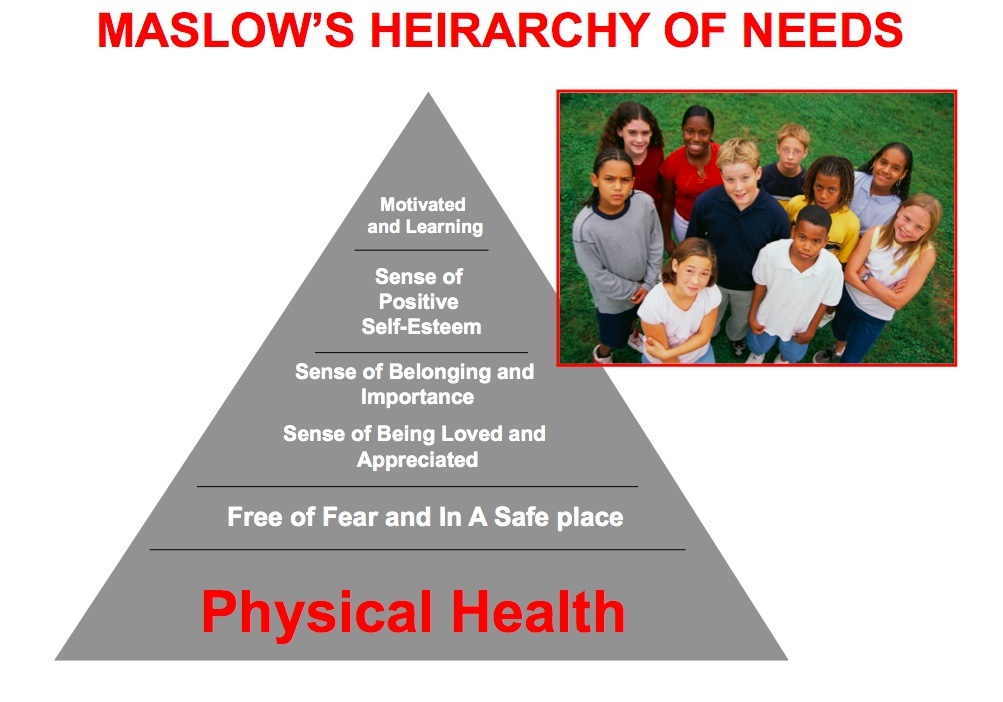
While news about childhood obesity often makes the headlines, three other interrelated — and equally critical issues — are often not as familiar. While you may not have heard as much about student under-nutrition, food insecurity and inactivity, a growing body of research suggests that these issues can have a significant — and negative — impact on the children and adolescents in schools. It is critical to understand how addressing these physical health issues, identified as the foundation for learning in Maslow’s hierarchy of needs, can help to support classroom performance and academic success in any district.
Physical Health = Foundation for Learning

As a few statistics will show, there are compelling reasons to address the physical health needs of America’s children today. In terms of nutrition, the overwhelming majority of children in the U.S. (98 percent) do not consume adequate servings from all food groups, missing nutrient-rich foods essential for growth and development. According to the 2010 Dietary Guidelines for Americans, four nutrients (calcium, vitamin D, potassium and fiber) are of “public health concern,” meaning these nutrient gaps are so big they affect children’s health today and in the future.

The Partnership for a Healthier America (PHA) also notes that there is a crisis of physical inactivity among our nation’s youth. The PHA September 2012 Policy Snapshot reports that only 42 percent of children ages six to 11 and 29 percent of high school students get the recommended 60 minutes of daily physical activity.

Nearly 17 million American children live in food insecure homes, not always certain when or where they will have their next meal. Recent surveys suggest that as many as half of school children skip breakfast regularly. There is also growing awareness among policy makers that food insecurity and the high rates of childhood obesity in the U.S. may be interrelated problems. The fact that children can be both overweight and food insecure is counter intuitive – and the reasons are both complex and not completely understood.


We do know that food insecurity affects students’ health, development, behavior and school performance. Food insecure students tend to have lower math scores, difficulty concentrating, more fatigue and are more likely to repeat a grade level. Children and teens struggling with food security are also more likely to experience difficulty getting along with others, irritability and school suspensions.
Wellness Impact Report

                        Wellness Impact Report

We also know that improving children’s eating habits and physical activity levels leads to health benefits. While multiple factors influence a child’s ability to learn in school, researchers and educators now recognize that skipping breakfast and a sedentary lifestyle may also affect a student’s cognition and achievement. GENYOUth’s Wellnes Impact Report explores the connections between nutrition, physical activity and academic achievement. Here is what they talked about and how it can make a difference in your district.

BREAKFAST BOOSTS BRAINPOWER

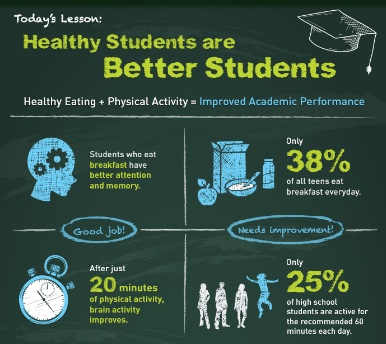
Mothers across the country have recognized the importance of breakfast for decades — and researchers have now confirmed both the health and cognitive benefits of eating well in the morning. Breakfast helps to combat childhood obesity, encourages healthy eating, and gets kids ready to learn. Unfortunately, for many families, breakfast gets squeezed out by the morning hustle and bustle — or, sadly, by the lack of food in the house. When students come to school hungry for whatever reason, they are listening to their stomachs rather than their teachers. They may have trouble concentrating on work in the classroom and often end up in the nurse’s office complaining of stomach pains and headaches. Research has shown that school breakfast programs can help prevent these problems and that they can help improve math grades, reduce school absences and rates of tardiness, and decrease emotional/behavioral problems.

Breakfast Changes Lives

                                           Breakfast Changes Lives

Expanding programs can bring all the benefits of breakfast to your schools. Flexible breakfast service — like Grab-n-Go and Breakfast in the Classroom — can help increase participation without losing valuable instructional time. Your local dairy council can work directly with your school to help implement the right breakfast program for your district. Fuel Up To Play 60 and other grants are available to help implement school breakfast programs and dairy council staff members are eager to help your district take full advantage of valuable funding, implementation and promotion resources.

ACTIVITY AFFECTS COGNITION

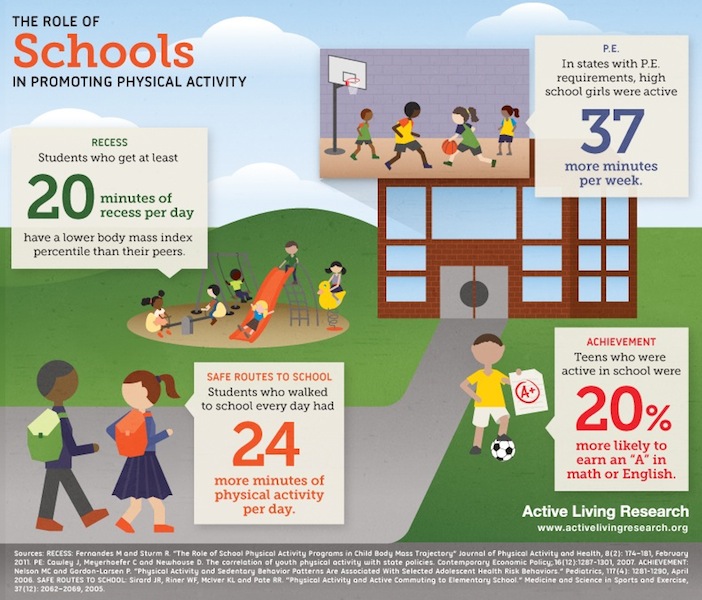
The Wellness Impact Report also documents the positive relationships between physical activity at school and several indicators of academic achievement, classroom behavior and cognitive function. According to researchers, the normally sedentary school day can be activated in multiple effective ways, including physical education, active recess, walking or biking to/from school, and before/after school programs like walking clubs, as well as physically active classroom lessons and energizing breaks.

Activity in Schools

                                                         Activity in Schools

Your district’s physical education (PE) professionals are your best resource for all the ways to increase activity in and out of the classroom. If you want to see some excellent examples of classroom energizers for elementary and middle school students, Eat Smart, Move More North Carolina were developed as part of the North Carolina State Board of Education’s Healthy Active Children Policy.

STUDENT LEADERS MAKE A DIFFERENCE

While everyone has a role to play in creating healthier, smarter school environments, student empowerment is a critical component for success. According to the Learning Connection Summit leaders, one of the key principles of game-changing improvements in school nutrition and physical activity is to focus on youth leadership for maximum impact. That is the goal of Fuel Up to Play 60 (FUTP60), developed by the NDC and NFL, in collaboration with the U.S. Department of Agriculture. FUTP60 now engages over 11 million students in 73,000 schools. A recent survey of adults involved in those schools indicated that 70 percent believe the program is helping youth make healthier food choices and 62 percent say it is helping increase the amount of time students being physically active at school.

And, THAT is what it’s all about: Creating healthier school environments to create healthier students who are fit, healthy and ready to learn! Sincere thanks to Southeast United Dairy Industry Association, Inc. (SUDIA) for their support of the original draft of this article, published in the SEEN Magazine of the Southeast Education Network

School Breakfast Makes Sense for School Success

As a mom, registered dietitian (RD) and national school nutrition expert, I’ve been a broken-record about breakfast for decades. I can honestly say that I talk about breakfast at school in every one of the many presentations I give every year from coast-to-coast. The reasons are both simple and profound:

  • Breakfast helps fuel smart brains by improving students’ ability to focus and pay attention in class. Hungry children cannot listen to their teachers because they are listening to their stomachs. A 2012 Share Our Strength survey reported that 3 out of 5 teachers say they have “children in their classrooms who regularly come to school hungry.”
  • Breakfast helps build strong bodies by providing nutrients most American children are currently missing. The 2010 Dietary Guidelines for Americans identified four nutrients of concern – calcium, vitamin D, potassium and fiber. A nutrient-rich school breakfast helps students grow strong and play hard – and it turns out that physical activity also helps them perform better in the classroom.
Erza enjoys breakfast in the classroom, Minneapolis, MN

Erza enjoys breakfast in the classroom, Minneapolis, MN

Schools across the Midwest are serving up breakfast to thousands of hungry kids every day in school cafeterias, classrooms, and even hallways – where students can pick up a nutrient-rich, grab-n-go breakfast to kick-start their morning. It’s been such a pleasure to work with Midwest Dairy Association’s School Nutrition Institute this year, helping school nutrition professionals learn creative ways to revitalize breakfast so that every student is ready to learn in the classroom.

National School Breakfast Week – March 4 through 8, 2013 – is the perfect time to find out what’s happening with school breakfast in your community. I know you’ll be impressed with the quick, simple, delicious choices – like yogurt parfaits with fruit and granola, whole grain cereal with low-fat milk and fresh fruit, or breakfast burritos with eggs and cheese. It’s so reassuring to know that school breakfast programs across the Midwest are dedicated to building smart brains and strong bodies for school success.

Breakfast Bar in Parkside Elementary, Grants Pass, OR

Breakfast Bar in Parkside Elementary, Grants Pass, OR

Originally published on Midwest Dairy’s blog, Dairy Makes Sense on Monday, March 4, 2013

SUPER Breakfast, SUPER Oatmeal, SUPER BOWL Challenge

For the first time ever SCHOOL MEALS THAT ROCK is offering some SUPER PRIZES – for your participation in FUEL UP TO PLAY 60 SUPER BOWL BREAKFAST CHALLENGE.

From November 5th through December 3rd, you will have the chance to win one of FOUR $50 GIFTS CARDS from the NFL Gift Shop. All you have to do is check the weekly questions on FACEBOOK School Meals That Rock and post your answers – and, of course, get your school excited about entering the FUEL UP TO PLAY 60 SUPER BOWL BREAKFAST CHALLENGE. Rules for entering the challenge are pasted below and on the FUTP60 website.

HERE’S HOW YOU CAN WIN A $50 GIFT CARD:

  • Respond to this blog post with a BREAKFAST or OATMEAL comment … or post a BREAKFAST or OATMEAL comment on FACEBOOK: School Meals That Rock or on Twitter @SchoolMealsRock.
  • Every week, a winner will be drawn randomly from all those who post an answer to the weekly question.
  • You may post as many different answers as you like on FACEBOOK: School Meals That Rock or on Twitter @SchoolMealsRock.
  • Winners of the gift cards – and a selection of answers – will be posted here throughout the month of November, along with FUEL UP TO PLAY 60 resources and success stories. 

This week’s questions is a simple, but critical, one:

  • In your own words (25 or less), why is OATMEAL an awesome breakfast food for students and teachers?  

NOTE: The gift card give-away is sponsored by FUTP60, a partnership of the NFL and National Dairy Council Although I do consulting work for National Dairy Council (and dairy affiliates across the US), I am not receiving any compensation for participating in this contest.

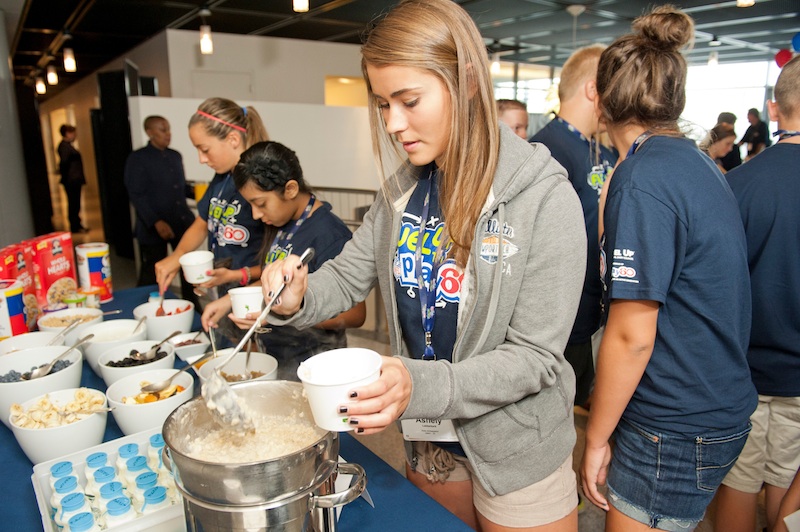
Students enjoy oatmeal breakfast bar at a FUTP60 Youth Summit

Breakfast is one of the most important meals of the day, and it can be the most fun, too! How do you want to fuel up your school with oatmeal? Propose your big idea for an awesome breakfast event at school, and your school could win big…SUPER BOWL big. If you are selected as one of the TWO national winners, you get a VIP, all-expenses paid trip to Super Bowl XLVII in New Orleans! Your school will also get to turn their idea into a reality! So, what are you waiting for? Show us how you want to enjoy oatmeal at your school! Tips for creating a ‘Super Bowl’ worthy submission:

1. Design a fun proposal. You can use one of the templates provided to describe your suggested breakfast event. Photos and drawings are optional. You can also submit a video or digital recording of your proposal. Your event doesn’t have to occur in order to be eligible for the prize – we’re just looking for great ideas! 

2. Request an Oatmeal Starter Kit. To get you excited for the challenge, we’re giving away free oatmeal! Ask your Program Advisor or Teacher to request a kit for your school. Supplies are limited, so hurry!

3. Be creative. If you need suggested ideas for oatmeal events, your school could do: a recipe cook-off, taste-test, or a breakfast club. Think big and have fun – the options are endless. You could have a toppings bar, or add food color for your favorite NFL team! You can get bonus points for NFL flair!

4. Get to work! Use the templates provided or grab a digital camera/video recorder and show us how your school wants to enjoy oatmeal to start the day. 

5. Keep it clean. Make sure there is no swearing, violence or other inappropriate behavior featured in your submission. 

6. Be original. If you want to include music in your submission, don’t use music, videos or pictures that belong to someone else. If you could hear it on the radio or see it on TV, it can’t be used in your submission.

7. Watch the clock. Try to keep your entry short and sweet!

8. Promote the program. Wear Fuel Up to Play 60 gear or show us your inspirational posters or other Fuel Up to Play 60 materials hanging in your classroom.

 9. Be descriptive. Include a description with your entry, letting us know why you think it completes the Challenge.

10. Be on time! Don’t want until the last minute to send in your Challenge entry! Be sure to get your entry completed and uploaded online as soon as you get it done. This ensures you will be in the running for the national prizes and exclusive digital rewards!

Good luck, fuel up and get moving! And remember, we’re giving away tickets to Super Bowl XLVII in New Orleans and the chance to turn your idea into a reality! 

YUMMMMMMY … it’s oatmeal for breakfast!!

Some Very Real Reasons Why Kids May Be Hungry at School – and What We Can Do About It: Part 1 of 3

I’ve watched the videos from the hungry teen athletes in Kansas and Jon Stewart’s amusing Starved By the Bell segment. I’ve read about the boycotts and heard dedicated school nutrition professionals talk seriously about getting their high schools out of the National School Lunch Program.

I’m very sorry that meals for kids at school are once again fodder for YouTube videos and late night TV. I’m even sorrier that school nutrition has become a political football like so many other issues. I am sorriest for the thousands of school nutrition heroes who have been trying to make the 2012 USDA Nutrition Standards work and the millions of low-income children who reply on schools cafeterias to provide their best meals of the day.

There are some very real reasons why students, especially teens, may be hungry during the school day. If everyone focused on finding real solutions, we could work together to benefit all students – improving their nutrition, health and academic performance. Here are two of the very real reasons that kids may be hungry at school – stay tuned for more reasons in parts 2 and 3.

Greek Pizza with hummus on whole grain crust, Johnston, Rhode Island, High School

Reason #1: Kids, especially teens, are hungry because they don’t eat breakfast.

SOLUTION: Breakfast every day for every student

According to the 2011 Kellogg’ Breakfast in America Survey, breakfast eating dips as kids grow older; 77 percent of young children eat breakfast every day, but this falls to 50 percent in the middle-school years and 36 percent among high school students. If you don’t eat breakfast, the new calorie ranges may not be enough to be both a breakfast and a lunch. And, more importantly, you will have found it hard (if not impossible) to concentrate and learn in your morning classes.

Schools need breakfast programs that are convenient for kids and practical for school food service. There are lots of successful models: Grab-and-Go breakfast options, like new kiosks planned for Medford (MA) schools, breakfast in the classroom being successfully implemented in districts coast to coast, and cafeteria breakfast bars with made-to-order breakfast burritos, as seen in my hometown of Billings, Montana.

Made-to-Order, Breakfast Burrito Bar, Senior High School, Billings, Montana

Reason #2: Most school schedule recess after lunch, so kids rush to get outside.

SOLUTION: Recess Before lunch

When kids are eager for recess, they often dump hunger-satisfying foods into the trash. It’s only nutrition WHEN they eat or drink, so we should maximize scheduling to get the food into the kids. Honestly, it’s not rocket science that children would be hungrier and thirstier when they have the chance to play first – and that exactly what schools report according to Starving for Recess, a 2011 District Administration article.

Scheduling Recess Before Lunch (RBL) isn’t rocket-science either and there are plenty of resources from Montana Team Nutrition to help schools with the process. RBL can even save money since many schools report significant decreases in garbage removal costs when students are active first, eating more food and drinking more milk afterward.

Recess Before Lunch Guide, Montana Team Nutrition (2008)

School Breakfast: From the Hungry Side of the Tray

I was profoundly affected by my school breakfast visit Thursday morning – to Senior High School in Billings, Montana (1,900+ students, 31% free-reduced). I tried to capture it throughout the day in School Meals That Rock Facebook photos postings and some School Meals Rock tweets, but what I saw and felt was difficult to express 140 characters at a time.

Much of my work is fairly abstract – presentations about marketing healthy school meals, webinars about implementing new meal patterns, and interviews about nutrients that kids are missing. This visit to a large high school cafeteria for breakfast was much more important and straightforward – it was simply about feeding hungry teenagers.

The food was great. While it exceeded current USDA guidelines, the menu might have disappointed the vociferous school meal critics who sometimes seem to seek nutrition perfection. Some of the fruit was canned (peaches and pineapple in juice); there were corn dogs (whole grain, low-fat, turkey, but still corn dogs); and there were ready-to-eat cereals rather than plain oatmeal.

There was also fresh fruit (bananas, apples, and oranges), yogurt parfaits, and an amazing made-to-order burrito bar with locally sourced tortillas and sausage crumbles, plus eggs, spinach, jalapenos, onions, and salsa. While not organic-free-range nutrition perfection, it was wholesome, healthy, and prepared by “lunch ladies” who greeted kids by name with a smile and “welcome to our café” attitude.

In the bright sunny Senior High cafeteria, I was especially struck by three things:

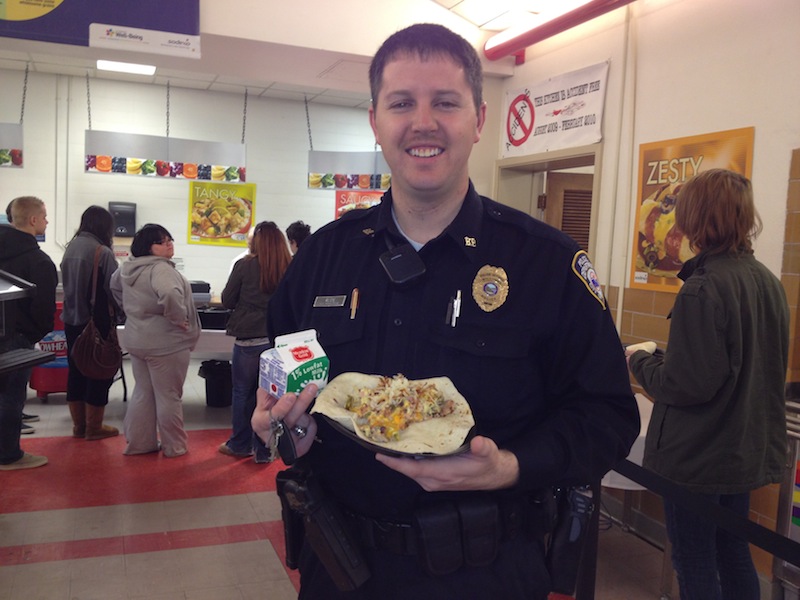
  • First, the atmosphere was like the pleasant bustle of a coffee shop with lots of conversation, but no loud voices or inappropriate interactions. The school police officer came in – to talk with kids and have breakfast himself – rather than to “patrol” or enforce proper behavior. He said, “It’s like this every morning.”
  • There were all kinds of kids – with cowboy hats, updo hairstyles, multiple piercings, and athletic gear – all there to do one thing: eat breakfast. Best of all, there were many girls with smart plates filled with protein, fruit, and milk. With all the news about disordered eating, it is heartening to see young women enjoying breakfast.
  • When I asked several teens what they liked best about school breakfast, they looked a little surprised, because it was obvious to them. “I eat here almost everyday because it’s free and it’s good.” “Some kids don’t have money to eat and when I eat here, I don’t have to listen to my stomach growl all morning.”

On USDA’s “What’s on Your Plate” Day, these students were not looking for culinary perfection, steel cut oats, or exotic tropical fruit. They needed a balanced breakfast in a safe and welcoming place – they got that and much more. Next time you are tempted to pick apart a school menu or criticize the cafeteria offerings, go to your local high school and take a look at things from a hungry teen’s point-of-view.

Find out what changes the program has already made and what they would like to do if they had more support. Compare what the kids can enjoy in a school breakfast to those eating chips, pop, and candy from the corner store. Offer ideas to leverage USDA’s $1.94 reimbursement (food + labor) for even more nutritious options that teens will eat.

Better yet, get engaged with the school and the kids. Explore what you could do to help promote smart choices for successful athletes or start a school food pantry for the students in need. There is a brand-new food pantry at Senior High – and everyone is surprised by how many students are using it.