Eat. Play. Learn. G is for GARDEN

To celebrate the publication of Proceedings of the Learning Connection Summit: Nutrition, Physical Activity, and Student Achievement, I’m offering a short daily post during February on the ABCs of the health and academics.

G is for GARDEN

It this point in the cold winter, it warms my heart to think about school gardens. Of course, I also get a envious when I see Florida school gardens that are green and lush when the snow is nearly a foot deep in Montana!

Why include gardens in talking about the learning connection? Students can learn all sorts of things in a school garden – botany, biology, chemistry, ecology and math to name a few. Growing food also provides the most direct, tangible connection to nutrition. I often say, if they grow it, they will eat it – there really is no better way to teach healthy eating habits than in a garden.

Here are four photos to represent the diversity and similarities of school gardens in the USA – just looking at them makes spring a little bit closer!

February 2014: Mrs. Donna Stoddard's 2nd grade class in Read-Pattillo Elementary, New Smyrna Beach (FL) are growing kale, radishes, sunflowers, parsley, cilantro, peas, sweet onions, carrots, kohlrabi, potatoes and green peppers in their school garden! Lucky students!

February 2014: Mrs. Donna Stoddard’s 2nd grade class in Read-Pattillo Elementary, New Smyrna Beach (FL) are growing kale, radishes, sunflowers, parsley, cilantro, peas, sweet onions, carrots, kohlrabi, potatoes and green peppers in their school garden! Lucky students! Thanks Fresh for Florida Kids!

June 2014: Alaska Elementary School Garden, Thanks Alaska Farm to School!

June 2013: Alaska Elementary School Garden, Thanks Alaska Farm to School!

March 2013: AMAZING lettuce planted, grown and harvested in the "Garden of Learning," Gary A Knox Elementary School, Crane, Arizona

March 2013: AMAZING lettuce planted, grown and harvested in the “Garden of Learning,” Gary A Knox Elementary School, Crane, Arizona

April 2012: University City High School Garden, Philadelphia, PA, an oasis in the middle of the city and my favorite urban school garden.

April 2012: University City High School Garden, Philadelphia, PA, an oasis in the middle of the city and my favorite urban school garden.

Eat. Play. Learn. F is for FUEL Up

To celebrate the publication of Proceedings of the Learning Connection Summit: Nutrition, Physical Activity, and Student Achievement, I’m offering a short daily post during February on the ABCs of the health and academics.

F is for FUEL Up

I’ve been a serious fan of FUEL Up to Play 60 since its 2007 kickoff. I’ve seen the frontline benefits in my hometown (Billings, Montana) and in many states across the USA. I wrote the SNA toolkit: Make Fuel Up to Play 60 Work For Your School Nutrition Program and know for certain that the program can enhance school environments, nutrition programs and academic achievement.

In my playbook, FUEL Up to Play 60 scores a touchdown because, at the school level, all plays are planned and implemented by students themselves! If we want to raise a healthier generation of Americans, it is today’s youth who need to make a commitment to wellness in their own lives. FUEL Up to Play 60 grants and resources support and inspire young folks to make the program’s tagline a reality. Here are three examples of how student leaders are making health happen in their schools.

  • EAT HEALTHY. The FUEL Up to Play 60 Willow Creek team (pictured below) served yogurt parfaits and whole-wheat breakfast burritos made with turkey sausage during a National School Breakfast week celebration.
  • GET ACTIVE. The creativity of FUEL Up to Play 60 teams really shines when it comes to fitness fun – and the added minutes of physical activity have helped kids get fit and schools meet the criteria for USDA’s HealthierUS School Challenge.
  • MAKE A DIFFERENCEFUEL Up to Play 60 helps motivate me to stay in the school wellness game. When kids make presentations to school boards, start grab-n-go breakfast carts or plant school gardens, I believe that real change is possible.

Want more details FUEL Up to Play 60 plays or help in bringing the program to your school? Contact your state/regional dairy council and check the FUEL Up to Play 60 website.

Willowcreek Middle School, Lehi, Nevada, Goes BIG with FUTP60!

Willowcreek Middle School, Lehi, Utah, Goes BIG with FUTP60!

Eat. Play. Learn. E is for ENVIRONMENT

To celebrate the publication of Proceedings of the Learning Connection Summit: Nutrition, Physical Activity, and Student Achievement, I’m offering a short daily post during February on the ABCs of the health and academics.

E is for ENVIRONMENT

In the school wellness ‘biz,’ we talk a lot about creating a healthy school environment. In fact, it’s probably safe to say that most of my professional work and a significant portion of my volunteer time has been devoted to promoting a culture of wellness in K-12 schools. A quote from the The Wellness Impact: Enhancing Academic Success through Healthy School Environments captures the key issues.

“… the vital importance of improved nutrition and increased physical activity in creating an environment that enriches students’ readiness to learn.”

So what exactly is a healthy school environment? How can you tell that you are in a healthy environment when you walk into a school? Actually, I think that you can see aspects of a healthy environment before you even get to a school building! Here are just a few of my favorite way to identify a school where students can be fit, well-nourished and ready to learn.

  • Students (and sometimes families) fill the sidewalks as they walk to school.
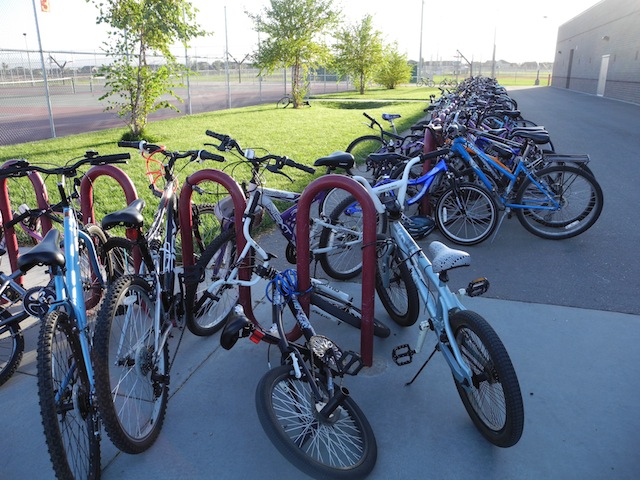
  1. School bike racks are full or overflowing (see photo below from Idaho middle school).
  2. Playgrounds and sports fields are full of children and adults playing together.
  3. Gardens have a prominent place on the school campus.
  4. Wonderful aromas of food cooking/baking/roasting waft through the hallways.
  5. Hallway walls have artwork, signs or markers to encourage physical activity.
  6. Banners or signs identify awards and recognition for nutrition and fitness.
  7. Breakfast is served in the classroom to every child who needs it.
  8. Food presentations are eye-appealing, colorful and customer-focused.
  9. Cafeteria is bright and cheerful; students socializing with inside voices.
  10. Adults are sitting and eating with children rather than patrolling the tables.
  11. Any snack food sales offer many options from MyPlate food groups.
  12. Fun after-school physical activities are available to children of all abilities.

These are just a few of my favorite things in a healthy school environment. What are yours?

Full Bike Racks at Heritage Middle School in Meridian Idaho

Full Bike Racks at Heritage Middle School in Meridian, Idaho

Eat. Play. Learn. D is for DISCIPLINE

To celebrate the publication of Proceedings of the Learning Connection Summit: Nutrition, Physical Activity, and Student Achievement, I’m offering a short daily post during February on the ABCs of the health and academics.

D is for DISCIPLINE

If you have ever worked in schools, you know that discipline problems can take up lots of time that could be better spent on teaching and learning. What you may not know is that discipline and behavior can be improved with something as simple as active recess or classroom energizers or PE class. It’s true – there is a definite Learning Connection between student’s physical activity and their levels of physical activity.

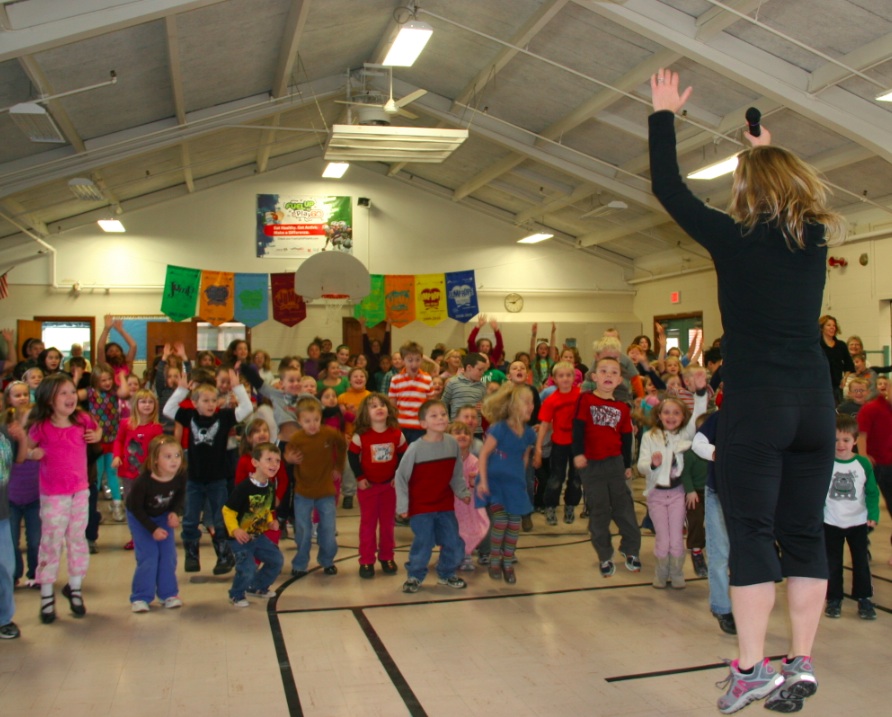
I am a huge fan of programs like Fuel Up to Play 60 (see Maine photo below), Move to Learn, and Playworks that get kids up and moving throughout school campuses – in classrooms, gyms, playgrounds and even hallways. While the strategies and activities vary from program to program and school to school, the overall goal is the same: Increase student physical activity in order to improve behavior, reduce discipline referrals and, ultimately, to enhance cognition and academic success. Does it work?

According to the experts, the answer is another resounding YES. Short bursts of activity, moderate activities like walking and dancing, skill-building PE classes and active recess all help students become more fit, more focused and ready to learn. Need some proof? Here are links to evaluations, assessments and research about the connection between physical activity, behavior and school discipline issues:

Students in PIttston, Maine, jump for joy (as well as health, wellness and academic success)

Students in PIttston, Maine, jump for joy (as well as health, wellness and academic success)

Eat. Play. Learn. C is for CLASSROOM

To celebrate the publication of Proceedings of the Learning Connection Summit: Nutrition, Physical Activity, and Student Achievement, I’m offering a short daily post during February on the ABCs of the health and academics.

C is for CLASSROOM

As they say in real estate, it’s all about location, location, location. Many educators and school administrators are asking if a classroom is the right location for a school breakfast. The answer from superintendents, principals, teachers and students across the country is a resounding YES. From reading the research, visiting the schools and talking with stakeholders, these are the top four reasons that I’m a big believer in – and booster for – breakfast in the classroom (BIC), sometimes called breakfast after the bell.

  1. Serving breakfast in the classroom is a proven strategy for increasing breakfast participation. The Food Research and Action Center’s (FRAC) 2014 School Breakfast Scorecard credits increased numbers of low-income students eating breakfast to strategies like moving it out of the cafeteria into the classroom.
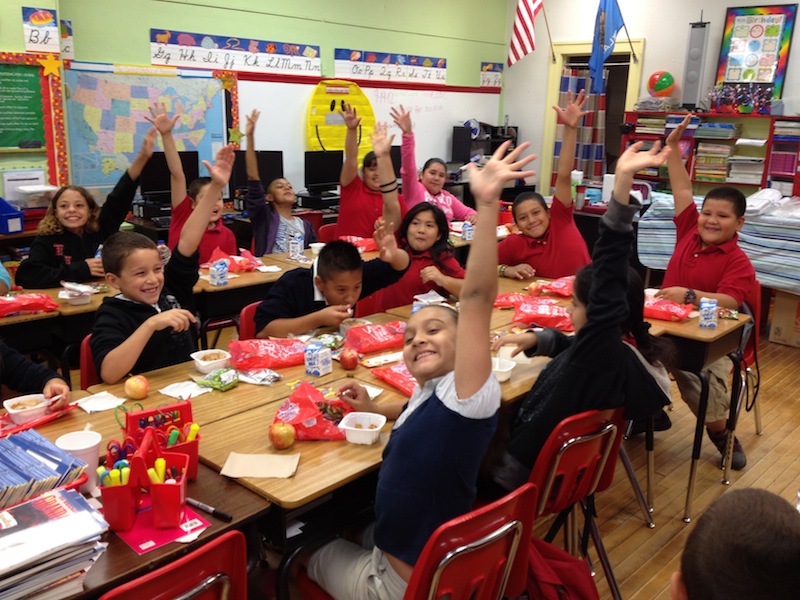
  2. Students like the comfortable atmosphere of their classroom better than a loud cafeteria. Eating in a classroom – with an opt-out option – reduces the stigma of breakfast-for-poor-kids-only. When I talk to students, like those in the photo below, they tell me they like to eat with their friends in a quiet, calm place.
  3. Teachers see positive results when students eat a morning meal in the classroom. The 2013 Too Hungry to Learn report showed that 75% of teachers liked knowing that their students are energized and ready to learn. Seventy-six percent use the time to take attendance, 65% make classroom announcements.
  4. School administrators have also embraced the benefits of serving breakfast in the classroom. In 2013, the American Association of School Administrators (AASA, The Superintendents Association) published an issue of their magazine on Improving Attendance, Health and Behavior: Moving Breakfast Out of the Cafeteria.

Breakfast in the classroom is good for students, educators and administrators. I call that a win-win-win – and clearly this classroom does too.

OKC BIC-4

Eat. Play. Learn. B is for BREAKFAST

To celebrate the publication of Proceedings of the Learning Connection Summit: Nutrition, Physical Activity, and Student Achievement, I’m offering a short daily post during February on the ABCs of the health and academics.

B is for BREAKFAST

Want the low-down on the benefits of breakfast for school-aged children? Just ask those on the front lines of education – classroom teachers. That is what Share our Strength did in the No Kid Hungry 2012 Teacher’s Report Hunger in Our Schools.

Teachers know the realities of hunger in America’s classrooms – and they know the educational, behavioral and health benefits of breakfast (see graph below). What they may not know is that school breakfast also helps to fill the nutrition gaps experienced by US children and teens. According to the 2010 Dietary Guidelines for Americans Advisory Committee Report, American young people, especially teenage girls, have numerous nutrient ‘shortfalls.’ Many are not getting enough vitamin A, C and E, magnesium and phosphorus. Even more are lacking the four nutrients of concern: vitamin D, potassium, calcium and dietary fiber.

The good news it is that a simple school breakfast – fruit, whole grain cereal or bread, and low-fat dairy – helps to fill those nutrient gaps. School breakfast also provides the protein and energy that students need to focus, concentrate and learn until lunch time. Such a simple meal – with so many breakfast benefits!

2012 NKH Teachers Benefits

Eat, Play, Learn: The ABCs of Health and Learning

To celebrate the publication of Proceedings of the Learning Connection Summit: Nutrition, Physical Activity, and Student Achievement, I’m offering a short daily post during February on the ABCs of the health and academics.

A is for ACADEMIC ACHIEVEMENT 

This new paper, written by me with distinguished co-authors Marie Spano, MS, RD, CSCS, CSSD, Joseph E. Donnelly, EDD, FACSM, Charles H. Hillman, PhD, and Ronald Kleinman, MD, and made possible through an educational grant from Nike, was published in January/February 2014 Nutrition Today. It shares key insights from the September 2012 GENYOUth Nutrition + Physical Activity Learning Connection Summit.

  • The proceedings examine the growing body of research focused on the association between physical activity, school-based physical education, school breakfast consumption, improved nutrition overall, and academic achievement.
  • The Summit convened thought leaders and decision-makers from the public-private sectors in education, health and wellness, academia, government, philanthropy, business and, importantly, students to explore the connection that physical activity and nutrition have to learning and behavior. It explored both the barriers and opportunities to help schools implement wellness policies and practices.
  • The participants identified knowledge gaps, developed practical approaches to leverage the current science, and recommitted to work with schools to enhance children’s health and readiness to learn.

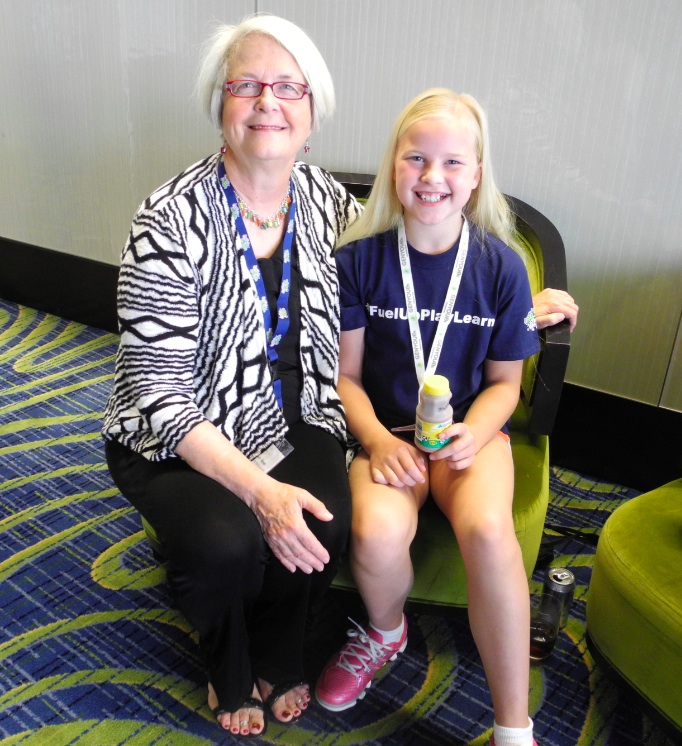
Students were a core part of the Summit – joining conversations about the importance of the learning connection, sharing ideas for improving academic achievement, and acting as leaders among their generation to make a difference. I am excited to share what I learned during -and since – the Summit from the research, from the experts and from young people themselves. Students, like Kylie from Minnesota, are my daily inspiration for improving academic achievement through nutrition and fitness at school.

Eat. Play. Learn. It’s all about ACADEMIC ACHIEVEMENT. 

Kylie, Fuel Up To Play 60, Student Ambassador, Minnesota

Kylie Kasprick, Fuel Up To Play 60, Student Ambassador, Minnesota

EVERY DAY GOODNESS: Smart Photos of School Meals (Part 2)

Why are we spending so much time on school food photo tips? When people see a few yucky photos of school meals, they think that all school meals are bad. When they see bright, beautiful, colorful foods served in your outstanding programs, they begin to understand all school meals in a different way. Public opinion about school meals is literally in your hands. School Meals That Rock wants the world to see accurate, current, positive images of school nutrition.

That’s why we are sharing tips for better school food photos. Part 1 featured tips on tray color and background; this post offers three suggestions about the food itself.

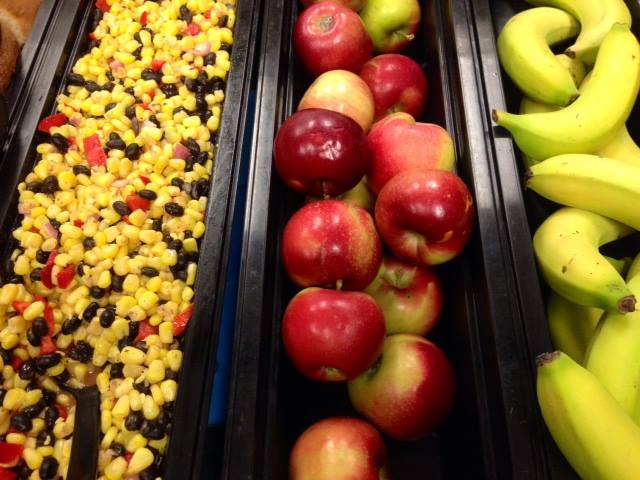
Salad Bar section from Billerica, Massachusetts

Salad Bar section from Billerica, Massachusetts

Tip #4: GO WITH BRIGHT COLORS. There’s no need to always show a complete tray. Look throughout your kitchen and cafeteria for brilliant combinations of colors. This small section of a salad bar has a great mix of red and yellows. It demonstrates the variety of produce options available to student and is very appealing. Thanks to Dina Fordyce Wiroll, Nutrition Services Site Coordinator, Billerica Public Schools for taking it and sharing it. You can learn more about their program by following them at Billerica Schools Nutrition Services on Facebook.

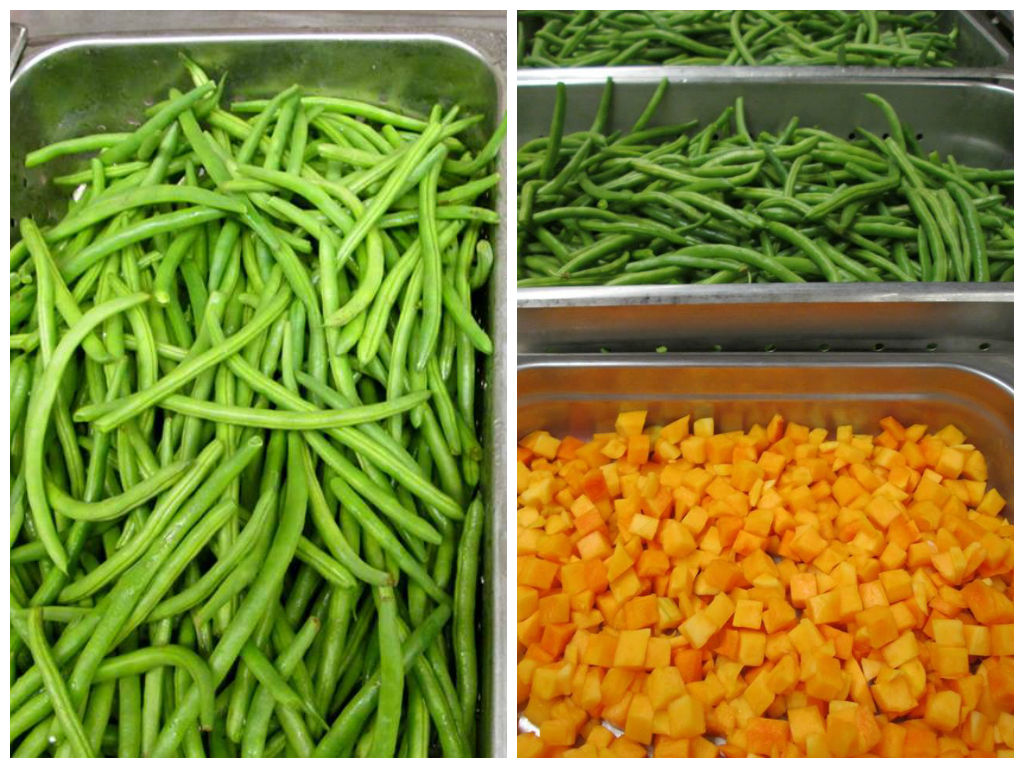
Vegetables from the line in Timpview High School, Provo, Utah

Vegetables from the line in Timpview High School, Provo, Utah

Tip #5: SHOW CONTRASTING COLORS AND SHAPES. Whether on a line or on a tray, contrast is good. These fresh, local green beans look nice by themselves, but see how much more appealing they look in contrast to the steamed butternut squash. Thanks to Colleen Dietz for her amazing collection for school food photos from schools in Provo, Utah. She has done an outstanding job of encouraging staff throughout the district to document excellence in school nutrition. You see learn a lot by following Provo’s work on Facebook at ITS Meals at Provo School District.

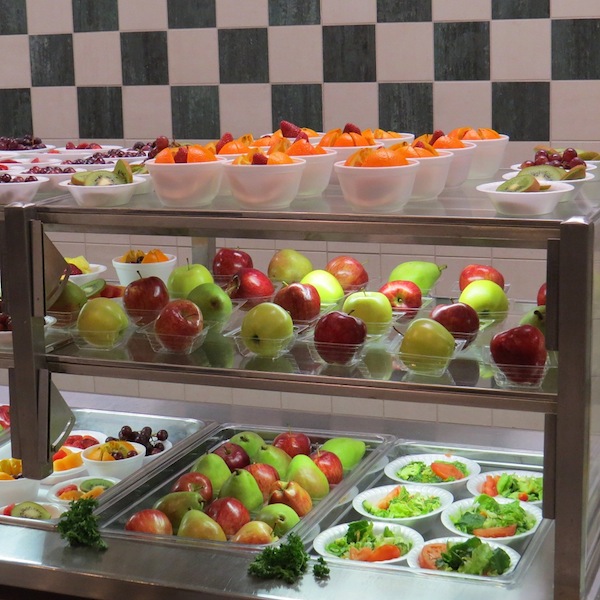
Dramatic display of fruits and vegetables from Jackson-Madison County School System, Tennessee

Dramatic display of produce from Jackson-Madison County School System, Tennessee

Tip #6: SHOW LAYERS OF COLOR. Multiple shelves in a cafeteria line can be an impressive way to display food – and to encourage students to take and eat items. Layers also make dramatic photographs, especially when they are filled with bright colors. Susan Johnson, School Nutrition Director, from Jackson-Madison County School System in Tennessee, share some knock-out photos with us. This one is from Liberty Technology Magnet High School, where some of the vegetables are grown in a hydroponic greenhouse.

EVERY DAY GOODNESS: Smart Photos of School Meals (Part 1)

School lunch photos are back in the news. First, there was the story about the FedUp campaign on NPR’s The Salt. My reaction – and their response – are at What School Meals REALLY Look Like Today. Now, USA Today wants to know “What does your school lunch look like?” If you believe, as I do, that media coverage has been skewed to outdated and inaccurate images of school meals, there is something that you can do – something that you must do.

It’s time to flood social media with gorgeous photos of real school meals – the EVERY DAY GOODNESS that is prepared in your kitchens and served in your cafeterias and classrooms! A smart, beautiful photo is worth a thousand words – and thousands of views. That’s why School Meals That Rock is featuring SMART TIPS FOR PHOTOS THAT ROCK. Get your Smartphone or camera ready – and start snapping!

TIP #1: TAKE LOTS OF PHOTOS. Seriously, in order to get great photos that do justice to your great meals, you have to practice. So, just do it today. Take lots of photos and delete all of them if they are not as good as you would like. The only way to get good at taking photos is to practice, practice, practice. There are tons of photo ops in every school kitchen and cafeteria – check out the photo gallery at ITS Meals at Provo School District for tons of examples.

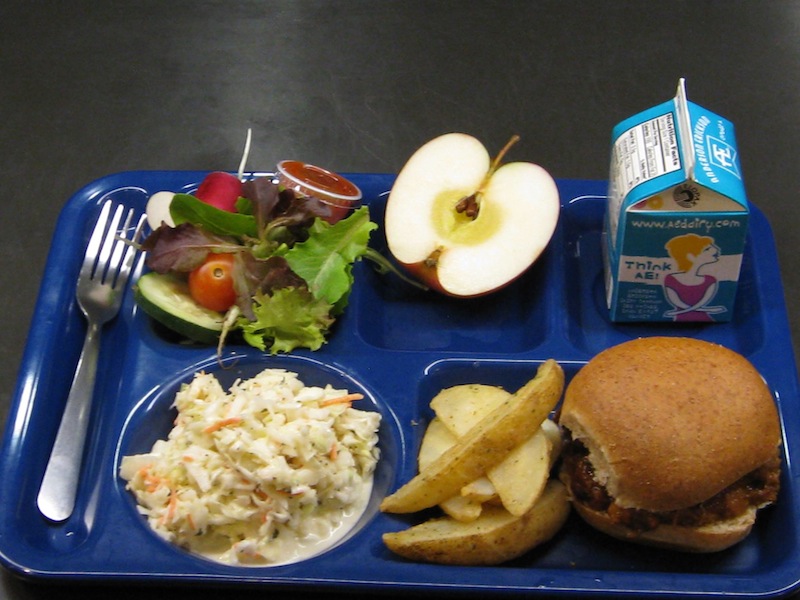
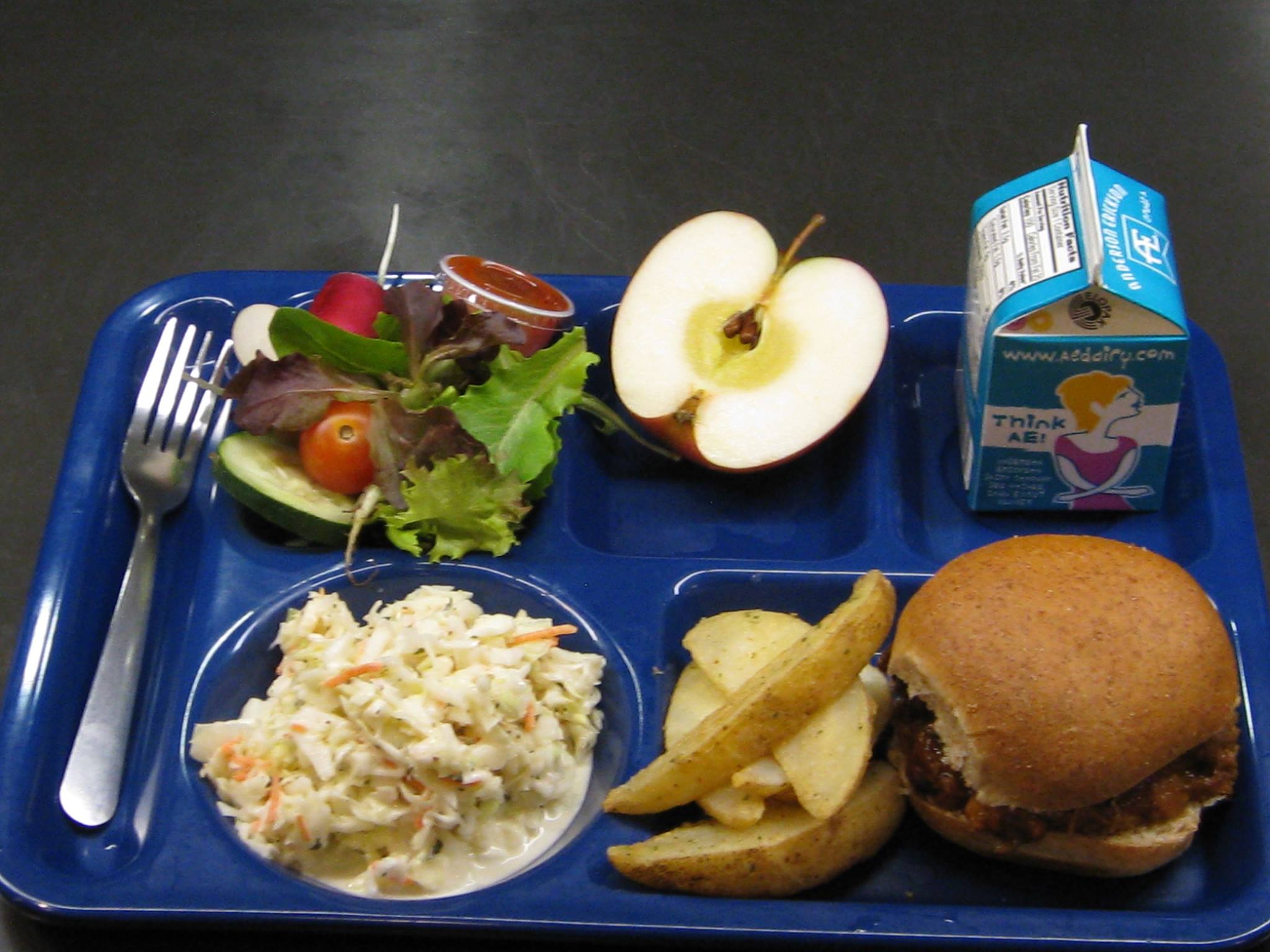
Food Day 2013 tray from Decorah, Iowa

Food Day 2013 tray from Decorah, Iowa

Tip #2: USE A SOLID COLOR TRAY. Deep blue, green and red seem to compliment most school foods best. Natural and black can also work well. Steer away from swirled colors and pastels. Very few foods look delicious on mint green or pink. If you don’t have the right tray, borrow or purchase one to use for daily photos. If you use plates instead of trays, show your meals on plates. The photo above – from a lunch of locally-sourced foods served in Decorah Community Schools in Iowa – rocks for many reasons: The tray color is just one of the them. The meal below may meet all nutrition standards, may be delicious and may even include local foods, but it is hard to see the food for the swirling blue and white colors.

Swirled colors make it hard to showcase delicious food

Swirled colors make it hard to showcase delicious food

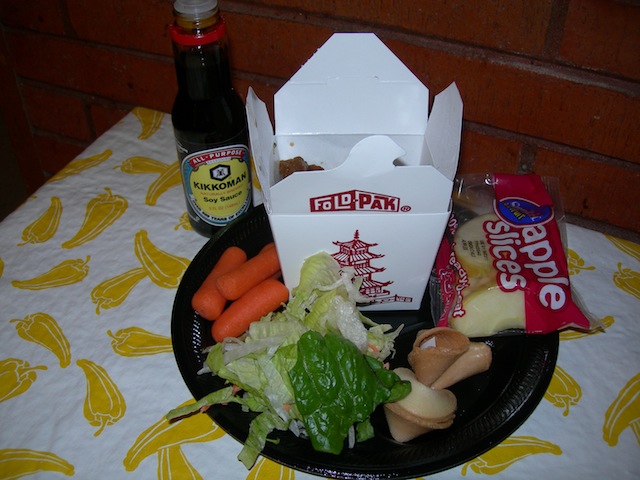
Tip #3: KEEP BACKGROUND SIMPLE. Help the viewer focus on the food by eliminating distracting background patterns. One of the best backgrounds is a clean stainless kitchen counter or cafeteria table. While the meal below has some great options, there are too many districting patterns in the background, plus we cannot see what food is in the box. There is also no reason to include the bottle of soy sauce – a carton or bottle of milk would be much better.

Too many patterns in the background distract from the food

Too many patterns in the background distract from the food

BOTTOM LINE: If you want the world to have a more accurate, current and POSITIVE image of school meals, YOU have to share the EVERY DAY GOODNESS in your cafeterias.

Kale Chips for 8,000 and Other Real School Food Stories

Yet another superficial, completely unbalanced school lunch story hit the blogosphere last Friday on NPR’s The Salt. Unfortunately, author Maria Godoy failed to do any investigation, instead using a very non-random sample of teen photos to declare that “America’s school cafeterias are still turning out the culinary abominations.” Actually, Ms. Godoy, many school meals are foodies dreams come true – and here are several delicious examples that I used recently to celebrate October 2013 as Farm to School Month, October 14-18, 2013, as National School Lunch Week, and October 24, 2013, as Food Day. This trifecta of real food benefits everyone: The farmers and ranchers who grow food for local districts, school nutrition directors who know exactly where their food comes from, and – most of all – millions of students who enjoy fresh food right on their school trays.
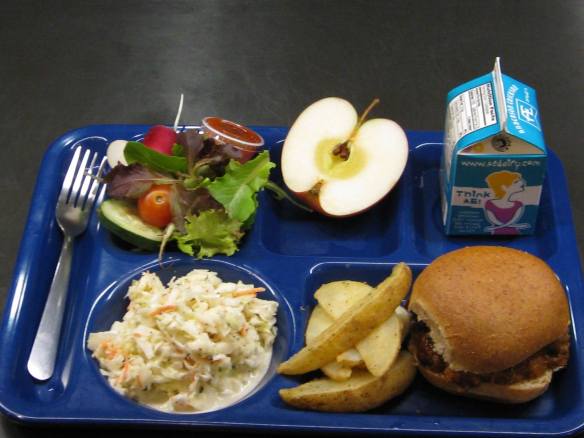
Food Day 2013 lunch, Decorah, Iowa.

Food Day 2013 lunch, Decorah, Iowa, with local BBQ pork and veggies from school garden

The three pillars of a sustainable farm to school program are generally seen as Cafeteria, Classroom and Community. But there is fourth, equally important C – Champions! Successful farm to school programs are started, nurtured and harvested by champions at every step from the field to table. Here’s how three directors – three very cool school lunch dudes – from Maine to Montana are growing impressive farm to school numbers.

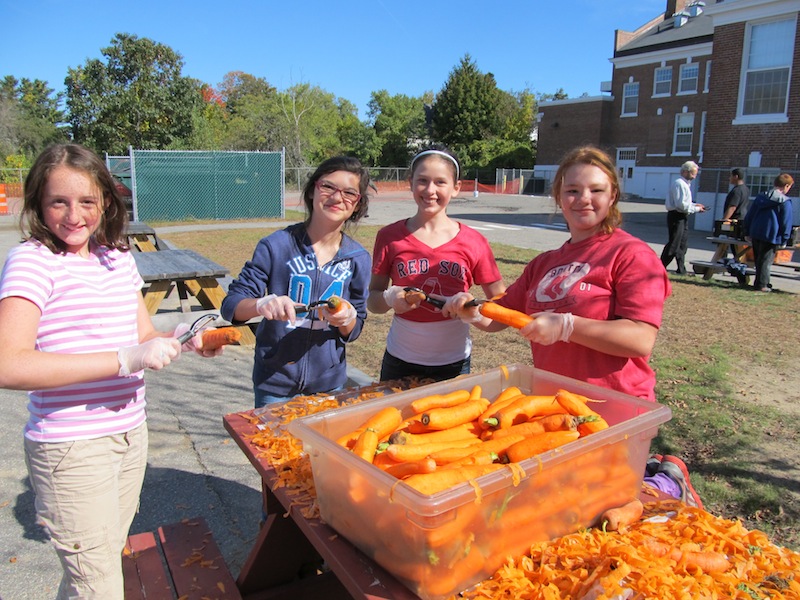
Thanks to Nutrition Services director Tyler Goodwin, students in the Wells-Ogunquit Community School District on the coast of southern Maine have a personal relationship produce on their lunch trays. It comes from the Spiller Farm, just two miles down the road and students help to pick it, clean it and prepare it. During September trips to the farm, hundreds of school kids picked 15 bushels (450 pounds) of green beans, 18 bushels (900 pounds) of red potatoes and 15 bushels (720 pounds) of apples (enough to supply the entire District for the next several months).
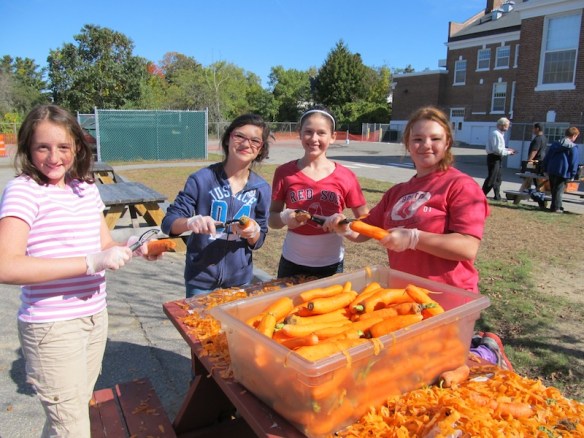
Student helpers get local carrots ready for school lunch

Student helpers peel local carrots for a deliciously school lunch

In October, Chef Tyler froze 10 bushels of carrots, also picked by student helpers. The final yield was 450 pounds of freshly picked, lightly steamed, very local frozen carrots for winter meals like veggie stir-fry, peas-n-carrots and candied carrots. The team is learning about and working to support centuries of farming heritage in Wells. According to Goodwin, fresh local produce makes a real difference in cafeterias too. “What I have noticed in all schools is healthier choices being made, kids are automatically selecting the required fruit or vegetable with lunch, and less waste than last year,” he reports.

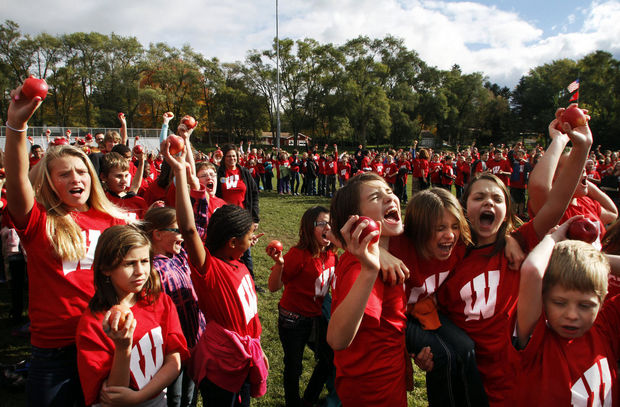
Deep in the apple orchards of Central Michigan, Dan Gorman, Food Service Director in Montague/Whitehall Schools focused on some big farm to school numbers too – world record numbers in this case! On Oct. 24, he and the districts’ 4,000 students – plus at least 14,000 more in Muskegon County – regained the World Record for the “most people simultaneously eating an apple at one time.” Muskegon County held the world record (9,329) until last May when children in New Zealand schools upped it to 17,064 with the help of an apple company. Now, western Michigan is back in the lead with a very impressive 19,087 students, staff and local business folks crunching a Michigan apple at the same time.
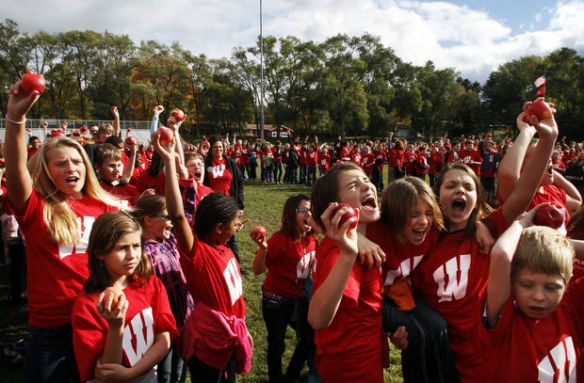
Michigan students crunch Michigan apples for world record

Michigan students crunch Michigan apples for world record

Promoting healthy snacking, supporting local agriculture and generating record-breaking excitement are just some of Dan’s everyday efforts to bring fresh, local food to kids. When he switched the district’s milk contract to a local dairy that raises its own cows and crops, the farm was able to hire four new workers. In the elementary cafeterias, monthly Harvest Days highlight Michigan fruits, vegetables and herbs. Students get to touch, smell and taste fresh items with their lunch, guided by an adult community member or high school mentor. As chair of the 1 in 21 Education Committee, Gorman is – as always – focused on a much bigger goal. “Going for a world record is as American as apple pie, but the more important goal is making Muskegon county the healthiest county in Michigan by 2021,” he says.

Now, about the kale chips for 8,000: It happened for the second time on October 2, 2013, to celebrate National Kale Day in Missoula County Public Schools, Montana. Last year, on a ‘dare’ from Jason Mandela of the PEAS (Program in Ecological Agriculture and Society) Farm, Food and Nutrition Supervisor Ed Christensen offered baked kale chips to every student in the district. While not shy about saying his kale chips are “the best,” Ed was impressed by how much the kids liked them. “It’s really pretty simple,” he says. “We use freshly picked kale, toss it with oil, sprinkle with a little salt, and bake slowly.” While olive oil adds nutty flavor and USDA commodity oil works fine, Christensen also likes to use Montana-grown safflower on his kale chips.
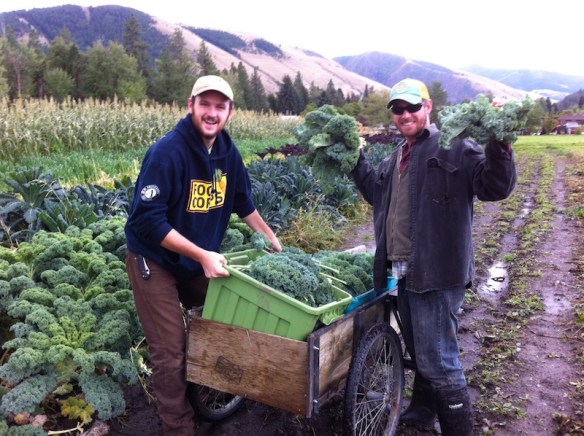
Picking kale for 8,000 in the PEAS garden

Picking kale for 8,000 in the PEAS Farm, Missoula, Montana

Kale is big on Christensen’s local veggie list because it’s so hardy, often the last thing harvested from the PEAS Farm. Chips are a great way to serve kale because they are like potato chips to kids. On a recent ‘smack down’ with a tasty raw kale salad, the crunchy chips won hands down. During this year’s Kale-abration, Ed saw savvy 3rd graders crushing the chips onto their pizza. About that pizza, the crust is 100 percent scratch, whole grain made with local Wheat Montana Prairie Gold flour and turkey pepperoni. Missoula schools are currently developing a scratch sauce to incorporate house-grown onions and herbs. Clearly Ed wants to do farm to school as many ways as possible – in a place with a growing season of less than four months!!

Being a school nutrition director is a tough enough job without adding inaccurate, inflammatory news stories. Despite the demands, thousands of directors across the U.S. have stepped up to the plate – or lunch tray – to do what Tyler, Dan and Ed do in their districts. Why? So students can have the freshest, best tasting, most nutritious meals possible and be fit, well-nourished and ready to succeed.
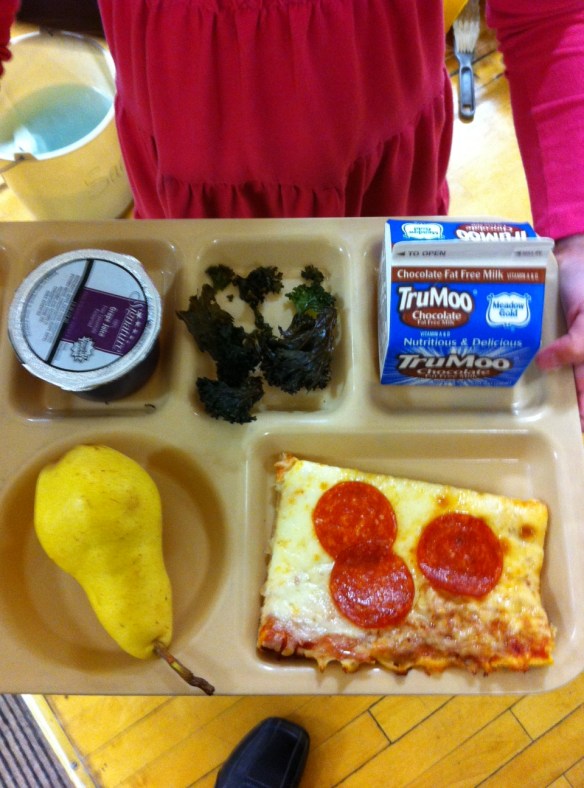
Kale chips for lunch with whole grain pizza and pears.
Kale chips for lunch with whole grain pizza and pears.